


Black-winged Stilt
Himantopus himantopus
- KingdomAnimalia (Animals)
- PhylumChordata (Cordats)
- ClassAves (Aus)
- OrderCharadriiformes (Caradriformes)
- FamilyRecurvirostridae (Stilts and Avocets)
- GenusHimantopus (Typical Stilts)
- SpeciesHimantopus himantopus (Black-winged Stilt)
The black-winged stilt (Himantopus himantopus) is a widely distributed, very long-legged wader in the avocet and stilt family Recurvirostridae. Its scientific name, Himantopus himantopus, is sometimes used to generalize a single, almost cosmopolitan species. Alternatively, it is restricted to the form that is widespread in Europe, Asia and Africa, which equals the nominate group of H. himantopus sensu lato. Meanwhile, the black-necked (H. mexicanus) and white-backed stilts (H. melanurus) both inhabit the Americas; the pied stilt (H. leucocephalus) ranges from Australia and New Zealand. Today, most sources accept between one and four actual species. Wikipedia →
Closest Relatives at Cat Tien National Park

Red-wattled Lapwing
Vanellus indicus

Bronze-winged Jacana
Metopidius indicus

Greater Painted-Snipe
Rostratula benghalensis
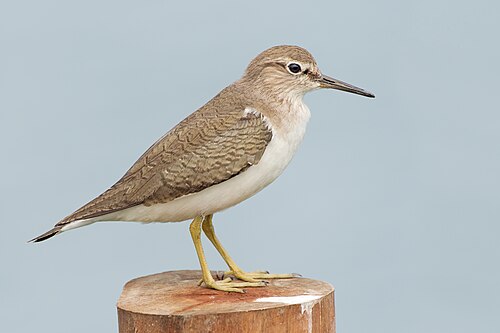
Common Sandpiper
Actitis hypoleucos

Oriental Pratincole
Glareola maldivarum

Barred Buttonquail
Turnix suscitator

Yellow-legged Buttonquail
Turnix tanki

Pin-tailed Snipe
Gallinago stenura

Wood Sandpiper
Tringa glareola

Grey-headed Lapwing
Vanellus cinereus
📅 Monthly Probability
Fewer than 5 records of Black-winged Stilt at Cat Tien National Park — not enough to chart months honestly.
☀️ When They're Spotted
Most active during daytime hours (6am–6pm) · across all parks (global)
Global Distribution
Where this species is recorded worldwide. Restricted to human observations from 2019 onwards — the same kind of record and the same period the probabilities on this page are built from, so collar-tracking studies, camera-trap arrays and museum specimens are excluded. Around Santa Rosa that removes 5,924 GPS fixes from a handful of tagged jaguars.
where this species is recorded (GBIF density — it tracks where observers go, not how likely a sighting is) · parks where it occurs — tap a pin for the sighting probability there