Royal Bardia National Park
🇳🇵 Nepal
🐯 Tiger Roams Royal BardiaRoyal Bardia National Park lies in the foothills of the Himalaya in western Nepal, where steep hills descend into a lush tropical rainforest. Thick canopy crowns a network of river valleys and lowland grass patches, and a series of well‑marked trails wind through the verdant understory.
28.383° N 81.537° E
Wildlife
⭐ Iconic Species
 ★
★ Axis Deer
Axis axis
 ★
★ White-throated Kingfisher
Halcyon smyrnensis
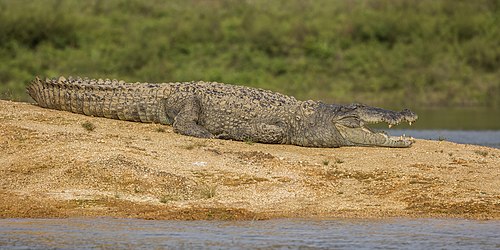 ★
★ Mugger Crocodile
Crocodylus palustris
 ★
★ Pearl-necked Dove
Spilopelia chinensis
📊 Most Spotted

Tiger
Panthera tigris

Black-hooded Oriole
Oriolus xanthornus

Rufous Treepie
Dendrocitta vagabunda

Black Drongo
Dicrurus macrocercus

Red-whiskered Bulbul
Pycnonotus jocosus

Great Indian Rhinoceros
Rhinoceros unicornis

Common Peafowl
Pavo cristatus

Red-wattled Lapwing
Vanellus indicus

Plum-headed Parakeet
Psittacula cyanocephala

River Lapwing
Vanellus duvaucelii

White-bellied Drongo
Dicrurus caerulescens

Hog Deer
Axis porcinus
⭐ Iconic Species
📊 Most Spotted
Tiger
Panthera tigris
Great Indian Rhinoceros
Rhinoceros unicornis
Hog Deer
Axis porcinus

Himalayan Langur
Semnopithecus schistaceus

Asian Elephant
Elephas maximus

Barasingha
Rucervus duvaucelii

Rhesus Macaque
Macaca mulatta

Indian Muntjac
Muntiacus muntjak

Sambar
Rusa unicolor

Smooth Coated Otter
Lutrogale perspicillata

Asian Jackal
Canis aureus

Leopard
Panthera pardus
⭐ Iconic Species
★ White-throated Kingfisher
Halcyon smyrnensis
★ Pearl-necked Dove
Spilopelia chinensis
📊 Most Spotted
Black-hooded Oriole
Oriolus xanthornus
Rufous Treepie
Dendrocitta vagabunda
Black Drongo
Dicrurus macrocercus
Red-whiskered Bulbul
Pycnonotus jocosus
Common Peafowl
Pavo cristatus
Red-wattled Lapwing
Vanellus indicus
Plum-headed Parakeet
Psittacula cyanocephala
River Lapwing
Vanellus duvaucelii
White-bellied Drongo
Dicrurus caerulescens

Rose-ringed Parakeet
Psittacula krameri

Pied Bushchat
Saxicola caprata

Common Kingfisher
Alcedo atthis
⭐ Iconic Species
📊 Most Spotted

Gharial
Gavialis gangeticus

Oriental Garden Lizard
Calotes versicolor

Keeled Indian Mabuya
Eutropis carinata

Bengal Monitor
Varanus bengalensis

Northern House Gecko
Hemidactylus flaviviridis

Dhaman
Ptyas mucosa

Buff Striped Keelback
Amphiesma stolatum

Common Bronzeback Tree Snake
Dendrelaphis tristis

White-spotted Supple Skink
Riopa albopunctata

Brahminy Blindsnake
Indotyphlops braminus

Trinket Snake
Coelognathus helena

Spotted House Gecko
Hemidactylus brookii


Animal Events
Tiger Territorial Roaming and Mating Display
During the late dry season, Bengal tigers actively patrol and scent-mark their expansive territories along drying river channels, frequently vocalizing and engaging in courtship displays.
Spotted Deer Herd Aggregation
Chital deer gather in massive, vigilant herds across the open floodplains and riverbanks to feed on fresh flush vegetation and seek mutual protection from predators.
Rhinoceros Mud-Wallowing and Grazing
As temperatures rise ahead of the monsoon, rhinos spend extended hours congregating in shallow river pools and muddy wallows to thermoregulate and feed on succulent aquatic plants.
Sighting Calendar
Chance of spotting each species, month by month
Sighting Zones
Warm areas are where all species together are recorded most, so they track where people go as much as where animals are. For one species, see the map on its own page.
Where Wildlife Score
How good is this park for seeing wildlife?Biodiversity
GoodHow rich is the wildlife?
Sighting
ExcellentHow likely to see animals?
Quick answers
What animals can you see in Royal Bardia National Park?
The most likely sightings are White-throated Kingfisher (seen by 70–80% of wildlife watchers), Axis Deer (seen by 60–70% of wildlife watchers), Tiger (seen by 60–70% of wildlife watchers), Pearl-necked Dove (seen by 60–70% of wildlife watchers), Black-hooded Oriole (seen by 50–60% of wildlife watchers) — among 998 recorded vertebrate species, based on citizen-science data from GBIF.
When is the best time to visit Royal Bardia National Park for wildlife?
January has the highest combined sighting rate for the park's top species in our month-by-month GBIF data. The full sighting calendar on this page shows each species' best months.
Can you see Axis Deer in Royal Bardia National Park?
Yes — about 62% of wildlife watchers report a Axis Deer sighting in Royal Bardia National Park, based on 28 days of visitor records from GBIF citizen-science data.
Can you see White-throated Kingfisher in Royal Bardia National Park?
Yes — about 72% of wildlife watchers report a White-throated Kingfisher sighting in Royal Bardia National Park, based on 228 days of visitor records from GBIF citizen-science data.
Can you see Mugger Crocodile in Royal Bardia National Park?
Yes — about 46% of wildlife watchers report a Mugger Crocodile sighting in Royal Bardia National Park, based on 16 days of visitor records from GBIF citizen-science data.
Can you see Pearl-necked Dove in Royal Bardia National Park?
Yes — about 60% of wildlife watchers report a Pearl-necked Dove sighting in Royal Bardia National Park, based on 191 days of visitor records from GBIF citizen-science data.
_male.jpg?width=1920)


