Masai Mara National Reserve
🇰🇪 Kenya
🐆 Cheetah Chase During MigrationMasai Mara National Reserve sits in southwest Kenya as a protected expanse of tropical savanna, defined by wide rolling grasslands and scattered acacia trees. Unlike densely forested parks, this open terrain offers unobstructed views across the plains where golden grasses sway in the wind.
-1.442° S 35.091° E
Wildlife
⭐ Iconic Species
 ★
★ Lion
Panthera leo
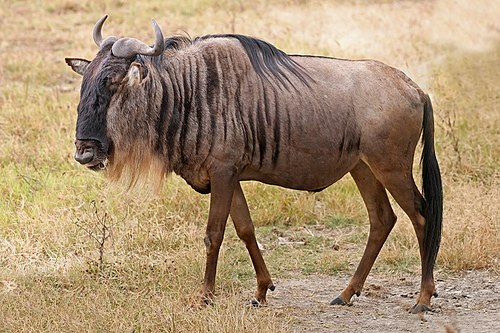 ★
★ Blue Wildebeest
Connochaetes taurinus
 ★
★ Cheetah
Acinonyx jubatus
 ★
★ Leopard
Panthera pardus
📊 Most Spotted

East African Giraffe
Giraffa tippelskirchi

African Bush Elephant
Loxodonta africana
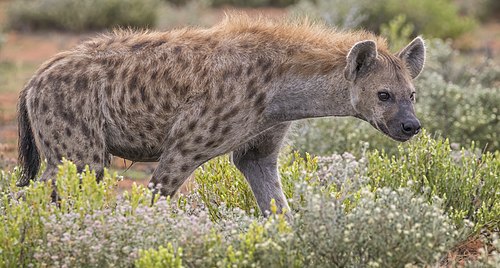
Spotted Hyena
Crocuta crocuta

Topi
Damaliscus korrigum

Common Hippopotamus
Hippopotamus amphibius

Superb Starling
Lamprotornis superbus

Plains Zebra
Equus quagga

Lilac-breasted Roller
Coracias caudatus

Cape Turtle Dove
Streptopelia capicola

Rüppell's Glossy-starling
Lamprotornis purpuroptera

African Buffalo
Syncerus caffer

Crowned Lapwing
Vanellus coronatus
⭐ Iconic Species
★ Lion
Panthera leo
★ Blue Wildebeest
Connochaetes taurinus
★ Cheetah
Acinonyx jubatus
★ Leopard
Panthera pardus
📊 Most Spotted
East African Giraffe
Giraffa tippelskirchi
African Bush Elephant
Loxodonta africana
Spotted Hyena
Crocuta crocuta
Topi
Damaliscus korrigum
Common Hippopotamus
Hippopotamus amphibius
Plains Zebra
Equus quagga
African Buffalo
Syncerus caffer

Thomson's Gazelle
Eudorcas thomsonii

Impala
Aepyceros melampus

Common Warthog
Phacochoerus africanus

Common Eland
Taurotragus oryx

Banded Mongoose
Mungos mungo
📊 Most Spotted
Superb Starling
Lamprotornis superbus
Lilac-breasted Roller
Coracias caudatus
Cape Turtle Dove
Streptopelia capicola
Rüppell's Glossy-starling
Lamprotornis purpuroptera
Crowned Lapwing
Vanellus coronatus

Egyptian Goose
Alopochen aegyptiaca

Common Bulbul
Pycnonotus barbatus

Common Ostrich
Struthio camelus

Yellow-throated Longclaw
Macronyx croceus

White-backed Vulture
Gyps africanus

Marabou Stork
Leptoptilos crumenifer

Little Bee-eater
Merops pusillus
📊 Most Spotted

Nile Crocodile
Crocodylus niloticus

Mwanza Flat-headed Rock Agama
Agama mwanzae

Nile Monitor
Varanus niloticus

African Striped Skink
Trachylepis striata

Leopard Tortoise
Stigmochelys pardalis

Flap-necked Chameleon
Chamaeleo dilepis

Helmeted Turtle
Pelomedusa subrufa

Tropical House Gecko
Hemidactylus mabouia

Black-necked Spitting Cobra
Naja nigricollis

Gregory's Blue-headed Agama
Acanthocercus gregorii

Puff Adder
Bitis arietans

Boomslang
Dispholidus typus
📊 Most Spotted

Common Reed Frog
Hyperolius viridiflavus

African Common Toad
Sclerophrys gutturalis

Anchieta's Ridged Frog
Ptychadena anchietae

Crowned bullfrog
Hoplobatrachus occipitalis

Peters' Foam-nest Tree Frog
Chiromantis petersii
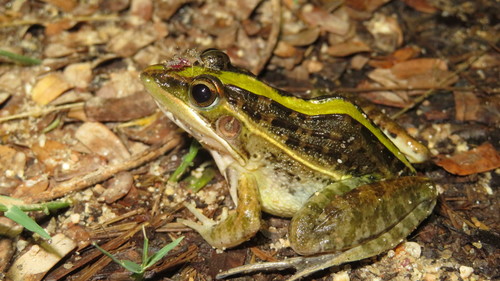
Nile Ridged Frog
Ptychadena nilotica

Senegal Kassina
Kassina senegalensis

Marsabit Clawed Frog
Xenopus borealis

Shovel-nosed Frog
Hemisus marmoratus

Red-Banded Rubber Frog
Phrynomantis bifasciatus

Mababe puddle frog
Phrynobatrachus mababiensis

Sharp-nosed ridged frog
Ptychadena oxyrhynchus
Animal Events
The Great Migration Arrival
Massive herds of blue wildebeest cross the Mara River, braving strong currents and waiting Nile crocodiles in one of nature's greatest spectacles.
Wildebeest Calving Season
A synchronized birthing period on the short-grass plains that simultaneously triggers intense predation pressure from spotted hyenas and opportunistic plains zebra herds sharing the nursery grounds.
Mid-Year Predator Peak and Concentration
As dry conditions set in, resident herbivores like African buffalo and territorial topi concentrate near permanent water sources, drawing heightened focus from top-tier predators.
Sighting Calendar
Chance of spotting each species, month by month
Sighting Zones
Warm areas are where all species together are recorded most, so they track where people go as much as where animals are. For one species, see the map on its own page.
Where Wildlife Score
How good is this park for seeing wildlife?Biodiversity
Very goodHow rich is the wildlife?
Sighting
ExcellentHow likely to see animals?
Quick answers
What animals can you see in Masai Mara National Reserve?
The most likely sightings are Lion (seen by 70–80% of wildlife watchers), East African Giraffe (seen by 60–70% of wildlife watchers), African Bush Elephant (seen by 60–70% of wildlife watchers), Spotted Hyena (seen by 60–70% of wildlife watchers), Topi (seen by 60–70% of wildlife watchers) — among 1402 recorded vertebrate species, based on citizen-science data from GBIF.
When is the best time to visit Masai Mara National Reserve for wildlife?
February has the highest combined sighting rate for the park's top species in our month-by-month GBIF data. The full sighting calendar on this page shows each species' best months.
Can you see Lion in Masai Mara National Reserve?
Yes — about 70% of wildlife watchers report a Lion sighting in Masai Mara National Reserve, based on 604 days of visitor records from GBIF citizen-science data.
Can you see Blue Wildebeest in Masai Mara National Reserve?
Yes — about 55% of wildlife watchers report a Blue Wildebeest sighting in Masai Mara National Reserve, based on 335 days of visitor records from GBIF citizen-science data.
Can you see Cheetah in Masai Mara National Reserve?
Yes — about 60% of wildlife watchers report a Cheetah sighting in Masai Mara National Reserve, based on 409 days of visitor records from GBIF citizen-science data.
Can you see Leopard in Masai Mara National Reserve?
Yes — about 48% of wildlife watchers report a Leopard sighting in Masai Mara National Reserve, based on 251 days of visitor records from GBIF citizen-science data.


