


Marsh Sandpiper
Tringa stagnatilis
- KingdomAnimalia (Animals)
- PhylumChordata (Cordats)
- ClassAves (Aus)
- OrderCharadriiformes (Caradriformes)
- FamilyScolopacidae (Sandpipers and Allies)
- GenusTringa (Shanks, Tattlers, and Allies)
- SpeciesTringa stagnatilis (Marsh Sandpiper)
The marsh sandpiper (Tringa stagnatilis) is a small wader. It is a rather small shank, and breeds in open grassy steppe and taiga wetlands from easternmost Europe to the Russian Far East. The genus name Tringa is the Neo-Latin name given to the green sandpiper by Aldrovandus in 1599 based on Ancient Greek trungas, a thrush-sized, white-rumped, tail-bobbing wading bird mentioned by Aristotle. The specific stagnatilis is from Latin stagnum, "swamp". Wikipedia →
Closest Relatives at Selous Game Reserve

Wood Sandpiper
Tringa glareola

Common Greenshank
Tringa nebularia
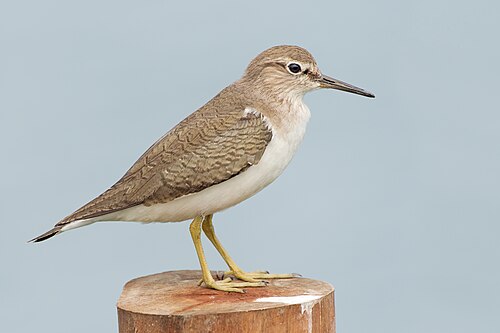
Common Sandpiper
Actitis hypoleucos

Ruff
Calidris pugnax

Little Stint
Calidris minuta

White-headed Lapwing
Vanellus albiceps

Water Thick-knee
Burhinus vermiculatus

Black-winged Stilt
Himantopus himantopus

Spur-winged Lapwing
Vanellus spinosus

African Skimmer
Rynchops flavirostris

Crowned Lapwing
Vanellus coronatus

Collared Pratincole
Glareola pratincola
📅 Monthly Probability
Fewer than 5 records of Marsh Sandpiper at Selous Game Reserve — not enough to chart months honestly.
☀️ When They're Spotted
Most active during daytime hours (6am–6pm) · across all parks (global)
Global Distribution
Where this species is recorded worldwide. Restricted to human observations from 2019 onwards — the same kind of record and the same period the probabilities on this page are built from, so collar-tracking studies, camera-trap arrays and museum specimens are excluded. Around Santa Rosa that removes 5,924 GPS fixes from a handful of tagged jaguars.
where this species is recorded (GBIF density — it tracks where observers go, not how likely a sighting is) · parks where it occurs — tap a pin for the sighting probability there