


Baltimore Oriole
Icterus galbula
- KingdomAnimalia (Animals)
- PhylumChordata (Cordats)
- ClassAves (Aus)
- OrderPasseriformes
- FamilyIcteridae (Ictèrids)
- GenusIcterus (New World Orioles)
- SpeciesIcterus galbula (Baltimore Oriole)
The Baltimore oriole (Icterus galbula) is a small icterid blackbird common in eastern North America as a migratory breeding bird. It received its common name from the resemblance of the male's colors to those on the coat-of-arms of 17th-century Lord Baltimore. Observations of interbreeding between the Baltimore oriole and the western Bullock's oriole Icterus bullockii, led to both being classified as a single species, called the northern oriole, from 1973 to 1995. Research by James Rising, a professor of zoology at the University of Toronto, and others showed that the two birds actually did not interbreed significantly. The Baltimore oriole is the state bird of Maryland, and the namesake and mascot for the Baltimore Orioles baseball team. Wikipedia →
Closest Relatives at Voyageurs National Park

Red-winged Blackbird
Agelaius phoeniceus
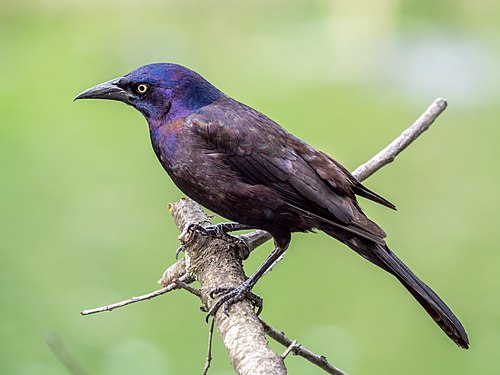
Common Grackle
Quiscalus quiscula

Yellow-headed Blackbird
Xanthocephalus xanthocephalus

Brown-headed Cowbird
Molothrus ater

Rusty Blackbird
Euphagus carolinus

Blue Jay
Cyanocitta cristata

Yellow-rumped Warbler
Setophaga coronata

American Crow
Corvus brachyrhynchos

Black-capped Chickadee
Poecile atricapillus

Red-eyed Vireo
Vireo olivaceus

White-throated Sparrow
Zonotrichia albicollis

American Robin
Turdus migratorius
📅 Monthly Probability
Fewer than 5 records of Baltimore Oriole at Voyageurs National Park — not enough to chart months honestly.
☀️ When They're Spotted
Most active during daytime hours (6am–6pm) · across all parks (global)
Global Distribution
Where this species is recorded worldwide. Restricted to human observations from 2019 onwards — the same kind of record and the same period the probabilities on this page are built from, so collar-tracking studies, camera-trap arrays and museum specimens are excluded. Around Santa Rosa that removes 5,924 GPS fixes from a handful of tagged jaguars.
where this species is recorded (GBIF density — it tracks where observers go, not how likely a sighting is) · parks where it occurs — tap a pin for the sighting probability there