Chirripó National Park
🇨🇷 Costa Rica
🐦 Highland Hummingbird HavenChirripó protects Costa Rica's highest peak — Cerro Chirripó at 3,820 m (12,530 ft) — and the country's only páramo ecosystem, an alpine tundra of shrubs and grasses found nowhere else in Central America at this latitude. The park shelters the largest population of Baird's tapir in the country, along with pumas, jaguars, and over 400 bird species including the Resplendent Quetzal, Fiery-throated Hummingbird, and the endemic Volcano Junco.
9.540° N 83.493° W
Wildlife
⭐ Iconic Species
 ★
★ Resplendent Quetzal
Pharomachrus mocinno
 ★
★ Scarlet-rumped Tanager
Ramphocelus passerinii
 ★
★ Violet Sabrewing
Campylopterus hemileucurus
 ★
★ Central American White-faced Capuchin
Cebus imitator
📊 Most Spotted

Rufous-tailed Hummingbird
Amazilia tzacatl

Silver-throated Tanager
Tangara icterocephala

Golden-hooded Tanager
Stilpnia larvata

Blue-gray Tanager
Thraupis episcopus

Clay-colored Thrush
Turdus grayi

Palm Tanager
Thraupis palmarum

Buff-throated Saltator
Saltator maximus

Great Kiskadee
Pitangus sulphuratus

Speckled Tanager
Ixothraupis guttata

Bananaquit
Coereba flaveola
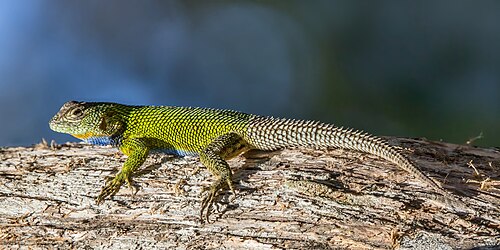
Emerald Swift
Sceloporus malachiticus

Gray-headed Chachalaca
Ortalis cinereiceps
⭐ Iconic Species
📊 Most Spotted

White-nosed Coati
Nasua narica

Red-tailed Squirrel
Sciurus granatensis

Variegated Squirrel
Sciurus variegatoides

Central American Agouti
Dasyprocta punctata

Sumichrast's Vesper Rat
Nyctomys sumichrasti

Spotted Paca
Cuniculus paca

Central American Spider Monkey
Ateles geoffroyi

Gabb's Cottontail
Sylvilagus gabbi

Greater Broad-nosed Bat
Platyrrhinus vittatus

Mexican Hairy Dwarf Porcupine
Sphiggurus mexicanus

Mexican Deer Mouse
Peromyscus mexicanus

Baird's Tapir
Tapirella bairdii
⭐ Iconic Species
★ Resplendent Quetzal
Pharomachrus mocinno
★ Scarlet-rumped Tanager
Ramphocelus passerinii
★ Violet Sabrewing
Campylopterus hemileucurus
📊 Most Spotted
Rufous-tailed Hummingbird
Amazilia tzacatl
Silver-throated Tanager
Tangara icterocephala
Golden-hooded Tanager
Stilpnia larvata
Blue-gray Tanager
Thraupis episcopus
Clay-colored Thrush
Turdus grayi
Palm Tanager
Thraupis palmarum
Buff-throated Saltator
Saltator maximus
Great Kiskadee
Pitangus sulphuratus
Speckled Tanager
Ixothraupis guttata
Bananaquit
Coereba flaveola
Gray-headed Chachalaca
Ortalis cinereiceps

Snowy-bellied Hummingbird
Saucerottia edward
📊 Most Spotted
Emerald Swift
Sceloporus malachiticus

Many-scaled Anole
Anolis polylepis

Side-striped palm pit viper
Bothriechis lateralis

Humble Anole
Anolis humilis

Slender Anole
Anolis woodi
South American Milksnake
Lampropeltis micropholis

Costa Rica Montane Pitviper
Cerrophidion sasai

Black-tailed Worm Snake
Geophis talamancae

Blotched Palm-pitviper
Bothriechis supraciliaris

Fire-bellied Snake
Erythrolamprus epinephalus

Montane Alligator Lizard
Abronia monticola

Black-speckled Palm Pit Viper
Bothriechis nigroviridis
📊 Most Spotted

Emerald Glass Frog
Espadarana prosoblepon

Warszewitsch's Frog
Lithobates warszewitschii

Isla Bonita Robber Frog
Craugastor crassidigitus

Fitzinger's Robber Frog
Craugastor fitzingeri

Pygmy Rain Frog
Pristimantis ridens

Masked Tree Frog
Smilisca phaeota

Giant Marine Toad
Rhinella horribilis

Pugnosed Tree Frog
Smilisca sila

Golden-groined Robber Frog
Pristimantis cruentus

Varagua Caecilian
Gymnopis multiplicata
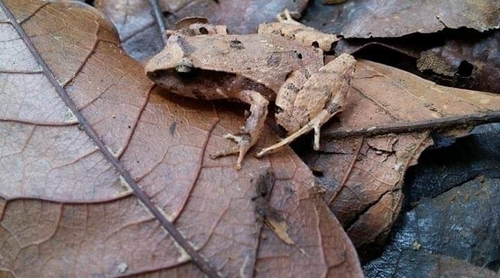
Cerro Utyum Robber Frog
Craugastor podiciferus

Savage's Worm Salamander
Oedipina savagei
Animal Events
Migrant Raptor Passage
Broad-winged Hawks stream overhead in great spiraling kettles, riding thermals along the mountain spine on their long migration. Hundreds can wheel together in a single swirling column before peeling off to glide south.

Resplendent Quetzal Breeding Season
During the breeding season the male Resplendent Quetzal grows tail streamers nearly a meter long, flashing emerald and crimson as it courts and defends a nest hollowed into a rotting highland tree. Collared Trogons breed alongside it, their steady calls threading through the same cloud forest canopy.

Highland Hummingbird Peak
When the highland shrubs and epiphytes bloom, hummingbirds swarm the flowers in a shimmering rush of activity. The Violet Sabrewing, one of Costa Rica's largest hummingbirds, hovers in deep purple iridescence while the bold Rufous-tailed Hummingbird darts and squabbles over every nectar-rich perch.
Sighting Calendar
Chance of spotting each species, month by month
Sighting Zones
Warm areas are where all species together are recorded most, so they track where people go as much as where animals are. For one species, see the map on its own page.
Where Wildlife Score
How good is this park for seeing wildlife?Biodiversity
Very goodHow rich is the wildlife?
Sighting
GoodHow likely to see animals?
Quick answers
What animals can you see in Chirripó National Park?
The most likely sightings are Scarlet-rumped Tanager (seen by 60–70% of wildlife watchers), Rufous-tailed Hummingbird (seen by 60–70% of wildlife watchers), Silver-throated Tanager (seen by 60–70% of wildlife watchers), Golden-hooded Tanager (seen by 60–70% of wildlife watchers), Blue-gray Tanager (seen by 50–60% of wildlife watchers) — among 1082 recorded vertebrate species, based on citizen-science data from GBIF.
When is the best time to visit Chirripó National Park for wildlife?
June has the highest combined sighting rate for the park's top species in our month-by-month GBIF data. The full sighting calendar on this page shows each species' best months.
Can you see Resplendent Quetzal in Chirripó National Park?
It's possible but not guaranteed: about 4% of wildlife watchers report a Resplendent Quetzal sighting in Chirripó National Park, based on 77 days of visitor records from GBIF citizen-science data. Sightings take luck and time in the field.
Can you see Scarlet-rumped Tanager in Chirripó National Park?
Yes — about 66% of wildlife watchers report a Scarlet-rumped Tanager sighting in Chirripó National Park, based on 1,273 days of visitor records from GBIF citizen-science data.
Can you see Violet Sabrewing in Chirripó National Park?
Yes — about 34% of wildlife watchers report a Violet Sabrewing sighting in Chirripó National Park, based on 649 days of visitor records from GBIF citizen-science data.
Can you see Central American White-faced Capuchin in Chirripó National Park?
It's possible but not guaranteed: about 9% of wildlife watchers report a Central American White-faced Capuchin sighting in Chirripó National Park, based on 18 days of visitor records from GBIF citizen-science data. Sightings take luck and time in the field.
Explore Other Parks
 📍 32 km 🐦 Fiery-throated Hummingbirds in Rainy Highlands
 Tapantí-Macizo de la Muerte National Park
 📍 37 km 🐦 Quetzals and Talamanca Hummingbirds
 Los Quetzales National Park
 📍 54 km 🐋 Humpback Whales Off the Whale's Tail
 Marino Ballena National Park
 📍 63 km 🐦 Highland Hummingbirds & Quetzals