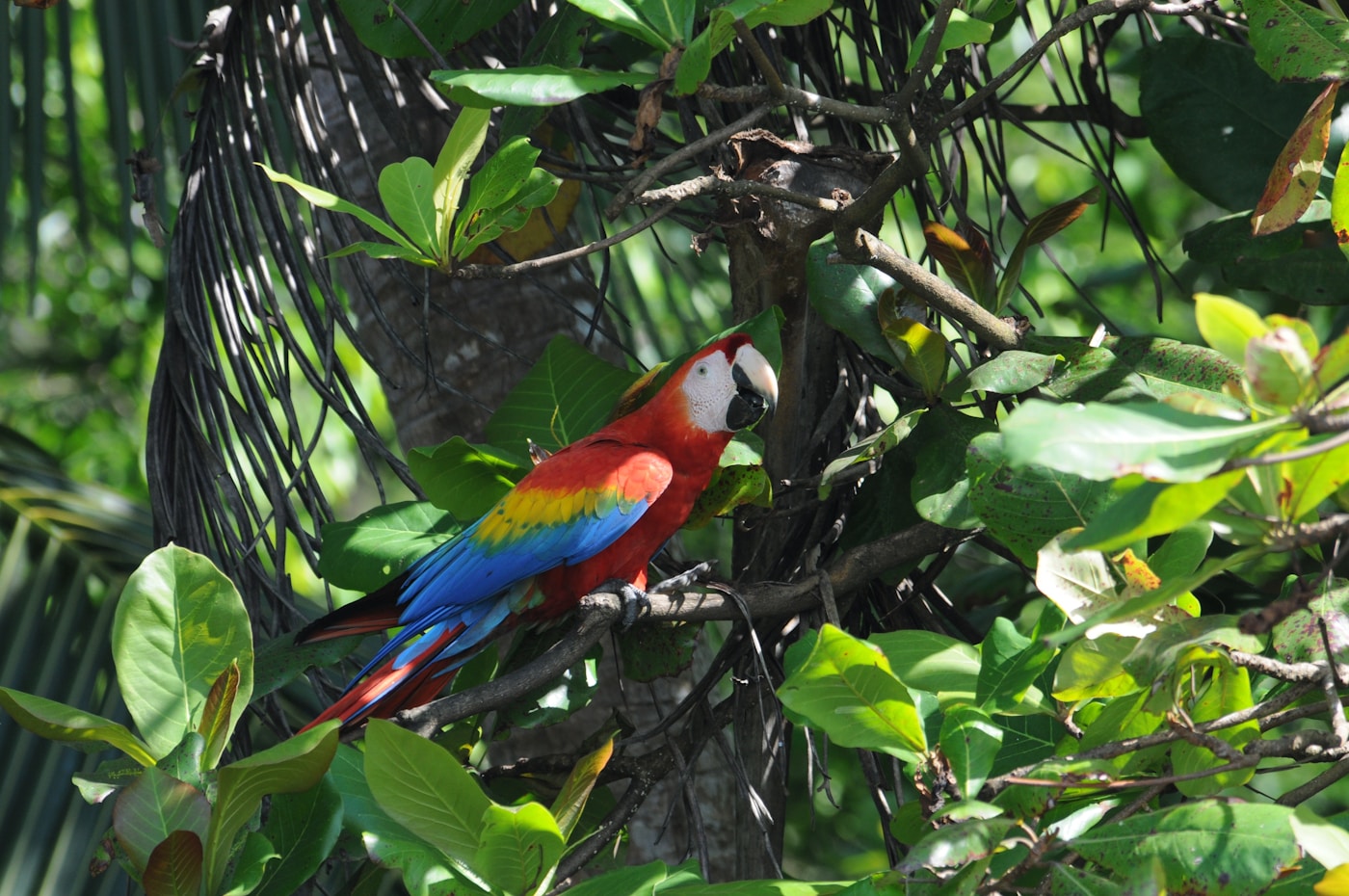
Manuel Antonio National Park
🇨🇷 Costa Rica
🐒 Monkeys & Sloths in the TreesManuel Antonio is Costa Rica’s most visited national park and one of the smallest, packing extraordinary biodiversity into just 1,983 hectares of tropical forest and pristine white-sand beaches. Home to the endangered Central American squirrel monkey (Saimiri oerstedii) — found almost nowhere else on Earth — along with three-toed sloths, white-faced capuchins, and green iguanas visible on virtually every visit.
8.890° N 84.375° W
Wildlife
⭐ Iconic Species
 ★
★ Central American Squirrel Monkey
Saimiri oerstedii
 ★
★ Central American White-faced Capuchin
Cebus imitator
 ★
★ Brown-throated Sloth
Bradypus variegatus
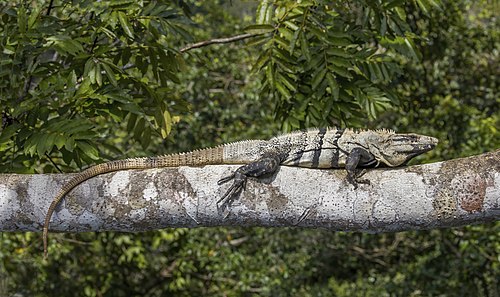 ★
★ Black Spiny-tailed Iguana
Ctenosaura similis
📊 Most Spotted

Common Basilisk
Basiliscus basiliscus

Black Vulture
Coragyps atratus

Mantled Howler Monkey
Alouatta palliata

Central American Agouti
Dasyprocta punctata

Hoffmann's Two-toed Sloth
Choloepus hoffmanni

Great Kiskadee
Pitangus sulphuratus

Helmeted Iguana
Corytophanes cristatus

Great-tailed Grackle
Quiscalus mexicanus

White-tailed Deer
Odocoileus virginianus

Turkey Vulture
Cathartes aura

Tropical Kingbird
Tyrannus melancholicus

Scarlet-rumped Tanager
Ramphocelus passerinii
⭐ Iconic Species
★ Central American Squirrel Monkey
Saimiri oerstedii
★ Central American White-faced Capuchin
Cebus imitator
★ Brown-throated Sloth
Bradypus variegatus
📊 Most Spotted
Mantled Howler Monkey
Alouatta palliata
Central American Agouti
Dasyprocta punctata
Hoffmann's Two-toed Sloth
Choloepus hoffmanni
White-tailed Deer
Odocoileus virginianus

White-nosed Coati
Nasua narica

Common tent-making Bat
Uroderma bilobatum

Common Raccoon
Procyon lotor

Northern Tamandua
Tamandua mexicana

Proboscis Bat
Rhynchonycteris naso

Mexican Hairy Dwarf Porcupine
Sphiggurus mexicanus

Variegated Squirrel
Sciurus variegatoides

Collared Peccary
Pecari tajacu
📊 Most Spotted
Black Vulture
Coragyps atratus
Great Kiskadee
Pitangus sulphuratus
Great-tailed Grackle
Quiscalus mexicanus
Turkey Vulture
Cathartes aura
Tropical Kingbird
Tyrannus melancholicus
Scarlet-rumped Tanager
Ramphocelus passerinii

Magnificent Frigatebird
Fregata magnificens

Black-hooded Antshrike
Thamnophilus bridgesi

Red-crowned Woodpecker
Melanerpes rubricapillus

Chestnut-backed Antbird
Myrmeciza exsul

Brown Pelican
Pelecanus occidentalis

Palm Tanager
Thraupis palmarum
⭐ Iconic Species
📊 Most Spotted
Common Basilisk
Basiliscus basiliscus
Helmeted Iguana
Corytophanes cristatus

Fer-de-lance
Bothrops asper

Delicate Ameiva
Holcosus leptophrys

Green Iguana
Iguana iguana
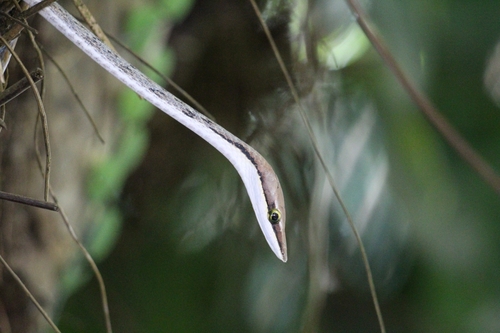
Köhler’s Vine Snake
Oxybelis koehleri

Many-scaled Anole
Anolis polylepis

Border Anole
Anolis limifrons

Neotropical Green Anole
Anolis biporcatus

White-throated Gecko
Gonatodes albogularis
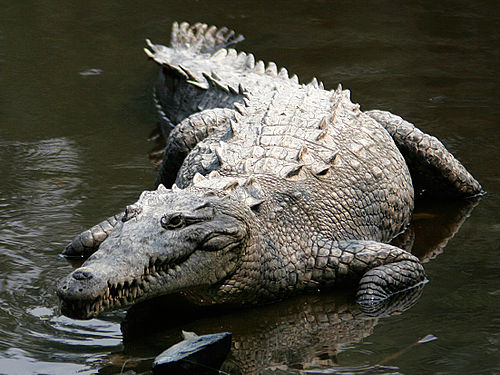
American Crocodile
Crocodylus acutus

Central American Boa
Boa imperator
📊 Most Spotted

Red-eyed Treefrog
Agalychnis callidryas

Rosenberg's Gladiator Frog
Boana rosenbergi

Masked Tree Frog
Smilisca phaeota

Savage's Thin-toed Frog
Leptodactylus savagei
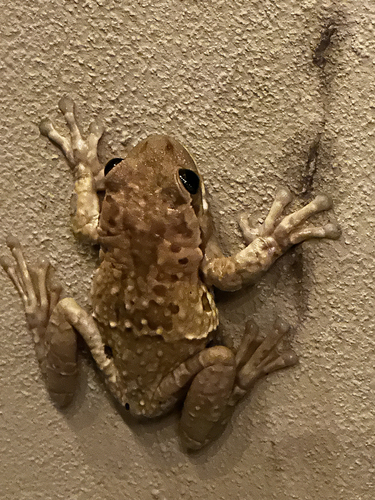
Milk Frog
Trachycephalus macrotis

Green and Black Dart-poison Frog
Dendrobates auratus

Giant Marine Toad
Rhinella horribilis

Harlequin Treefrog
Dendropsophus ebraccatus

Fitzinger's Robber Frog
Craugastor fitzingeri

Boulenger's Snouted Tree Frog
Scinax boulengeri

Rainforest Toad
Incilius aucoinae

Tink Frog
Diasporus diastema
Animal Events
Squirrel Monkey Troop Season
Endangered Central American squirrel monkeys, the park's flagship primate, sweep through the canopy in fast-moving, chattering troops as they forage for fruit and insects. Their frenetic feeding raids bring the year's best chance to watch these tiny, tangerine-backed monkeys up close.
Green Iguana Breeding Display
During the drier months male green iguanas flush into vivid orange and stake out basking perches, bobbing their heads in territorial display high in the canopy and along the trails. Common basilisks join the sun-warmed lineup, adding another dragon-like reptile to the show.
Rainy Season Frog Chorus
When the wet season fills the forest with pools, Rosenberg's gladiator frogs, masked treefrogs, and harlequin treefrogs erupt into deafening nighttime breeding choruses. Males call and wrestle for mates around flooded hollows, turning the dark forest into a pulsing wall of sound.
Sighting Calendar
Chance of spotting each species, month by month
* Manuel Antonio is closed every Tuesday for maintenance. Open Wednesday through Monday, 7:00 AM to 4:00 PM. Tickets must be purchased online in advance.
Sighting Zones
Warm areas are where all species together are recorded most, so they track where people go as much as where animals are. For one species, see the map on its own page.
Where Wildlife Score
How good is this park for seeing wildlife?Biodiversity
Very goodHow rich is the wildlife?
Sighting
ExcellentHow likely to see animals?
Quick answers
What animals can you see in Manuel Antonio National Park?
The most likely sightings are Black Spiny-tailed Iguana (seen by 90–100% of wildlife watchers), Central American White-faced Capuchin (seen by 90–100% of wildlife watchers), Brown-throated Sloth (seen by 80–90% of wildlife watchers), Common Basilisk (seen by 70–80% of wildlife watchers), Black Vulture (seen by 60–70% of wildlife watchers) — among 991 recorded vertebrate species, based on citizen-science data from GBIF.
When is the best time to visit Manuel Antonio National Park for wildlife?
February has the highest combined sighting rate for the park's top species in our month-by-month GBIF data. The full sighting calendar on this page shows each species' best months.
Can you see Central American Squirrel Monkey in Manuel Antonio National Park?
Yes — about 64% of wildlife watchers report a Central American Squirrel Monkey sighting in Manuel Antonio National Park, based on 284 days of visitor records from GBIF citizen-science data.
Can you see Central American White-faced Capuchin in Manuel Antonio National Park?
Yes — about 90% of wildlife watchers report a Central American White-faced Capuchin sighting in Manuel Antonio National Park, based on 940 days of visitor records from GBIF citizen-science data.
Can you see Brown-throated Sloth in Manuel Antonio National Park?
Yes — about 80% of wildlife watchers report a Brown-throated Sloth sighting in Manuel Antonio National Park, based on 557 days of visitor records from GBIF citizen-science data.
Can you see Black Spiny-tailed Iguana in Manuel Antonio National Park?
Yes — about 91% of wildlife watchers report a Black Spiny-tailed Iguana sighting in Manuel Antonio National Park, based on 982 days of visitor records from GBIF citizen-science data.