Cockscomb Basin Wildlife Sanctuary
🇧🇿 Belize
🐒 Jaguar and Howler Monkey BasinCockscomb was the first protected area in the world created for jaguars, and they are still here: recorded on about one visit in five, mostly as tracks on the trails at first light.
16.749° N 88.671° W
Wildlife
⭐ Iconic Species
 ★
★ Jaguar
Panthera onca
 ★
★ Mexican Black Howler Monkey
Alouatta pigra
 ★
★ Baird's Tapir
Tapirella bairdii
 ★
★ Keel-billed Toucan
Ramphastos sulfuratus
📊 Most Spotted

Spot-breasted Wren
Pheugopedius maculipectus

Great Kiskadee
Pitangus sulphuratus

Rufous-tailed Hummingbird
Amazilia tzacatl

Social Flycatcher
Myiozetetes similis

White-collared Manakin
Manacus candei

Brown Basilisk
Basiliscus vittatus

Melodious Blackbird
Dives dives
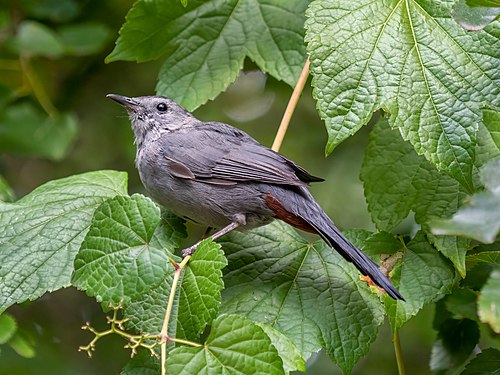
Gray Catbird
Dumetella carolinensis

Short-billed Pigeon
Patagioenas nigrirostris

Turkey Vulture
Cathartes aura

Black-headed Trogon
Trogon melanocephalus

White-breasted Wood-Wren
Henicorhina leucosticta
⭐ Iconic Species
★ Jaguar
Panthera onca
★ Mexican Black Howler Monkey
Alouatta pigra
★ Baird's Tapir
Tapirella bairdii
📊 Most Spotted

Central American Red Brocket
Mazama temama

White-nosed Coati
Nasua narica

Kinkajou
Potos flavus

Deppe's Squirrel
Sciurus deppei

Gray Fox
Urocyon cinereoargenteus

Collared Peccary
Pecari tajacu

Northern Tamandua
Tamandua mexicana

Ocelot
Leopardus pardalis

Greater Spear-nosed Bat
Phyllostomus hastatus

Mexican Mouse Opossum
Marmosa mexicana

Desmarest's Spiny Pocket Mouse
Heteromys desmarestianus

West Indian Manatee
Trichechus manatus
⭐ Iconic Species
📊 Most Spotted
Spot-breasted Wren
Pheugopedius maculipectus
Great Kiskadee
Pitangus sulphuratus
Rufous-tailed Hummingbird
Amazilia tzacatl
Social Flycatcher
Myiozetetes similis
White-collared Manakin
Manacus candei
Melodious Blackbird
Dives dives
Gray Catbird
Dumetella carolinensis
Short-billed Pigeon
Patagioenas nigrirostris
Turkey Vulture
Cathartes aura
Black-headed Trogon
Trogon melanocephalus
White-breasted Wood-Wren
Henicorhina leucosticta

Clay-colored Thrush
Turdus grayi
📊 Most Spotted
Brown Basilisk
Basiliscus vittatus

Middle American Ameiva
Holcosus festivus

Red Coffee Snake
Ninia sebae

Yucatán Banded Gecko
Coleonyx elegans

Helmeted Iguana
Corytophanes cristatus

Belize Crocodile
Crocodylus moreletii

White-lipped Mud Turtle
Kinosternon leucostomum

Blunthead Tree Snake
Imantodes cenchoa

Hernandez’s Helmeted Basilisk
Corytophanes hernandesii

Central American Boa
Boa imperator

Mesoamerican Slider
Trachemys venusta

Cloudy Snail-eating Snake
Sibon nebulatus
📊 Most Spotted

Central American Gulf Coast Toad
Incilius valliceps

Giant Marine Toad
Rhinella horribilis

Mexican Smilisca
Smilisca baudinii

Yellow Treefrog
Dendropsophus microcephalus

Long-Legged Streamfrog
Craugastor sabrinus

Mexican Mushroomtongue Salamander
Bolitoglossa mexicana

Vaillant's Frog
Lithobates vaillanti
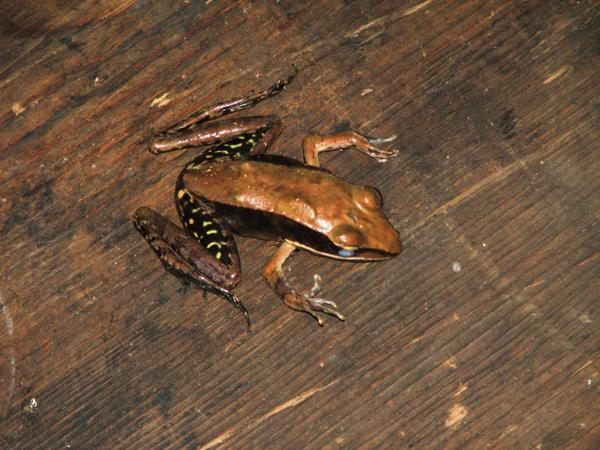
Julian's Frog
Lithobates juliani

Stauffer's Tree Frog
Scinax staufferi

Rufescent Salamander
Bolitoglossa rufescens

Elegant Narrow-mouthed Toad
Gastrophryne elegans

Harlequin Treefrog
Dendropsophus ebraccatus
Animal Events
Jaguars and Tapirs on the Trails
Jaguars and Baird's tapir leave tracks along the trails and river crossings, at their most recorded of the year.
Howlers and Coatis in the Dry Months
Yucatán black howler troops call across the basin at dawn and coati bands work the forest floor.
Frogs and Toads in the Rains
Cane toads and Mexican tree frogs breed in every pool and call through the night.
Sighting Calendar
Chance of spotting each species, month by month
Sighting Zones
Warm areas are where all species together are recorded most, so they track where people go as much as where animals are. For one species, see the map on its own page.
Where Wildlife Score
How good is this park for seeing wildlife?Biodiversity
GoodHow rich is the wildlife?
Sighting
Very goodHow likely to see animals?
Quick answers
What animals can you see in Cockscomb Basin Wildlife Sanctuary?
The most likely sightings are Spot-breasted Wren (seen by 70–80% of wildlife watchers), Great Kiskadee (seen by 60–70% of wildlife watchers), Rufous-tailed Hummingbird (seen by 60–70% of wildlife watchers), Social Flycatcher (seen by 60–70% of wildlife watchers), White-collared Manakin (seen by 50–60% of wildlife watchers) — among 860 recorded vertebrate species, based on citizen-science data from GBIF.
When is the best time to visit Cockscomb Basin Wildlife Sanctuary for wildlife?
February has the highest combined sighting rate for the park's top species in our month-by-month GBIF data. The full sighting calendar on this page shows each species' best months.
Can you see Jaguar in Cockscomb Basin Wildlife Sanctuary?
It's possible but not guaranteed: about 14% of wildlife watchers report a Jaguar sighting in Cockscomb Basin Wildlife Sanctuary, based on 6 days of visitor records from GBIF citizen-science data. Sightings take luck and time in the field.
Can you see Mexican Black Howler Monkey in Cockscomb Basin Wildlife Sanctuary?
Yes — about 30% of wildlife watchers report a Mexican Black Howler Monkey sighting in Cockscomb Basin Wildlife Sanctuary, based on 9 days of visitor records from GBIF citizen-science data.
Can you see Baird's Tapir in Cockscomb Basin Wildlife Sanctuary?
Yes — about 18% of wildlife watchers report a Baird's Tapir sighting in Cockscomb Basin Wildlife Sanctuary, based on 8 days of visitor records from GBIF citizen-science data.
Can you see Keel-billed Toucan in Cockscomb Basin Wildlife Sanctuary?
Yes — about 48% of wildlife watchers report a Keel-billed Toucan sighting in Cockscomb Basin Wildlife Sanctuary, based on 531 days of visitor records from GBIF citizen-science data.


