Biotopo Cerro Cahuí
🇬🇹 Guatemala
🦎 Brown Basilisks Skitter Across the LakeshoreBiotopo Cerro Cahuí is a protected tropical rainforest in Petén, Guatemala. The park sits on limestone hills covered in dense evergreen canopy, with winding streams that cut through palm‑fringed valleys. Its limestone outcrops and flooded lowlands give a mosaic of forest types that differ from nearby rainforests of the region.
17.003° N 89.719° W
Wildlife
⭐ Iconic Species
 ★
★ Keel-billed Toucan
Ramphastos sulfuratus
 ★
★ Belize Crocodile
Crocodylus moreletii
 ★
★ Brown Basilisk
Basiliscus vittatus
 ★
★ Yucatán Squirrel
Sciurus yucatanensis
📊 Most Spotted

Magnolia Warbler
Setophaga magnolia

Brown Jay
Psilorhinus morio

Black-and-white Warbler
Mniotilta varia

Social Flycatcher
Myiozetetes similis

Melodious Blackbird
Dives dives

Central American Gulf Coast Toad
Incilius valliceps

Hooded Warbler
Setophaga citrina

American Redstart
Setophaga ruticilla

Ivory-billed Woodcreeper
Xiphorhynchus flavigaster

Spot-breasted Wren
Pheugopedius maculipectus

Great Crested Flycatcher
Myiarchus crinitus

Summer Tanager
Piranga rubra
⭐ Iconic Species
📊 Most Spotted

Common Opossum
Didelphis marsupialis

Jamaican Fruit-eating Bat
Artibeus jamaicensis

Mexican Hairy Dwarf Porcupine
Sphiggurus mexicanus

Derby's Woolly Opossum
Caluromys derbianus

White-tailed Deer
Odocoileus virginianus

Central American Agouti
Dasyprocta punctata

Proboscis Bat
Rhynchonycteris naso
⭐ Iconic Species
📊 Most Spotted
Magnolia Warbler
Setophaga magnolia
Brown Jay
Psilorhinus morio
Black-and-white Warbler
Mniotilta varia
Social Flycatcher
Myiozetetes similis
Melodious Blackbird
Dives dives
Hooded Warbler
Setophaga citrina
American Redstart
Setophaga ruticilla
Ivory-billed Woodcreeper
Xiphorhynchus flavigaster
Spot-breasted Wren
Pheugopedius maculipectus
Great Crested Flycatcher
Myiarchus crinitus
Summer Tanager
Piranga rubra

White-eyed Vireo
Vireo griseus
⭐ Iconic Species
📊 Most Spotted
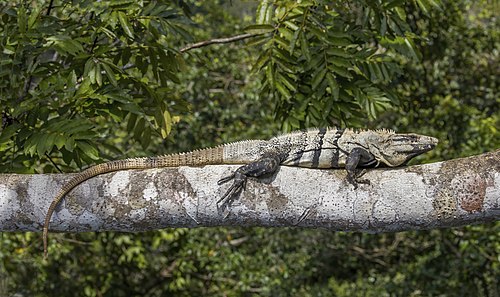
Black Spiny-tailed Iguana
Ctenosaura similis

Common House Gecko
Hemidactylus frenatus

Greater Scaly Anole
Anolis tropidonotus

Mexican Parrot Snake
Leptophis mexicanus

Speckled Racer
Drymobius margaritiferus

Central American Boa
Boa imperator

White-lipped Mud Turtle
Kinosternon leucostomum

Ghost Anole
Anolis lemurinus

Turniptail Gecko
Thecadactylus rapicauda

Yucatán Banded Gecko
Coleonyx elegans

Rainbow Ameiva
Holcosus undulatus

Brown Anole
Anolis sagrei
📊 Most Spotted
Central American Gulf Coast Toad
Incilius valliceps

Giant Marine Toad
Rhinella horribilis

Mexican Smilisca
Smilisca baudinii

Yucatán Casque-headed Tree Frog
Triprion petasatus

Stauffer's Tree Frog
Scinax staufferi

Mexican Burrowing Toad
Rhinophrynus dorsalis

Sheep Frog
Hypopachus variolosus

Browns' Frog
Lithobates brownorum

Painted Tree Frog
Tlalocohyla picta
Animal Events
Morelet's Crocodile Season
The park's namesake crocodile basks along the Lake Petén Itzá shore in the late dry season and starts nesting with the first rains — sightings peak in .
Migratory Warbler Wintering
Neotropical migrant songbirds winter in and pass through the lakeside forest — the reason the biotope is documented as a birdwatching destination; warblers dominate the sighting data in migration and winter months.
Rainy-Season Frog Chorus
The first rains trigger explosive breeding choruses of toads and treefrogs in the biotope's lowland forest and lake margin — amphibian sightings in the data.
Sighting Calendar
Chance of spotting each species, month by month
Sighting Zones
Warm areas are where all species together are recorded most, so they track where people go as much as where animals are. For one species, see the map on its own page.
Where Wildlife Score
How good is this park for seeing wildlife?Biodiversity
GoodHow rich is the wildlife?
Sighting
GoodHow likely to see animals?
Quick answers
What animals can you see in Biotopo Cerro Cahuí?
The most likely sightings are Magnolia Warbler (seen by 50–60% of wildlife watchers), Brown Jay (seen by 40–50% of wildlife watchers), Black-and-white Warbler (seen by 40–50% of wildlife watchers), Brown Basilisk (seen by 40–50% of wildlife watchers), Social Flycatcher (seen by 40–50% of wildlife watchers) — among 749 recorded vertebrate species, based on citizen-science data from GBIF.
When is the best time to visit Biotopo Cerro Cahuí for wildlife?
December has the highest combined sighting rate for the park's top species in our month-by-month GBIF data. The full sighting calendar on this page shows each species' best months.
Can you see Keel-billed Toucan in Biotopo Cerro Cahuí?
Yes — about 33% of wildlife watchers report a Keel-billed Toucan sighting in Biotopo Cerro Cahuí, based on 49 days of visitor records from GBIF citizen-science data.
Can you see Belize Crocodile in Biotopo Cerro Cahuí?
It's possible but not guaranteed: about 7% of wildlife watchers report a Belize Crocodile sighting in Biotopo Cerro Cahuí, based on 1 days of visitor records from GBIF citizen-science data. Sightings take luck and time in the field.
Can you see Brown Basilisk in Biotopo Cerro Cahuí?
Yes — about 45% of wildlife watchers report a Brown Basilisk sighting in Biotopo Cerro Cahuí, based on 21 days of visitor records from GBIF citizen-science data.
Can you see Yucatán Squirrel in Biotopo Cerro Cahuí?
Yes — about 32% of wildlife watchers report a Yucatán Squirrel sighting in Biotopo Cerro Cahuí, based on 11 days of visitor records from GBIF citizen-science data.
_on_foxtail_palm_(Wodyetia_bifurcata)_Cayo.jpg?width=1920)


