Celaque National Park
🇭🇳 Honduras
🐦 Bushy-crested Jay Cloud ForestCelaque protects Honduras's largest cloud forest, climbing to the highest point in the country. Bushy-crested jays follow visitors along the trails — they are recorded on almost half of all visits — and brown-backed solitaires sing from the canopy.
14.539° N 88.712° W
Wildlife
⭐ Iconic Species
 ★
★ Bushy-crested Jay
Cyanocorax melanocyaneus
 ★
★ Brown-backed Solitaire
Myadestes occidentalis
 ★
★ Lesson's Motmot
Momotus lessonii
 ★
★ Golden-cheeked Warbler
Setophaga chrysoparia
📊 Most Spotted

Melodious Blackbird
Dives dives

Gualaco Scaly Anole
Anolis mccraniei

Great-tailed Grackle
Quiscalus mexicanus

Clay-colored Thrush
Turdus grayi

Southern House Wren
Troglodytes musculus

Acorn Woodpecker
Melanerpes formicivorus

Black Vulture
Coragyps atratus

Wilson's Warbler
Cardellina pusilla

Rose-bellied Lizard
Sceloporus variabilis

Golden-fronted Woodpecker
Melanerpes aurifrons

Black-throated Green Warbler
Setophaga virens

Azure-crowned Hummingbird
Saucerottia cyanocephala
📊 Most Spotted

Deppe's Squirrel
Sciurus deppei

Jamaican Fruit-eating Bat
Artibeus jamaicensis

Big-eared Woolly Bat
Chrotopterus auritus

hairy-legged myotis
Myotis keaysi

wrinkle-faced bat
Centurio senex

Jaguarundi
Puma yagouaroundi

Vampire Bat
Desmodus rotundus

Cacomistle
Bassariscus sumichrasti

big naked-backed bat
Pteronotus gymnonotus

Variegated Squirrel
Sciurus variegatoides

Western red bat
Lasiurus frantzii

Geoffroy's tailless bat
Anoura geoffroyi
⭐ Iconic Species
★ Bushy-crested Jay
Cyanocorax melanocyaneus
★ Brown-backed Solitaire
Myadestes occidentalis
★ Lesson's Motmot
Momotus lessonii
★ Golden-cheeked Warbler
Setophaga chrysoparia
📊 Most Spotted
Melodious Blackbird
Dives dives
Great-tailed Grackle
Quiscalus mexicanus
Clay-colored Thrush
Turdus grayi
Southern House Wren
Troglodytes musculus
Acorn Woodpecker
Melanerpes formicivorus
Black Vulture
Coragyps atratus
Wilson's Warbler
Cardellina pusilla
Golden-fronted Woodpecker
Melanerpes aurifrons
Black-throated Green Warbler
Setophaga virens
Azure-crowned Hummingbird
Saucerottia cyanocephala

Black-headed Saltator
Saltator atriceps

Slate-throated Redstart
Myioborus miniatus
📊 Most Spotted
Gualaco Scaly Anole
Anolis mccraniei
Rose-bellied Lizard
Sceloporus variabilis
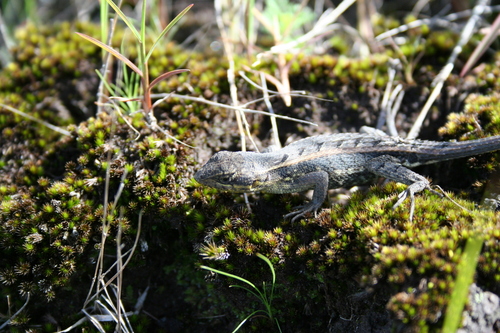
Dwarf Spiny Lizard
Sceloporus squamosus

Central American Coral Snake
Micrurus nigrocinctus

Brown Basilisk
Basiliscus vittatus
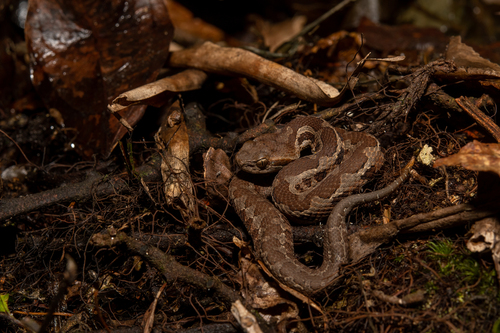
Wilson's Montane Pitviper
Cerrophidion wilsoni

Central American Rattlesnake
Crotalus simus

Julio’s Casquehead Iguana
Laemanctus julioi

Variegated False Coral Snake
Pliocercus elapoides

MonteCristo Arboreal Alligator Lizard
Abronia montecristoi
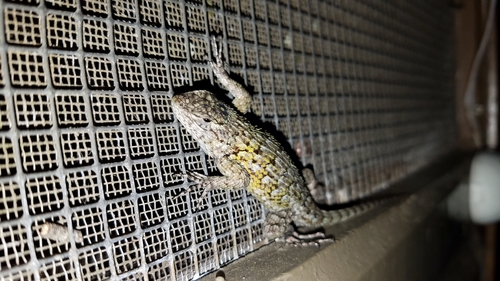
Honduran Emerald Spiny Lizard
Sceloporus hondurensis

Blood Snake
Stenorrhina freminvillei
📊 Most Spotted

Porter's Toad
Incilius porteri

Highland Frog
Lithobates maculatus

Black-eyed Tree Frog
Agalychnis moreletii

Mexican Smilisca
Smilisca baudinii

Central American Gulf Coast Toad
Incilius valliceps
Jalapa toad
Incilius ibarrai

Celaque Mushroomtongue Salamander
Bolitoglossa celaque

Sheep Frog
Hypopachus variolosus

Giant Marine Toad
Rhinella horribilis

Dry Forest Toad
Incilius coccifer

Giant Palm Salamander
Bolitoglossa dofleini

Copan Stream Frog
Ptychohyla hypomykter
Animal Events
Golden-cheeked Warblers
Golden-cheeked warblers winter in these oak and pine forests, joined by chestnut-capped warblers.
Highland Birds Sing
Brown-backed solitaires and bushy-crested jays are most vocal and most easily found in the drier months.
Coral Snakes and Lizards Emerge
Central American coral snakes and rose-bellied lizards are found far more often when the forest floor dries out.
Sighting Calendar
Chance of spotting each species, month by month
Sighting Zones
Warm areas are where all species together are recorded most, so they track where people go as much as where animals are. For one species, see the map on its own page.
Where Wildlife Score
How good is this park for seeing wildlife?Biodiversity
ExcellentHow rich is the wildlife?
Sighting
GoodHow likely to see animals?
Quick answers
What animals can you see in Celaque National Park?
The most likely sightings are Bushy-crested Jay (seen by 70–80% of wildlife watchers), Melodious Blackbird (seen by 50–60% of wildlife watchers), Gualaco Scaly Anole (seen by 50–60% of wildlife watchers), Great-tailed Grackle (seen by 40–50% of wildlife watchers), Clay-colored Thrush (seen by 40–50% of wildlife watchers) — among 764 recorded vertebrate species, based on citizen-science data from GBIF.
When is the best time to visit Celaque National Park for wildlife?
May has the highest combined sighting rate for the park's top species in our month-by-month GBIF data. The full sighting calendar on this page shows each species' best months.
Can you see Bushy-crested Jay in Celaque National Park?
Yes — about 70% of wildlife watchers report a Bushy-crested Jay sighting in Celaque National Park, based on 96 days of visitor records from GBIF citizen-science data.
Can you see Brown-backed Solitaire in Celaque National Park?
Yes — about 42% of wildlife watchers report a Brown-backed Solitaire sighting in Celaque National Park, based on 58 days of visitor records from GBIF citizen-science data.
Can you see Lesson's Motmot in Celaque National Park?
Yes — about 24% of wildlife watchers report a Lesson's Motmot sighting in Celaque National Park, based on 33 days of visitor records from GBIF citizen-science data.
Can you see Golden-cheeked Warbler in Celaque National Park?
It's possible but not guaranteed: about 13% of wildlife watchers report a Golden-cheeked Warbler sighting in Celaque National Park, based on 18 days of visitor records from GBIF citizen-science data. Sightings take luck and time in the field.


