Cerro Azul Meámbar National Park
🇭🇳 Honduras
🐦 Motmot Cloud ForestPANACAM sits above Lago de Yojoa, where the forest is close enough to the lodge trails that the wildlife comes to you. Agoutis and white-nosed coatis are recorded on about half of all visits, and keel-billed toucans and rufous-tailed hummingbirds are constants around the clearings.
14.841° N 87.891° W
Wildlife
⭐ Iconic Species
 ★
★ Keel-billed Toucan
Ramphastos sulfuratus
 ★
★ Lesson's Motmot
Momotus lessonii
 ★
★ Keel-billed Motmot
Electron carinatum
 ★
★ White-nosed Coati
Nasua narica
📊 Most Spotted

Rufous-tailed Hummingbird
Amazilia tzacatl

Clay-colored Thrush
Turdus grayi

Brown Jay
Psilorhinus morio

Golden-fronted Woodpecker
Melanerpes aurifrons

Melodious Blackbird
Dives dives

Black Vulture
Coragyps atratus

Montezuma Oropendola
Psarocolius montezuma

Great-tailed Grackle
Quiscalus mexicanus

Social Flycatcher
Myiozetetes similis

Great Kiskadee
Pitangus sulphuratus

Turkey Vulture
Cathartes aura

Yellow-throated Euphonia
Euphonia hirundinacea
⭐ Iconic Species
📊 Most Spotted

Variegated Squirrel
Sciurus variegatoides

Central American Agouti
Dasyprocta punctata

Kinkajou
Potos flavus

Common Opossum
Didelphis marsupialis

Deppe's Squirrel
Sciurus deppei

Common Hog-nosed Skunk
Conepatus leuconotus

Derby's Woolly Opossum
Caluromys derbianus

Proboscis Bat
Rhynchonycteris naso

Big-eared Climbing Rat
Ototylomys phyllotis

Sumichrast's Vesper Rat
Nyctomys sumichrasti

Common Raccoon
Procyon lotor

Mexican Hairy Dwarf Porcupine
Sphiggurus mexicanus
⭐ Iconic Species
★ Keel-billed Toucan
Ramphastos sulfuratus
★ Lesson's Motmot
Momotus lessonii
★ Keel-billed Motmot
Electron carinatum
📊 Most Spotted
Rufous-tailed Hummingbird
Amazilia tzacatl
Clay-colored Thrush
Turdus grayi
Brown Jay
Psilorhinus morio
Golden-fronted Woodpecker
Melanerpes aurifrons
Melodious Blackbird
Dives dives
Black Vulture
Coragyps atratus
Montezuma Oropendola
Psarocolius montezuma
Great-tailed Grackle
Quiscalus mexicanus
Social Flycatcher
Myiozetetes similis
Great Kiskadee
Pitangus sulphuratus
Turkey Vulture
Cathartes aura
Yellow-throated Euphonia
Euphonia hirundinacea
📊 Most Spotted

Middle American Ameiva
Holcosus festivus

Brown Basilisk
Basiliscus vittatus

Ghost Anole
Anolis lemurinus

Rose-bellied Lizard
Sceloporus variabilis

Yellow-spotted Night Lizard
Lepidophyma flavimaculatum

Common House Gecko
Hemidactylus frenatus

Variable Coralsnake
Micrurus diastema

Turniptail Gecko
Thecadactylus rapicauda

Continental Least Gecko
Sphaerodactylus continentalis

Gualaco Scaly Anole
Anolis mccraniei

Mesoamerican Slider
Trachemys venusta

Moist Forest Anole
Anolis unilobatus
📊 Most Spotted

Central American Gulf Coast Toad
Incilius valliceps

Giant Marine Toad
Rhinella horribilis

Mexican Smilisca
Smilisca baudinii

Highland Frog
Lithobates maculatus

Broad-headed rainfrog
Craugastor laticeps
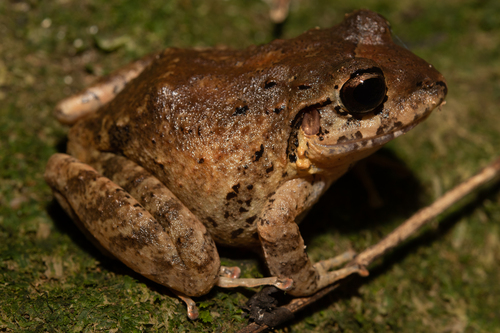
Chortis Streamside Frog
Craugastor laevissimus

Browns' Frog
Lithobates brownorum

Copan Stream Frog
Ptychohyla hypomykter

Vaillant's Frog
Lithobates vaillanti

Mexican Mushroomtongue Salamander
Bolitoglossa mexicana

Common Leaf-Litter Frog
Craugastor loki

Stauffer's Tree Frog
Scinax staufferi
Animal Events
Frog Chorus in the Rains
Cane toads and Mexican treefrogs breed through the wet months and call from every pool and ditch after dark.
Coatis and Agoutis on the Trails
Coati bands and agoutis forage along the lodge trails, at their most visible of the year.
Motmots and Toucans at the Feeders
Keel-billed toucans and Lesson's motmots work the lodge clearings and fruiting trees.
Sighting Calendar
Chance of spotting each species, month by month
Sighting Zones
Warm areas are where all species together are recorded most, so they track where people go as much as where animals are. For one species, see the map on its own page.
Where Wildlife Score
How good is this park for seeing wildlife?Biodiversity
Very goodHow rich is the wildlife?
Sighting
GoodHow likely to see animals?
Quick answers
What animals can you see in Cerro Azul Meámbar National Park?
The most likely sightings are Rufous-tailed Hummingbird (seen by 60–70% of wildlife watchers), Clay-colored Thrush (seen by 60–70% of wildlife watchers), Brown Jay (seen by 60–70% of wildlife watchers), Golden-fronted Woodpecker (seen by 60–70% of wildlife watchers), Melodious Blackbird (seen by 60–70% of wildlife watchers) — among 944 recorded vertebrate species, based on citizen-science data from GBIF.
When is the best time to visit Cerro Azul Meámbar National Park for wildlife?
July has the highest combined sighting rate for the park's top species in our month-by-month GBIF data. The full sighting calendar on this page shows each species' best months.
Can you see Keel-billed Toucan in Cerro Azul Meámbar National Park?
Yes — about 55% of wildlife watchers report a Keel-billed Toucan sighting in Cerro Azul Meámbar National Park, based on 322 days of visitor records from GBIF citizen-science data.
Can you see Lesson's Motmot in Cerro Azul Meámbar National Park?
Yes — about 53% of wildlife watchers report a Lesson's Motmot sighting in Cerro Azul Meámbar National Park, based on 314 days of visitor records from GBIF citizen-science data.
Can you see Keel-billed Motmot in Cerro Azul Meámbar National Park?
Yes — about 27% of wildlife watchers report a Keel-billed Motmot sighting in Cerro Azul Meámbar National Park, based on 156 days of visitor records from GBIF citizen-science data.
Can you see White-nosed Coati in Cerro Azul Meámbar National Park?
Yes — about 33% of wildlife watchers report a White-nosed Coati sighting in Cerro Azul Meámbar National Park, based on 32 days of visitor records from GBIF citizen-science data.


