


White-winged Tern
Chlidonias leucopterus
- KingdomAnimalia (Animals)
- PhylumChordata (Cordats)
- ClassAves (Aus)
- OrderCharadriiformes (Caradriformes)
- FamilyLaridae (Gulls, Terns, and Skimmers)
- GenusChlidonias (Marsh Terns)
- SpeciesChlidonias leucopterus (White-winged Tern)
The white-winged tern or white-winged black tern (Chlidonias leucopterus) is a species of tern in the family Laridae. It is a small species generally found in or near bodies of fresh water across much of the world, including Europe, Africa, Asia, and Australia. The genus name is from Ancient Greek khelidonios, "swallow-like", from khelidon, "swallow". The name 'white-winged tern' is the standard in most English-speaking countries; in the United Kingdom, this name is also the one used by the formal ornithological recording authorities, but the older alternative 'white-winged black tern' is still frequent in popular use. Wikipedia →
Closest Relatives at Pilanesberg National Park

Whiskered Tern
Chlidonias hybrida

Caspian Tern
Hydroprogne caspia

Grey-hooded Gull
Chroicocephalus cirrocephalus

Blacksmith Lapwing
Vanellus armatus

African Wattled Lapwing
Vanellus senegallus

Crowned Lapwing
Vanellus coronatus

African Jacana
Actophilornis africanus

Black-winged Stilt
Himantopus himantopus

Spotted Thick-knee
Burhinus capensis

African Snipe
Gallinago nigripennis
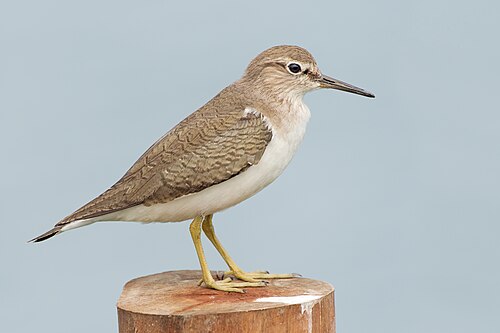
Common Sandpiper
Actitis hypoleucos

Pied Avocet
Recurvirostra avosetta
📅 Monthly Probability
Fewer than 5 records of White-winged Tern at Pilanesberg National Park — not enough to chart months honestly.
☀️ When They're Spotted
Most active during daytime hours (6am–6pm) · across all parks (global)
Global Distribution
Where this species is recorded worldwide. Restricted to human observations from 2019 onwards — the same kind of record and the same period the probabilities on this page are built from, so collar-tracking studies, camera-trap arrays and museum specimens are excluded. Around Santa Rosa that removes 5,924 GPS fixes from a handful of tagged jaguars.
where this species is recorded (GBIF density — it tracks where observers go, not how likely a sighting is) · parks where it occurs — tap a pin for the sighting probability there