


Garganey
Spatula querquedula
- KingdomAnimalia (Animals)
- PhylumChordata (Cordats)
- ClassAves (Aus)
- OrderAnseriformes
- FamilyAnatidae (Anàtids)
- GenusSpatula (Shovelers and Allies)
- SpeciesSpatula querquedula (Garganey)
The garganey (Spatula querquedula) is a small dabbling duck. It breeds in much of Europe and across the Palearctic, but is strictly migratory, with the entire population moving to Africa, India (in particular Santragachi), Bangladesh (in the natural reservoirs of Sylhet district) and Australasia during the winter of the Northern hemisphere, where large flocks can occur. This species was first described by Carl Linnaeus in his landmark 1758 10th edition of Systema Naturae. Like other small ducks such as the Eurasian teal, this species rises easily from the water with a fast twisting wader-like flight. Their breeding habitat is grassland adjacent to shallow marshes and steppe lakes. Wikipedia →
Closest Relatives at Serengeti National Park

Hottentot Teal
Spatula hottentota

Northern Shoveler
Spatula clypeata

Egyptian Goose
Alopochen aegyptiaca
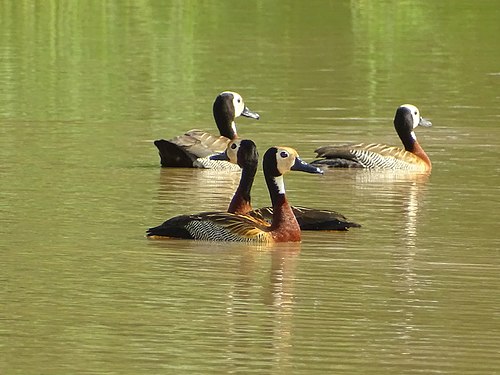
White-faced Whistling Duck
Dendrocygna viduata

Cape Teal
Anas capensis

Red-billed Teal
Anas erythrorhyncha

Muscovy Duck
Cairina moschata

Spur-winged Goose
Plectropterus gambensis

Comb Duck
Sarkidiornis melanotos

Fulvous Whistling-Duck
Dendrocygna bicolor

Yellow-billed Duck
Anas undulata

White-backed Duck
Thalassornis leuconotus
📅 Monthly Probability
Fewer than 5 records of Garganey at Serengeti National Park — not enough to chart months honestly.
☀️ When They're Spotted
Most active during daytime hours (6am–6pm) · across all parks (global)
Global Distribution
Where this species is recorded worldwide. Restricted to human observations from 2019 onwards — the same kind of record and the same period the probabilities on this page are built from, so collar-tracking studies, camera-trap arrays and museum specimens are excluded. Around Santa Rosa that removes 5,924 GPS fixes from a handful of tagged jaguars.
where this species is recorded (GBIF density — it tracks where observers go, not how likely a sighting is) · parks where it occurs — tap a pin for the sighting probability there