


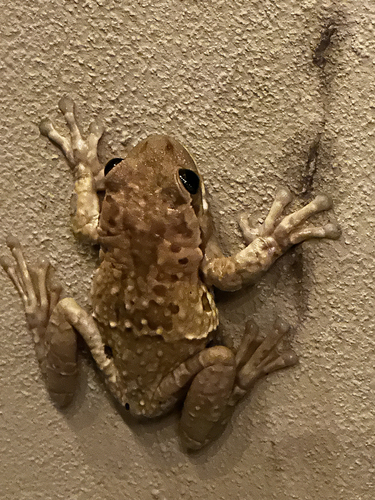
Giant Marine Toad
Rhinella horribilis
- KingdomAnimalia (Animals)
- PhylumChordata (Cordats)
- ClassAmphibia (Amfibis)
- OrderAnura (Anurs)
- FamilyBufonidae (Bufònids)
- GenusRhinella (Beaked Toads)
- SpeciesRhinella horribilis (Giant Marine Toad)
Rhinella horribilis is the scientific name used for populations of the cane toad or giant toad located in Mesoamerica and north-western South America when they are considered to be a separate species from Rhinella marina, a name which is then mostly restricted to Amazon basin populations. R. horribilis was originally described from Mexico as Bufo horribilis before later being considered a synonym of Bufo marina and later Rhinella marina. The specific epithet horribilis has now been revived after a 2016 study argued that these populations make up two separate species. Wikipedia →
30–40% of wildlife watchers report a Giant Marine Toad sighting in Marino Ballena National Park, based on 21 days of visitor records from GBIF citizen-science data.
Closest Relatives at Marino Ballena National Park

Rainforest Toad
Incilius aucoinae

Rosenberg's Gladiator Frog
Boana rosenbergi

Green and Black Dart-poison Frog
Dendrobates auratus

Masked Tree Frog
Smilisca phaeota

Savage's Thin-toed Frog
Leptodactylus savagei

Red-eyed Treefrog
Agalychnis callidryas

Granular Poison Frog
Oophaga granulifera

Fitzinger's Robber Frog
Craugastor fitzingeri
Milk Frog
Trachycephalus macrotis

Guayaquil Dwarf Frog
Engystomops pustulosus

Yellow Treefrog
Dendropsophus microcephalus

Harlequin Treefrog
Dendropsophus ebraccatus
📅 Monthly Probability
🌙 When They're Spotted
Most active during nighttime hours (6pm–6am) · across all parks (global)
Global Distribution
Where this species is recorded worldwide. Restricted to human observations from 2019 onwards — the same kind of record and the same period the probabilities on this page are built from, so collar-tracking studies, camera-trap arrays and museum specimens are excluded. Around Santa Rosa that removes 5,924 GPS fixes from a handful of tagged jaguars.
where this species is recorded (GBIF density — it tracks where observers go, not how likely a sighting is) · parks where it occurs — tap a pin for the sighting probability there
Parks Where Found
Quick answers
What are the chances of seeing a Giant Marine Toad in Marino Ballena National Park?
About 30% of wildlife watchers report a Giant Marine Toad sighting in Marino Ballena National Park, based on 21 days of visitor records from GBIF citizen-science data.
When is the best time to see Giant Marine Toad in Marino Ballena National Park?
August has the highest sighting rate for Giant Marine Toad in Marino Ballena National Park in our monthly data.