


Black-tailed Godwit
Limosa limosa
- KingdomAnimalia (Animals)
- PhylumChordata (Cordats)
- ClassAves (Aus)
- OrderCharadriiformes (Caradriformes)
- FamilyScolopacidae (Sandpipers and Allies)
- GenusLimosa (Godwits)
- SpeciesLimosa limosa (Black-tailed Godwit)
The black-tailed godwit (Limosa limosa) is a large, long-legged, long-billed shorebird first described by Carl Linnaeus in 1758. It is a member of the godwit genus, Limosa. There are four subspecies, all with orange head, neck and chest in breeding plumage and dull grey-brown winter coloration, and distinctive black and white wingbar at all times. Its breeding range stretches from Iceland through Europe and areas of central Asia. Black-tailed godwits spend (the northern hemisphere) winter in areas as diverse as the Indian subcontinent, Australia, New Zealand, western Europe and west Africa. The species breeds in fens, lake edges, damp meadows, moorlands and bogs and uses estuaries, swamps and floods in (the northern hemisphere) winter; it is more likely to be found inland and on freshwater than the similar bar-tailed godwit. Wikipedia →
Closest Relatives at Kakadu National Park

Bar-tailed Godwit
Limosa lapponica
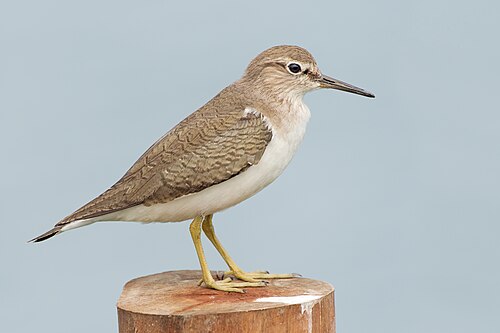
Common Sandpiper
Actitis hypoleucos

Sharp-tailed Sandpiper
Calidris acuminata

Marsh Sandpiper
Tringa stagnatilis

Common Greenshank
Tringa nebularia

Little Curlew
Numenius minutus

Wood Sandpiper
Tringa glareola

Far Eastern Curlew
Numenius madagascariensis

Whimbrel
Numenius phaeopus

Comb-crested Jacana
Irediparra gallinacea

Masked Lapwing
Vanellus miles

Whiskered Tern
Chlidonias hybrida
📅 Monthly Probability
Fewer than 5 records of Black-tailed Godwit at Kakadu National Park — not enough to chart months honestly.
☀️ When They're Spotted
Most active during daytime hours (6am–6pm) · across all parks (global)
Global Distribution
Where this species is recorded worldwide. Restricted to human observations from 2019 onwards — the same kind of record and the same period the probabilities on this page are built from, so collar-tracking studies, camera-trap arrays and museum specimens are excluded. Around Santa Rosa that removes 5,924 GPS fixes from a handful of tagged jaguars.
where this species is recorded (GBIF density — it tracks where observers go, not how likely a sighting is) · parks where it occurs — tap a pin for the sighting probability there