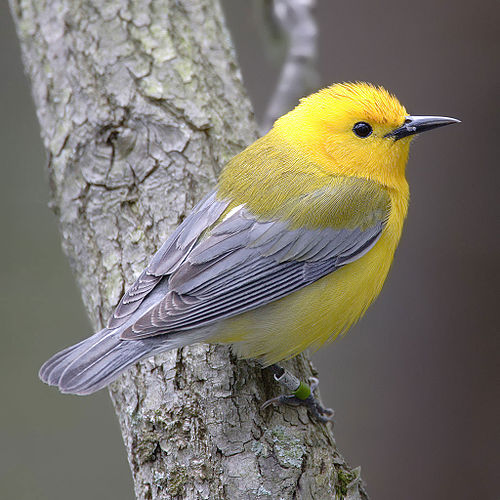


Prothonotary Warbler
Protonotaria citrea
- KingdomAnimalia (Animals)
- PhylumChordata (Cordats)
- ClassAves (Aus)
- OrderPasseriformes
- FamilyParulidae (Parúlids)
- GenusProtonotaria (Prothonotary Warblers)
- SpeciesProtonotaria citrea (Prothonotary Warbler)
The prothonotary warbler (Protonotaria citrea) is a small songbird of the New World warbler family. It is named for its plumage, which resembles the yellow robes once worn by papal clerks (named prothonotaries) in the Roman Catholic Church. The prothonotary warbler is the only member of the genus Protonotaria and the only eastern warbler that nests in natural or artificial cavities. These warblers often move with quick, jerky, movements and will even crawl upside down on sticks or trees. During the spring they are often seen in wetlands gathering nesting material, or food, for their mate. Wikipedia →
Closest Relatives at Volcán Barú National Park

Collared Redstart
Myioborus torquatus

Flame-throated Warbler
Oreothlypis gutturalis

Black-cheeked Warbler
Basileuterus melanogenys

Wilson's Warbler
Cardellina pusilla

Slate-throated Redstart
Myioborus miniatus

Wrenthrush
Zeledonia coronata

Black-throated Green Warbler
Setophaga virens

Black-and-white Warbler
Mniotilta varia

Tennessee Warbler
Leiothlypis peregrina

Blackburnian Warbler
Setophaga fusca

Golden-winged Warbler
Vermivora chrysoptera

Golden-crowned Warbler
Basileuterus culicivorus
📅 Monthly Probability
Fewer than 5 records of Prothonotary Warbler at Volcán Barú National Park — not enough to chart months honestly.
☀️ When They're Spotted
Most active during daytime hours (6am–6pm) · across all parks (global)
Global Distribution
Where this species is recorded worldwide. Restricted to human observations from 2019 onwards — the same kind of record and the same period the probabilities on this page are built from, so collar-tracking studies, camera-trap arrays and museum specimens are excluded. Around Santa Rosa that removes 5,924 GPS fixes from a handful of tagged jaguars.
where this species is recorded (GBIF density — it tracks where observers go, not how likely a sighting is) · parks where it occurs — tap a pin for the sighting probability there