


Scarlet Macaw
Ara macao
- KingdomAnimalia (Animals)
- PhylumChordata (Cordats)
- ClassAves (Aus)
- OrderPsittaciformes (Parrots)
- FamilyPsittacidae (New World and African Parrots)
- GenusAra
- SpeciesAra macao (Scarlet Macaw)
The scarlet macaw (Ara macao) also called the red-and-yellow macaw, red-and-blue macaw or red-breasted macaw, is a large yellow, green, red and blue Neotropical parrot native to humid evergreen forests of the Americas. Its range extends from southeastern Mexico to Peru, Ecuador, Colombia, Bolivia, Venezuela, Honduras, and Brazil in lowlands of 500 m (1,600 ft) (at least formerly) up to 1,000 m (3,300 ft), the Caribbean island of Trinidad, as well as the Pacific island of Coiba. Formerly, the northern extent of its range included southern Tamaulipas. In some areas, it has suffered local extinction because of habitat destruction, or capture for the parrot trade, but in other areas, it remains fairly common. It is the national bird of Honduras. Like its relative the blue-and-yellow macaw, the scarlet macaw is a popular bird in aviculture as a result of its striking plumage. Wikipedia →
30–40% of wildlife watchers report a Scarlet Macaw sighting in Cuyabeno Wildlife Reserve, based on 1,324 days of visitor records from GBIF citizen-science data.
Closest Relatives at Cuyabeno Wildlife Reserve
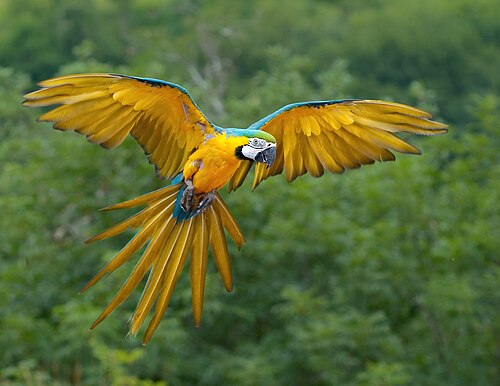
Blue-and-yellow Macaw
Ara ararauna

Chestnut-fronted Macaw
Ara severus

Red-and-green Macaw
Ara chloropterus

Cobalt-winged Parakeet
Brotogeris cyanoptera

Red-bellied Macaw
Orthopsittaca manilata

Mealy Parrot
Amazona farinosa

Orange-winged Parrot
Amazona amazonica

Blue-headed Parrot
Pionus menstruus

Dusky-headed Parakeet
Aratinga weddellii

Black-headed Parrot
Pionites melanocephalus

Yellow-crowned Parrot
Amazona ochrocephala

Orange-cheeked Parrot
Pionopsitta barrabandi
📅 Monthly Probability
☀️ When They're Spotted
Most active during daytime hours (6am–6pm) · across all parks (global)
Global Distribution
Where this species is recorded worldwide. Restricted to human observations from 2019 onwards — the same kind of record and the same period the probabilities on this page are built from, so collar-tracking studies, camera-trap arrays and museum specimens are excluded. Around Santa Rosa that removes 5,924 GPS fixes from a handful of tagged jaguars.
where this species is recorded (GBIF density — it tracks where observers go, not how likely a sighting is) · parks where it occurs — tap a pin for the sighting probability there
Parks Where Found
Quick answers
What are the chances of seeing a Scarlet Macaw in Cuyabeno Wildlife Reserve?
About 32% of wildlife watchers report a Scarlet Macaw sighting in Cuyabeno Wildlife Reserve, based on 1,324 days of visitor records from GBIF citizen-science data.
When is the best time to see Scarlet Macaw in Cuyabeno Wildlife Reserve?
October has the highest sighting rate for Scarlet Macaw in Cuyabeno Wildlife Reserve in our monthly data.