


Asian Palm-Swift
Cypsiurus balasiensis
- KingdomAnimalia (Animals)
- PhylumChordata (Cordats)
- ClassAves (Aus)
- OrderApodiformes (Swifts and Hummingbirds)
- FamilyApodidae (Swifts)
- GenusCypsiurus (Old World Palm Swifts)
- SpeciesCypsiurus balasiensis (Asian Palm-Swift)
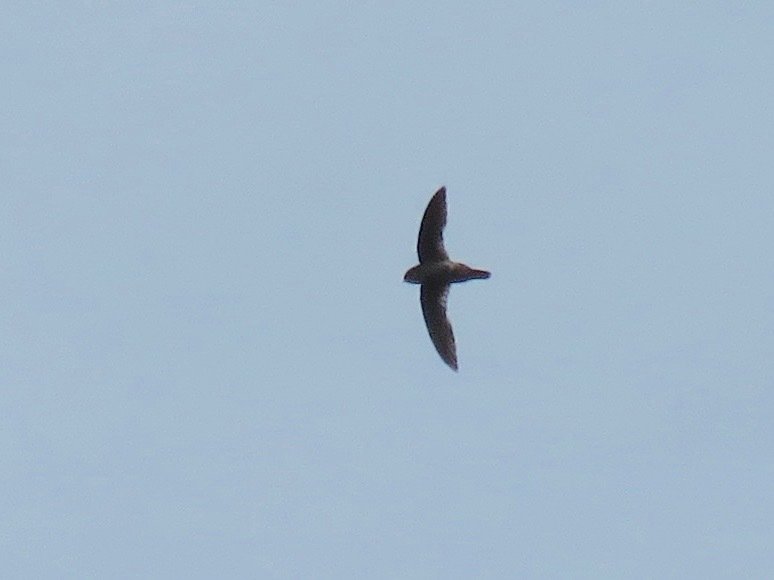
The Asian palm swift (Cypsiurus balasiensis) is a small swift. It is very similar to the African palm swift, Cypsiurus parvus, and was formerly considered to be the same species. It is a common resident breeder in tropical Asia from India to the Philippines. The down and feather nest is glued to the underside of a palm leaf with saliva, which is also used to secure the usually two or three eggs. This is a bird of open country and cultivation, which is strongly associated with oil palms. This 13 cm long species is mainly pale brown in colour. Wikipedia →
Closest Relatives at Kerinci Seblat National Park

Plume-toed Swiftlet
Collocalia affinis

Silver-rumped Needletail
Rhaphidura leucopygialis

White-nest Swiftlet
Aerodramus fuciphagus

House Swift
Apus nipalensis
Waterfall Swift
Hydrochous gigas

Brown-backed Needletail
Hirundapus giganteus

Black-nest Swiftlet
Aerodramus maximus

Pacific Swift
Apus pacificus

Whiskered Treeswift
Hemiprocne comata

Gray-rumped Treeswift
Hemiprocne longipennis
📅 Monthly Probability
Fewer than 5 records of Asian Palm-Swift at Kerinci Seblat National Park — not enough to chart months honestly.
🌅 When They're Spotted
Most active at dawn and dusk · across all parks (global)
Global Distribution
Where this species is recorded worldwide. Restricted to human observations from 2019 onwards — the same kind of record and the same period the probabilities on this page are built from, so collar-tracking studies, camera-trap arrays and museum specimens are excluded. Around Santa Rosa that removes 5,924 GPS fixes from a handful of tagged jaguars.
where this species is recorded (GBIF density — it tracks where observers go, not how likely a sighting is) · parks where it occurs — tap a pin for the sighting probability there