Mudumalai National Park
🇮🇳 India
🐯 Tiger Prowls Mudumalai's Monsoon TrailsMudumalai National Park is a protected jungle reserve situated where the borders of Tamil Nadu, Karnataka, and Kerala meet in southern India. This protected area features dense deciduous forest, tropical woodlands, and winding dirt trails that pass beneath towering trees and thick green undergrowth.
11.570° N 76.595° E
Wildlife
⭐ Iconic Species
 ★
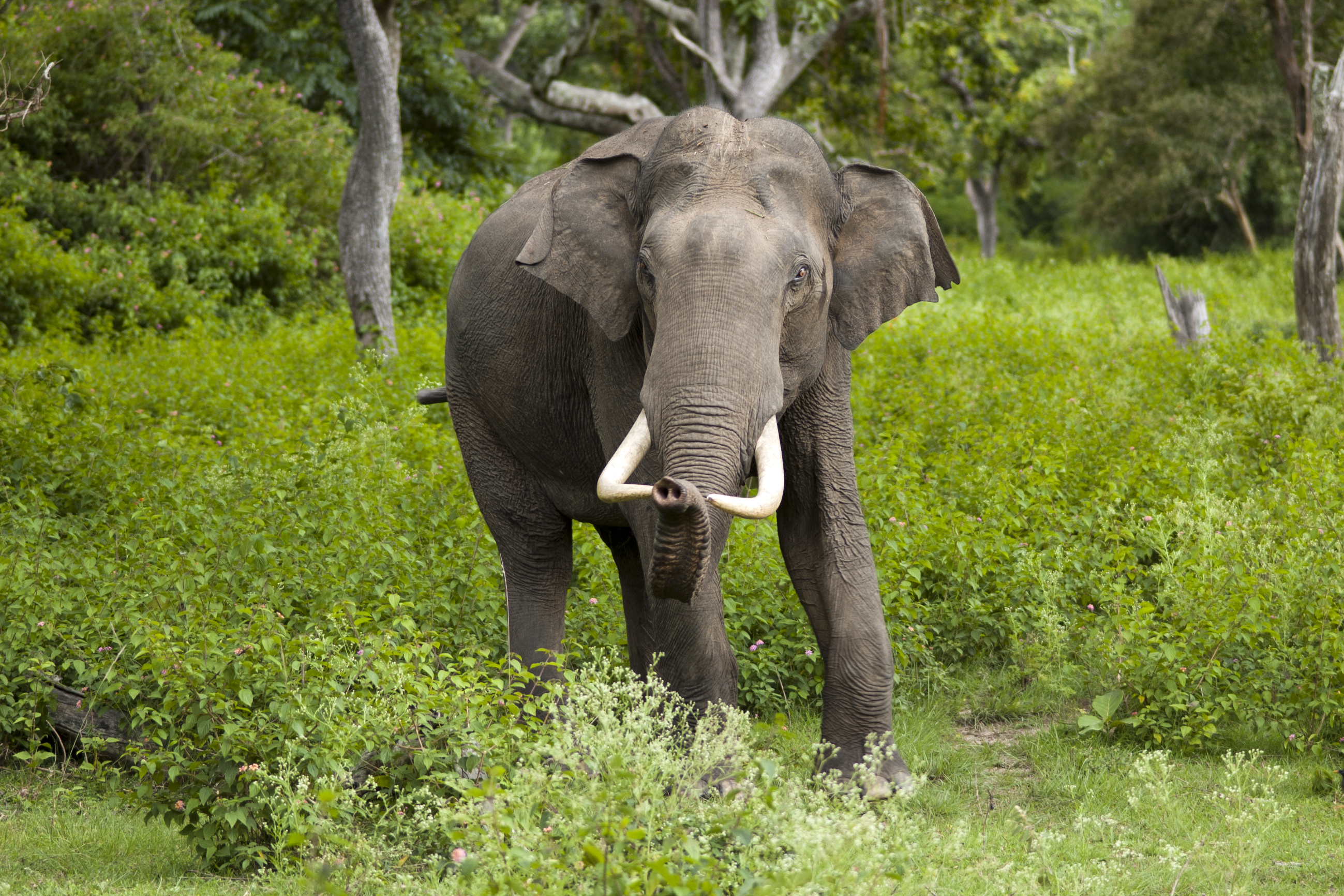
★ Asian Elephant
Elephas maximus
 ★
★ Axis Deer
Axis axis
 ★
★ Tiger
Panthera tigris
 ★
★ Gaur
Bos frontalis
📊 Most Spotted

Pearl-necked Dove
Spilopelia chinensis

Plum-headed Parakeet
Psittacula cyanocephala

Oriental Magpie-Robin
Copsychus saularis

Brahminy Starling
Sturnia pagodarum

Red-whiskered Bulbul
Pycnonotus jocosus

Indian Giant Squirrel
Ratufa indica

White-cheeked Barbet
Psilopogon viridis

Coppersmith Barbet
Psilopogon haemacephalus

Long-tailed Shrike
Lanius schach

Common Peafowl
Pavo cristatus

Jungle Myna
Acridotheres fuscus

Black-rumped Flameback
Dinopium benghalense
⭐ Iconic Species
★ Asian Elephant
Elephas maximus
★ Axis Deer
Axis axis
★ Tiger
Panthera tigris
★ Gaur
Bos frontalis
📊 Most Spotted
Indian Giant Squirrel
Ratufa indica

Bonnet Macaque
Macaca radiata

Tufted Langur
Semnopithecus priam

Sambar
Rusa unicolor

Wild Boar
Sus scrofa

Indian Gray Mongoose
Herpestes edwardsi

Blackbuck
Antilope cervicapra

Dhole
Cuon alpinus

Indian Hare
Lepus nigricollis

Indian Palm Squirrel
Funambulus palmarum

Common Palm Civet
Paradoxurus hermaphroditus

Stripe-necked Mongoose
Herpestes vitticollis
📊 Most Spotted
Pearl-necked Dove
Spilopelia chinensis
Plum-headed Parakeet
Psittacula cyanocephala
Oriental Magpie-Robin
Copsychus saularis
Brahminy Starling
Sturnia pagodarum
Red-whiskered Bulbul
Pycnonotus jocosus
White-cheeked Barbet
Psilopogon viridis
Coppersmith Barbet
Psilopogon haemacephalus
Long-tailed Shrike
Lanius schach
Common Peafowl
Pavo cristatus
Jungle Myna
Acridotheres fuscus
Black-rumped Flameback
Dinopium benghalense

Tickell's Blue Flycatcher
Cyornis tickelliae
📊 Most Spotted

Bengal Monitor
Varanus bengalensis

Indian Chameleon
Chamaeleo zeylanicus

Golden Tree Snake
Chrysopelea ornata

Ahaetulla oxyrhyncha
Ahaetulla oxyrhyncha

Indian Black Turtle
Melanochelys trijuga

Oriental Garden Lizard
Calotes versicolor

Chequered Keelback
Fowlea piscator

Collared Cat Snake
Boiga nuchalis

Indian Day Gecko
Cnemaspis indica

Western Ghats Flying Lizard
Draco dussumieri

Keeled Indian Mabuya
Eutropis carinata

Northern House Gecko
Hemidactylus flaviviridis


Animal Events
Dry Season Ungulate Concentration
During the drier months, massive herds of Axis Deer and Sambar gather around shrinking waterholes and open grasslands, offering exceptional viewing opportunities.
Monsoon Elephant Migration and Foraging
The arrival of monsoon rains triggers lush vegetation growth, drawing family herds of Asian Elephants into the regenerating valleys to feed.
Canopy Wildlife Activity Peak
As forest canopies shift through seasonal changes, arboreal and semi-arboreal mammals like the Indian Giant Squirrel exhibit heightened foraging and vocalization activities.
Sighting Calendar
Chance of spotting each species, month by month
Sighting Zones
Warm areas are where all species together are recorded most, so they track where people go as much as where animals are. For one species, see the map on its own page.
Where Wildlife Score
How good is this park for seeing wildlife?Biodiversity
Very goodHow rich is the wildlife?
Sighting
ExcellentHow likely to see animals?
Quick answers
What animals can you see in Mudumalai National Park?
The most likely sightings are Axis Deer (seen by 80–90% of wildlife watchers), Pearl-necked Dove (seen by 80–90% of wildlife watchers), Plum-headed Parakeet (seen by 60–70% of wildlife watchers), Oriental Magpie-Robin (seen by 60–70% of wildlife watchers), Brahminy Starling (seen by 60–70% of wildlife watchers) — among 851 recorded vertebrate species, based on citizen-science data from GBIF.
When is the best time to visit Mudumalai National Park for wildlife?
April has the highest combined sighting rate for the park's top species in our month-by-month GBIF data. The full sighting calendar on this page shows each species' best months.
Can you see Asian Elephant in Mudumalai National Park?
Yes — about 43% of wildlife watchers report a Asian Elephant sighting in Mudumalai National Park, based on 10 days of visitor records from GBIF citizen-science data.
Can you see Axis Deer in Mudumalai National Park?
Yes — about 81% of wildlife watchers report a Axis Deer sighting in Mudumalai National Park, based on 48 days of visitor records from GBIF citizen-science data.
Can you see Tiger in Mudumalai National Park?
It's possible but not guaranteed: about 10% of wildlife watchers report a Tiger sighting in Mudumalai National Park, based on 1 days of visitor records from GBIF citizen-science data. Sightings take luck and time in the field.
Can you see Gaur in Mudumalai National Park?
Yes — about 32% of wildlife watchers report a Gaur sighting in Mudumalai National Park, based on 6 days of visitor records from GBIF citizen-science data.


.jpg?width=1920)