Khao Luang National Park
🇹🇭 Thailand
🐦 Red-eyed Bulbul Dawn ChorusKhao Luang National Park is a rugged tropical rainforest preserve rising in southern Thailand. Dense evergreen canopies shade humid valley floors and steep mountain slopes, creating a humid jungle environment laced with flowing streams and damp earthen trails.
8.516° N 99.738° E
Wildlife
⭐ Iconic Species
 ★
★ Red-eyed Bulbul
Pycnonotus brunneus
 ★
★ Black-and-yellow Broadbill
Eurylaimus ochromalus
 ★
★ Common Water Monitor
Varanus salvator
 ★
★ Southern Pig-tailed Macaque
Macaca nemestrina
📊 Most Spotted

Red-throated Barbet
Psilopogon mystacophanos

Emma Gray's Forest Lizard
Calotes emma

Asian Fairy-bluebird
Irena puella

White-rumped Shama
Copsychus malabaricus

Spectacled Bulbul
Rubigula erythropthalmos

Chestnut-winged Babbler
Stachyris erythroptera

Ochraceous Bulbul
Alophoixus ochraceus

Little Spiderhunter
Arachnothera longirostra

Gold-whiskered Barbet
Psilopogon chrysopogon

Stripe-throated Bulbul
Pycnonotus finlaysoni

White-nest Swiftlet
Aerodramus fuciphagus

Gray-breasted Spiderhunter
Arachnothera modesta
⭐ Iconic Species
📊 Most Spotted

Himalayan Striped Squirrel
Tamiops mcclellandii

Common Treeshrew
Tupaia glis

Black Giant Squirrel
Ratufa bicolor

Slender Squirrel
Sundasciurus tenuis

Plantain Squirrel
Callosciurus notatus

Sunda Flying Lemur
Galeopterus variegatus

Stump-tailed Macaque
Macaca arctoides

Malay Weasel
Mustela nudipes

Red Giant Flying Squirrel
Petaurista petaurista

Pale Giant Squirrel
Ratufa affinis

Wild Boar
Sus scrofa

Black Flying Squirrel
Aeromys tephromelas
⭐ Iconic Species
📊 Most Spotted
Red-throated Barbet
Psilopogon mystacophanos
Asian Fairy-bluebird
Irena puella
White-rumped Shama
Copsychus malabaricus
Spectacled Bulbul
Rubigula erythropthalmos
Chestnut-winged Babbler
Stachyris erythroptera
Ochraceous Bulbul
Alophoixus ochraceus
Little Spiderhunter
Arachnothera longirostra
Gold-whiskered Barbet
Psilopogon chrysopogon
Stripe-throated Bulbul
Pycnonotus finlaysoni
White-nest Swiftlet
Aerodramus fuciphagus
Gray-breasted Spiderhunter
Arachnothera modesta

Thick-billed Green-Pigeon
Treron curvirostra
⭐ Iconic Species
📊 Most Spotted
Emma Gray's Forest Lizard
Calotes emma

Cambodian Flying Gecko
Gekko tokehos

Many-lined Sun-skink
Eutropis multifasciata

Khao Chong Bent-toed Gecko
Cyrtodactylus lekaguli

Black-barbed Flying Dragon
Draco melanopogon

Pegu Bent-toed Gecko
Cyrtodactylus zebraicus

Common House Gecko
Hemidactylus frenatus

Flat-tailed House Gecko
Hemidactylus platyurus
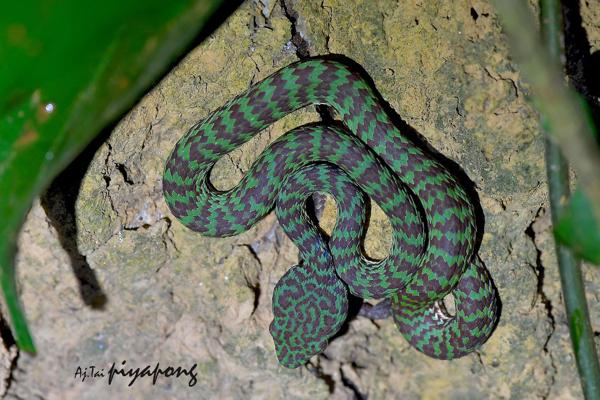
Beautiful Pitviper
Trimeresurus venustus

Triangle Keelback
Xenochrophis trianguligerus

Barred Flying Dragon
Draco taeniopterus

Chan-ard’s Rock Gecko
Cnemaspis chanardi
📊 Most Spotted

River Toad
Phrynoidis asper

Common Indian Toad
Duttaphrynus melanostictus

Common Tree Frog
Polypedates leucomystax

Northern White-lipped Frog
Chalcorana eschatia

Blyth's River Frog
Limnonectes blythii

Smith's Litter Frog
Leptobrachium smithi

Poisonous Rock Frog
Odorrana hosii

Berdmore's Chorus Frog
Microhyla berdmorei

Asian Painted Frog
Kaloula pulchra

Butler's Ricefrog
Microhyla butleri

Mukhlesur's Narrow-mouthed Frog
Microhyla mukhlesuri

Arcuate-spotted Pygmy Frog
Microhyla heymonsi
Animal Events
Red-eyed Bulbul Dawn Chorus
At sunrise the Red-eyed Bulbul fills the forest with a melodic call, signaling territorial presence.
Broadbill Nest-Building and Courtship
During the breeding season the Black-and-yellow Broadbill constructs hanging nests and performs elaborate wing‑flashing displays.
Stream Amphibian Breeding Aggregations
River Toads gather in shallow streams to spawn, creating noisy choruses that echo through the valleys.
Sighting Calendar
Chance of spotting each species, month by month
Sighting Zones
Warm areas are where all species together are recorded most, so they track where people go as much as where animals are. For one species, see the map on its own page.
Where Wildlife Score
How good is this park for seeing wildlife?Biodiversity
Very goodHow rich is the wildlife?
Sighting
Very goodHow likely to see animals?
Quick answers
What animals can you see in Khao Luang National Park?
The most likely sightings are Red-eyed Bulbul (seen by 70–80% of wildlife watchers), Red-throated Barbet (seen by 70–80% of wildlife watchers), Emma Gray's Forest Lizard (seen by 60–70% of wildlife watchers), Asian Fairy-bluebird (seen by 60–70% of wildlife watchers), White-rumped Shama (seen by 60–70% of wildlife watchers) — among 1078 recorded vertebrate species, based on citizen-science data from GBIF.
When is the best time to visit Khao Luang National Park for wildlife?
May has the highest combined sighting rate for the park's top species in our month-by-month GBIF data. The full sighting calendar on this page shows each species' best months.
Can you see Red-eyed Bulbul in Khao Luang National Park?
Yes — about 72% of wildlife watchers report a Red-eyed Bulbul sighting in Khao Luang National Park, based on 382 days of visitor records from GBIF citizen-science data.
Can you see Black-and-yellow Broadbill in Khao Luang National Park?
Yes — about 61% of wildlife watchers report a Black-and-yellow Broadbill sighting in Khao Luang National Park, based on 322 days of visitor records from GBIF citizen-science data.
Can you see Common Water Monitor in Khao Luang National Park?
Yes — about 31% of wildlife watchers report a Common Water Monitor sighting in Khao Luang National Park, based on 9 days of visitor records from GBIF citizen-science data.
Can you see Southern Pig-tailed Macaque in Khao Luang National Park?
Yes — about 16% of wildlife watchers report a Southern Pig-tailed Macaque sighting in Khao Luang National Park, based on 3 days of visitor records from GBIF citizen-science data.


