Danum Valley Conservation Area
🇲🇾 Malaysia
🐸 Wallace's Flying Frog Gliding OverheadDanum Valley Conservation Area is a vast lowland rainforest situated in the eastern region of Sabah, Malaysia. This ancient jungle features dense canopy layers, towering dipterocarp trees, and muddy earthen trails winding through steep river valleys, distinguishing it from fragmented secondary forests nearby.
4.960° N 117.719° E
Wildlife
⭐ Iconic Species
 ★
★ Bornean Orangutan
Pongo pygmaeus
 ★
★ Maroon Leaf Monkey
Presbytis rubicunda
 ★
★ Helmeted Hornbill
Rhinoplax vigil
 ★
★ Horsfield's Tarsier
Cephalopachus bancanus
📊 Most Spotted

File-eared Tree Frog
Polypedates otilophus

Borneo Forest Dragon
Gonocephalus bornensis

Rhinoceros Hornbill
Buceros rhinoceros

Little Spiderhunter
Arachnothera longirostra

North Philippine Temple Pitviper
Tropidolaemus subannulatus

Slender-billed Crow
Corvus enca

Brown-Striped Tree Frog
Polypedates macrotis

Black-and-yellow Broadbill
Eurylaimus ochromalus

Harlequin Tree Frog
Rhacophorus pardalis

Green Crested Lizard
Bronchocela cristatella

White-crowned Shama
Copsychus stricklandii

Common Water Monitor
Varanus salvator
⭐ Iconic Species
★ Bornean Orangutan
Pongo pygmaeus
★ Maroon Leaf Monkey
Presbytis rubicunda
★ Horsfield's Tarsier
Cephalopachus bancanus
📊 Most Spotted

Least Pygmy Squirrel
Exilisciurus exilis

Sunda Flying Lemur
Galeopterus variegatus

Malay Civet
Viverra tangalunga

Prevost's Squirrel
Callosciurus prevostii

Asian Elephant
Elephas maximus

Sambar
Rusa unicolor

North Bornean Gray Gibbon
Hylobates funereus

Pale Giant Squirrel
Ratufa affinis

Crab-eating Macaque
Macaca fascicularis

Common Palm Civet
Paradoxurus hermaphroditus

Small-toothed Palm Civet
Arctogalidia trivirgata

Mainland Leopard Cat
Prionailurus bengalensis
⭐ Iconic Species
📊 Most Spotted
Rhinoceros Hornbill
Buceros rhinoceros
Little Spiderhunter
Arachnothera longirostra
Slender-billed Crow
Corvus enca
Black-and-yellow Broadbill
Eurylaimus ochromalus
White-crowned Shama
Copsychus stricklandii

Lesser Green Leafbird
Chloropsis cyanopogon

Green Imperial-Pigeon
Ducula aenea

Spectacled Bulbul
Rubigula erythropthalmos

Whiskered Treeswift
Hemiprocne comata

Malaysian Pied-Fantail
Rhipidura javanica

Yellow-rumped Flowerpecker
Prionochilus xanthopygius

Great Argus
Argusianus argus
📊 Most Spotted
Borneo Forest Dragon
Gonocephalus bornensis
North Philippine Temple Pitviper
Tropidolaemus subannulatus
Green Crested Lizard
Bronchocela cristatella
Common Water Monitor
Varanus salvator

Flat-tailed House Gecko
Hemidactylus platyurus

Spotted House Gecko
Gekko monarchus

Gray Bronzeback
Dendrelaphis caudolineatus

White-banded Narrow-disked Gecko
Gekko albofasciolatus

Triangle Keelback
Xenochrophis trianguligerus

Rough Mabuya
Eutropis rudis

Ornate Earless Agama
Aphaniotis ornata

Paradise Flying Snake
Chrysopelea paradisi
📊 Most Spotted
File-eared Tree Frog
Polypedates otilophus
Brown-Striped Tree Frog
Polypedates macrotis
Harlequin Tree Frog
Rhacophorus pardalis

Wallace's Flying Frog
Rhacophorus nigropalmatus

Brown Tree Frog
Leptomantis harrissoni

Tree Hole Frog
Metaphrynella sundana

Chasen's Frilled Tree Frog
Kurixalus chaseni
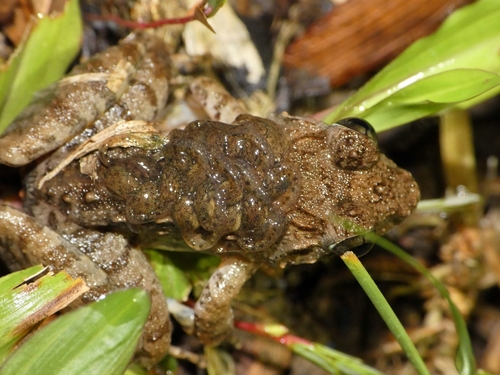
Rough Guardian Frog
Limnonectes finchi

Yellow-spotted Narrow-mouthed Frog
Chaperina fusca
_Figure_4_(cropped).jpg)
Nicobar Cricket Frog
Amnirana nicobariensis

Horned Toad
Megophrys nasuta

Dulit Flying Frog
Zhangixalus dulitensis
Animal Events
Frugivore Canopy Foraging Peak
During the early months, fruiting trees draw heavy canopy activity where Bornean Orangutans and Prevost's Squirrels actively forage for high-energy forest resources.
Nocturnal Rainforest Activity Surge
As darkness falls, the forest comes alive with hunting predators, allowing keen observers to spot Horsfield's Tarsiers and Malay Civets navigating the understory and lower branches.
Understory Herpetofauna Breeding Congregation
Increased moisture prompts higher amphibian and reptile movement, bringing Brown-Striped Tree Frogs and Bornean Keeled Green Pit Vipers into close proximity around breeding sites.
Sighting Calendar
Chance of spotting each species, month by month
Sighting Zones
Warm areas are where all species together are recorded most, so they track where people go as much as where animals are. For one species, see the map on its own page.
Where Wildlife Score
How good is this park for seeing wildlife?Biodiversity
Very goodHow rich is the wildlife?
Sighting
ExcellentHow likely to see animals?
Quick answers
What animals can you see in Danum Valley Conservation Area?
The most likely sightings are Maroon Leaf Monkey (seen by 70–80% of wildlife watchers), File-eared Tree Frog (seen by 70–80% of wildlife watchers), Borneo Forest Dragon (seen by 60–70% of wildlife watchers), Rhinoceros Hornbill (seen by 50–60% of wildlife watchers), Little Spiderhunter (seen by 50–60% of wildlife watchers) — among 1017 recorded vertebrate species, based on citizen-science data from GBIF.
When is the best time to visit Danum Valley Conservation Area for wildlife?
October has the highest combined sighting rate for the park's top species in our month-by-month GBIF data. The full sighting calendar on this page shows each species' best months.
Can you see Bornean Orangutan in Danum Valley Conservation Area?
Yes — about 45% of wildlife watchers report a Bornean Orangutan sighting in Danum Valley Conservation Area, based on 43 days of visitor records from GBIF citizen-science data.
Can you see Maroon Leaf Monkey in Danum Valley Conservation Area?
Yes — about 77% of wildlife watchers report a Maroon Leaf Monkey sighting in Danum Valley Conservation Area, based on 157 days of visitor records from GBIF citizen-science data.
Can you see Helmeted Hornbill in Danum Valley Conservation Area?
Yes — about 20% of wildlife watchers report a Helmeted Hornbill sighting in Danum Valley Conservation Area, based on 11 days of visitor records from GBIF citizen-science data.
Can you see Horsfield's Tarsier in Danum Valley Conservation Area?
Yes — about 34% of wildlife watchers report a Horsfield's Tarsier sighting in Danum Valley Conservation Area, based on 34 days of visitor records from GBIF citizen-science data.


