


Hottentot Teal
Spatula hottentota
- KingdomAnimalia (Animals)
- PhylumChordata (Cordats)
- ClassAves (Aus)
- OrderAnseriformes
- FamilyAnatidae (Anàtids)
- GenusSpatula (Shovelers and Allies)
- SpeciesSpatula hottentota (Hottentot Teal)
The blue-billed teal (Spatula hottentota), also sometimes called spotted teal and formerly Hottentot teal, is a species of dabbling duck of the genus Spatula. It is resident in eastern, southern, and western Africa, from Sudan and Ethiopia west to Niger and Nigeria, and south to South Africa and Namibia, and also in Madagascar. It is generally sedentary, but shows nomadic behaviour in response to water requirements, moving away if drought causes wetlands to dry out. The blue-billed teal breeds year round, depending on rainfall, and stays in small groups or pairs. They build nests above water in tree stumps and use vegetation. Ducklings leave the nest soon after hatching, and the mother's parenting is limited to providing protection from predators and leading young to feeding areas. Wikipedia →
5–10% of wildlife watchers report a Hottentot Teal sighting in Namib-Naukluft National Park, based on 97 days of visitor records from GBIF citizen-science data.
Closest Relatives at Namib-Naukluft National Park

Cape Shoveler
Spatula smithii

Cape Teal
Anas capensis

South African Shelduck
Tadorna cana

Egyptian Goose
Alopochen aegyptiaca

Maccoa Duck
Oxyura maccoa

Red-billed Teal
Anas erythrorhyncha

Spur-winged Goose
Plectropterus gambensis

Southern Pochard
Netta erythrophthalma

Fulvous Whistling-Duck
Dendrocygna bicolor
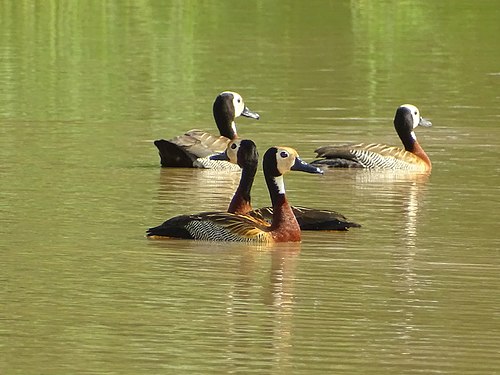
White-faced Whistling Duck
Dendrocygna viduata

Mallard
Anas platyrhynchos
📅 Monthly Probability
☀️ When They're Spotted
Most active during daytime hours (6am–6pm) · across all parks (global)
Global Distribution
Where this species is recorded worldwide. Restricted to human observations from 2019 onwards — the same kind of record and the same period the probabilities on this page are built from, so collar-tracking studies, camera-trap arrays and museum specimens are excluded. Around Santa Rosa that removes 5,924 GPS fixes from a handful of tagged jaguars.
where this species is recorded (GBIF density — it tracks where observers go, not how likely a sighting is) · parks where it occurs — tap a pin for the sighting probability there
Parks Where Found
Quick answers
What are the chances of seeing a Hottentot Teal in Namib-Naukluft National Park?
About 8% of wildlife watchers report a Hottentot Teal sighting in Namib-Naukluft National Park, based on 97 days of visitor records from GBIF citizen-science data.
When is the best time to see Hottentot Teal in Namib-Naukluft National Park?
March has the highest sighting rate for Hottentot Teal in Namib-Naukluft National Park in our monthly data.