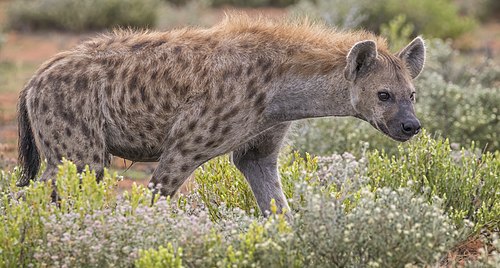
Banded Mongoose

Banded Mongoose

Mungos mungo

Least ConcernNear ThreatenedVulnerableEndangeredCritically Endangered
Insufficient data
overall probability at Nairobi National Park
1 Verified records at Nairobi National Park
☀️ Diurnal When it's active during daytime hours (6am–6pm)

The banded mongoose (Mungos mungo) is a mongoose species native from the Sahel to Southern Africa. It lives in savannas, open forests and grasslands and feeds primarily on beetles and millipedes. Mongooses use various types of dens for shelter including termite mounds. While most mongoose species live solitary lives, the banded mongoose live in colonies with a complex social structure. Wikipedia →

📅 Monthly Probability

📊

Fewer than 5 records of Banded Mongoose at Nairobi National Park — not enough to chart months honestly.

☀️ When They're Spotted

Most active during daytime hours (6am–6pm) · across all parks (global)

☀️Diurnal
☀️🌙🌙12am6am12pm6pm12am

Global Distribution

Where this species is recorded worldwide. Restricted to human observations from 2019 onwards — the same kind of record and the same period the probabilities on this page are built from, so collar-tracking studies, camera-trap arrays and museum specimens are excluded. Around Santa Rosa that removes 5,924 GPS fixes from a handful of tagged jaguars.

where this species is recorded (GBIF density — it tracks where observers go, not how likely a sighting is)  ·  parks where it occurs — tap a pin for the sighting probability there

Parks Where Found

# Park Country Probability
1 Tarangire National Park 🇹🇿 Tanzania
60–70%
2 Etosha National Park 🇳🇦 Namibia
50–60%
3 Waterberg Plateau Park 🇳🇦 Namibia
40–50%
4 Masai Mara National Reserve 🇰🇪 Kenya
40–50%
5 Serengeti National Park 🇹🇿 Tanzania
40–50%
6 Chobe National Park 🇧🇼 Botswana
40–50%
7 Queen Elizabeth National Park 🇺🇬 Uganda
30–40%
8 Ruaha National Park 🇹🇿 Tanzania
30–40%
9 Niokolo-Koba National Park 🇸🇳 Senegal
30–40%
10 Pilanesberg National Park 🇿🇦 South Africa
30–40%
11 Kafue National Park 🇿🇲 Zambia
30–40%
12 Moremi Game Reserve 🇧🇼 Botswana
20–30%
13 South Luangwa National Park 🇿🇲 Zambia
20–30%
14 Liwonde National Park 🇲🇼 Malawi
20–30%
15 iSimangaliso Wetland Park 🇿🇦 South Africa
20–30%
16 Hwange National Park 🇿🇼 Zimbabwe
20–30%
17 Amboseli National Park 🇰🇪 Kenya
20–30%
18 Lake Mburo National Park 🇺🇬 Uganda
20–30%
19 Tsavo East National Park 🇰🇪 Kenya
10–20%
20 Ngorongoro Conservation Area 🇹🇿 Tanzania
10–20%
21 Virunga National Park 🇨🇩 Democratic Republic of the Congo
10–20%
22 Tsavo West National Park 🇰🇪 Kenya
10–20%
23 Kruger National Park 🇿🇦 South Africa
10–20%
24 Lake Manyara National Park 🇹🇿 Tanzania
10–20%
25 Arusha National Park 🇹🇿 Tanzania
10–20%
26 Hluhluwe-Imfolozi Park 🇿🇦 South Africa
5–10%
27 Gonarezhou National Park 🇿🇼 Zimbabwe
Insufficient data
28 Mana Pools National Park 🇿🇼 Zimbabwe
Insufficient data
29 Kibale National Park 🇺🇬 Uganda
Insufficient data
30 Murchison Falls National Park 🇺🇬 Uganda
Insufficient data
31 Lower Zambezi National Park 🇿🇲 Zambia
Insufficient data
32 Mikumi National Park 🇹🇿 Tanzania
Insufficient data
33 Mkomazi National Park 🇹🇿 Tanzania
Insufficient data
34 Akagera National Park 🇷🇼 Rwanda
Insufficient data
35 Gorongosa National Park 🇲🇿 Mozambique
Insufficient data
36 Nairobi National Park 🇰🇪 Kenya
Insufficient data
37 Kgalagadi Transfrontier Park 🇿🇦 South Africa
Insufficient data
← Back to Nairobi National Park