


Pheasant-tailed Jacana
Hydrophasianus chirurgus
- KingdomAnimalia (Animals)
- PhylumChordata (Cordats)
- ClassAves (Aus)
- OrderCharadriiformes (Caradriformes)
- FamilyJacanidae (Jacanas)
- GenusHydrophasianus
- SpeciesHydrophasianus chirurgus (Pheasant-tailed Jacana)
The pheasant-tailed jacana (Hydrophasianus chirurgus) is a jacana in the monotypic genus Hydrophasianus. Like all other jacanas, they have elongated toes and nails that enable them to walk on floating vegetation in shallow lakes, their preferred habitat. They may also swim or wade in water reaching their body while foraging mainly for invertebrate prey. They are found in tropical Asia from Yemen in the west to the Philippines in the east and move seasonally in parts of their range. They are the only jacanas that migrate long distances and have different non-breeding and breeding plumages. The pheasant-tailed jacana forages by swimming or by walking on aquatic vegetation. Wikipedia →
30–40% of wildlife watchers report a Pheasant-tailed Jacana sighting in Yala National Park, based on 334 days of visitor records from GBIF citizen-science data.
Closest Relatives at Yala National Park

Red-wattled Lapwing
Vanellus indicus

Black-winged Stilt
Himantopus himantopus

Whiskered Tern
Chlidonias hybrida

Yellow-wattled Lapwing
Vanellus malabaricus
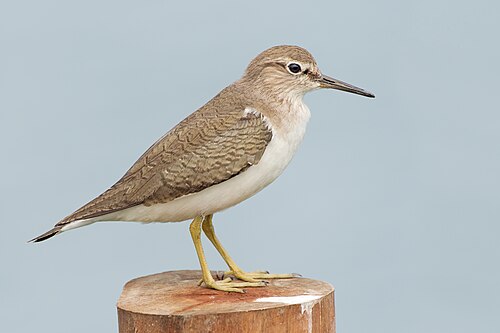
Common Sandpiper
Actitis hypoleucos

Great Thick-knee
Esacus recurvirostris

Common Redshank
Tringa totanus

Wood Sandpiper
Tringa glareola

Gull-billed Tern
Gelochelidon nilotica

Marsh Sandpiper
Tringa stagnatilis

Kentish Plover
Charadrius alexandrinus

Barred Buttonquail
Turnix suscitator
📅 Monthly Probability
☀️ When They're Spotted
Most active during daytime hours (6am–6pm) · across all parks (global)
Global Distribution
Where this species is recorded worldwide. Restricted to human observations from 2019 onwards — the same kind of record and the same period the probabilities on this page are built from, so collar-tracking studies, camera-trap arrays and museum specimens are excluded. Around Santa Rosa that removes 5,924 GPS fixes from a handful of tagged jaguars.
where this species is recorded (GBIF density — it tracks where observers go, not how likely a sighting is) · parks where it occurs — tap a pin for the sighting probability there
Parks Where Found
| # | Park | Country | Probability |
|---|---|---|---|
| 1 | Keoladeo National Park | 🇮🇳 India | |
| 2 | Yala National Park | 🇱🇰 Sri Lanka | |
| 3 | Wilpattu National Park | 🇱🇰 Sri Lanka | |
| 4 | Kaziranga National Park | 🇮🇳 India | |
| 5 | Ranthambore National Park | 🇮🇳 India | |
| 6 | Satpura National Park | 🇮🇳 India | |
| 7 | Bandhavgarh National Park | 🇮🇳 India | |
| 8 | Nagarhole National Park | 🇮🇳 India | |
| 9 | Sundarbans National Park | 🇮🇳 India | |
| 10 | Khao Yai National Park | 🇹🇭 Thailand | |
| 11 | Kanha National Park | 🇮🇳 India | |
| 12 | Jim Corbett National Park | 🇮🇳 India | |
| 13 | Minneriya National Park | 🇱🇰 Sri Lanka | |
| 14 | Royal Bardia National Park | 🇳🇵 Nepal | |
| 15 | Chitwan National Park | 🇳🇵 Nepal | |
| 16 | Royal Manas National Park | 🇧🇹 Bhutan | |
| 17 | Kaeng Krachan National Park | 🇹🇭 Thailand |
Quick answers
What are the chances of seeing a Pheasant-tailed Jacana in Yala National Park?
About 32% of wildlife watchers report a Pheasant-tailed Jacana sighting in Yala National Park, based on 334 days of visitor records from GBIF citizen-science data.
When is the best time to see Pheasant-tailed Jacana in Yala National Park?
February has the highest sighting rate for Pheasant-tailed Jacana in Yala National Park in our monthly data.