


Red Crossbill
Loxia curvirostra
- KingdomAnimalia (Animals)
- PhylumChordata (Cordats)
- ClassAves (Aus)
- OrderPasseriformes
- FamilyFringillidae (Fringíl·lids)
- GenusLoxia (Crossbills)
- SpeciesLoxia curvirostra (Red Crossbill)
The red crossbill or common crossbill (Loxia curvirostra) is a small passerine bird in the finch family Fringillidae. Crossbills have distinctive mandibles, crossed at the tips, which enable them to extract seeds from conifer cones and other fruits. Adults are often brightly coloured, with red or orange males and green or yellow females, but there is wide variation in beak size and shape, and call types, leading to different classifications of variants, some of which have been named as subspecies. The species is known as "red crossbill" in North America and "common crossbill" in Europe. Wikipedia →
Closest Relatives at Picos de Europa National Park

Chaffinch
Fringilla coelebs

Linnet
Linaria cannabina

European Serin
Serinus serinus

Eurasian Goldfinch
Carduelis carduelis
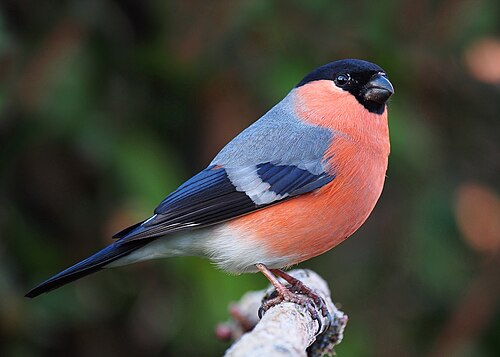
Eurasian Bullfinch
Pyrrhula pyrrhula

European Greenfinch
Chloris chloris

Eurasian Siskin
Spinus spinus

Citril Finch
Carduelis citrinella

Hawfinch
Coccothraustes coccothraustes

Eurasian Blackbird
Turdus merula

European Robin
Erithacus rubecula

Black Redstart
Phoenicurus ochruros
📅 Monthly Probability
Fewer than 5 records of Red Crossbill at Picos de Europa National Park — not enough to chart months honestly.
☀️ When They're Spotted
Most active during daytime hours (6am–6pm) · across all parks (global)
Global Distribution
Where this species is recorded worldwide. Restricted to human observations from 2019 onwards — the same kind of record and the same period the probabilities on this page are built from, so collar-tracking studies, camera-trap arrays and museum specimens are excluded. Around Santa Rosa that removes 5,924 GPS fixes from a handful of tagged jaguars.
where this species is recorded (GBIF density — it tracks where observers go, not how likely a sighting is) · parks where it occurs — tap a pin for the sighting probability there