

Masked Lapwing
Vanellus miles
- KingdomAnimalia (Animals)
- PhylumChordata (Cordats)
- ClassAves (Aus)
- OrderCharadriiformes (Caradriformes)
- FamilyCharadriidae (Plovers and Lapwings)
- GenusVanellus (Lapwings)
- SpeciesVanellus miles (Masked Lapwing)
The masked lapwing (Vanellus miles) is a large, common and conspicuous bird native to Australia (particularly the northern and eastern parts of the continent), New Zealand and New Guinea. It spends most of its time on the ground searching for food such as insects and worms and has several distinctive calls. It is common in Australian fields, open land and where there is lots of water, and is known for its defensive swooping behaviour during the nesting season. Despite the species being also known as the masked plover and often called the spur-winged plover or just plover in its native range, lapwings are classified to their own subfamily, Vanellinae, and not to the closely related plover subfamily, Charadriinae. There are two subspecies, the nominate subspecies and the southern V. m. novaehollandiae. Wikipedia →
Closest Relatives at Noosa National Park

Crested Tern
Thalasseus bergii

Silver Gull
Chroicocephalus novaehollandiae

Sooty Oystercatcher
Haematopus fuliginosus

Bush Stone-curlew
Burhinus grallarius

Pied Oystercatcher
Haematopus longirostris

Caspian Tern
Hydroprogne caspia

Little Tern
Sternula albifrons
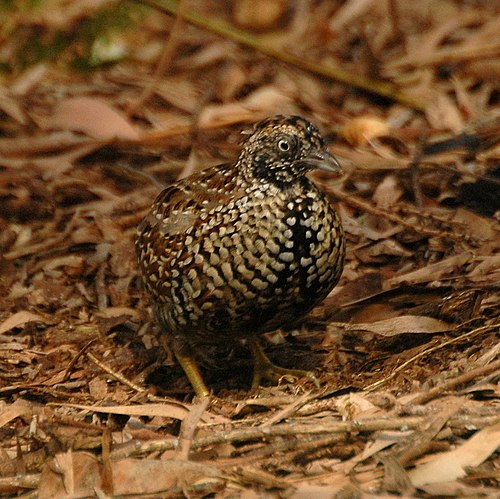
Black-breasted Buttonquail
Turnix melanogaster

Common Tern
Sterna hirundo

Bridled Tern
Onychoprion anaethetus

Painted Buttonquail
Turnix varius

Lesser Crested Tern
Thalasseus bengalensis
📅 Monthly Probability
Fewer than 5 records of Masked Lapwing at Noosa National Park — not enough to chart months honestly.
☀️ When They're Spotted
Most active during daytime hours (6am–6pm) · across all parks (global)
Global Distribution
Where this species is recorded worldwide. Restricted to human observations from 2019 onwards — the same kind of record and the same period the probabilities on this page are built from, so collar-tracking studies, camera-trap arrays and museum specimens are excluded. Around Santa Rosa that removes 5,924 GPS fixes from a handful of tagged jaguars.
where this species is recorded (GBIF density — it tracks where observers go, not how likely a sighting is) · parks where it occurs — tap a pin for the sighting probability there