


Bat-eared Fox
Otocyon megalotis
- KingdomAnimalia (Animals)
- PhylumChordata (Cordats)
- ClassMammalia (Mamífers)
- OrderCarnivora (Carnívors)
- FamilyCanidae (Canids)
- GenusOtocyon (Bat-eared foxes)
- SpeciesOtocyon megalotis (Bat-eared Fox)
The bat-eared fox (Otocyon megalotis) is a species of fox found on the African savanna. It is the only extant species of the genus Otocyon, and is the sister species to all other members of the tribe Vulpini, not genetically being a true fox. Fossil records indicate this canid first appeared during the middle Pleistocene. There are two separate populations of the bat-eared fox, each of which makes up a subspecies. The bat referred to in its colloquial name is possibly the Egyptian slit-faced bat (Nycteris thebaica), which is abundant in the region and has very large ears. Other vernacular names include big-eared fox, black-eared fox, long-eared fox, Delalande's fox, cape fox, and motlosi. Wikipedia →
10–20% of wildlife watchers report a Bat-eared Fox sighting in Ngorongoro Conservation Area, based on 29 days of visitor records from GBIF citizen-science data.
Closest Relatives at Ngorongoro Conservation Area

African Golden Wolf
Canis lupaster

Lion
Panthera leo
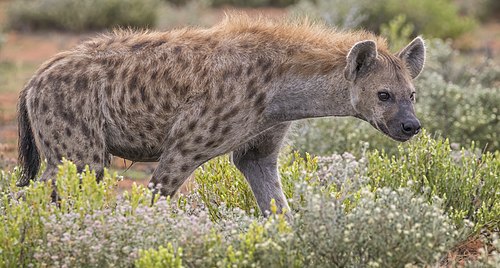
Spotted Hyena
Crocuta crocuta

Cheetah
Acinonyx jubatus

Serval
Leptailurus serval

Leopard
Panthera pardus

Banded Mongoose
Mungos mungo

Caracal
Caracal caracal

Northern Small-spotted Genet
Genetta genetta

Common Dwarf Mongoose
Helogale parvula

Honey Badger
Mellivora capensis

Slender Mongoose
Galerella sanguinea
📅 Monthly Probability
☀️ When They're Spotted
Most active during daytime hours (6am–6pm) · across all parks (global)
Global Distribution
Where this species is recorded worldwide. Restricted to human observations from 2019 onwards — the same kind of record and the same period the probabilities on this page are built from, so collar-tracking studies, camera-trap arrays and museum specimens are excluded. Around Santa Rosa that removes 5,924 GPS fixes from a handful of tagged jaguars.
where this species is recorded (GBIF density — it tracks where observers go, not how likely a sighting is) · parks where it occurs — tap a pin for the sighting probability there
Parks Where Found
| # | Park | Country | Probability |
|---|---|---|---|
| 1 | Kgalagadi Transfrontier Park | 🇿🇦 South Africa | |
| 2 | Amboseli National Park | 🇰🇪 Kenya | |
| 3 | Tarangire National Park | 🇹🇿 Tanzania | |
| 4 | Serengeti National Park | 🇹🇿 Tanzania | |
| 5 | Samburu National Reserve | 🇰🇪 Kenya | |
| 6 | Ngorongoro Conservation Area | 🇹🇿 Tanzania | |
| 7 | Masai Mara National Reserve | 🇰🇪 Kenya | |
| 8 | Namib-Naukluft National Park | 🇳🇦 Namibia | |
| 9 | Moremi Game Reserve | 🇧🇼 Botswana | |
| 10 | Etosha National Park | 🇳🇦 Namibia | |
| 11 | Addo Elephant National Park | 🇿🇦 South Africa | |
| 12 | Tsavo East National Park | 🇰🇪 Kenya | |
| 13 | Awash National Park | 🇪🇹 Ethiopia | |
| 14 | Ruaha National Park | 🇹🇿 Tanzania | |
| 15 | Waterberg Plateau Park | 🇳🇦 Namibia | |
| 16 | Gonarezhou National Park | 🇿🇼 Zimbabwe | |
| 17 | Hwange National Park | 🇿🇼 Zimbabwe | |
| 18 | Arusha National Park | 🇹🇿 Tanzania | |
| 19 | Mkomazi National Park | 🇹🇿 Tanzania | |
| 20 | Lake Nakuru National Park | 🇰🇪 Kenya | |
| 21 | Chobe National Park | 🇧🇼 Botswana | |
| 22 | Tsavo West National Park | 🇰🇪 Kenya |
Quick answers
What are the chances of seeing a Bat-eared Fox in Ngorongoro Conservation Area?
About 14% of wildlife watchers report a Bat-eared Fox sighting in Ngorongoro Conservation Area, based on 29 days of visitor records from GBIF citizen-science data.
When is the best time to see Bat-eared Fox in Ngorongoro Conservation Area?
November has the highest sighting rate for Bat-eared Fox in Ngorongoro Conservation Area in our monthly data.