


Caracal
Caracal caracal
- KingdomAnimalia (Animals)
- PhylumChordata (Cordats)
- ClassMammalia (Mamífers)
- OrderCarnivora (Carnívors)
- FamilyFelidae (Felids)
- GenusCaracal (Caracals and African Golden Cats)
- SpeciesCaracal caracal (Caracal)
The caracal (Caracal caracal) is a wild cat native to Africa, the Middle East, Central Asia, and arid areas of Pakistan and northwestern India. It is characterised by a robust build, long legs, a short face, long tufted ears, relatively short tail, and long canine teeth. Its coat is uniformly reddish tan or sandy, while the ventral parts are lighter with small reddish markings. It reaches 40–50 cm (16–20 in) at the shoulder and weighs 8–19 kg (18–42 lb). It was first scientifically described by German naturalist Johann Christian Daniel von Schreber in 1776. Three subspecies are recognised. Wikipedia →
10–20% of wildlife watchers report a Caracal sighting in Ngorongoro Conservation Area, based on 21 days of visitor records from GBIF citizen-science data.
Closest Relatives at Ngorongoro Conservation Area

Lion
Panthera leo

Cheetah
Acinonyx jubatus

Serval
Leptailurus serval

Leopard
Panthera pardus

African Wildcat
Felis lybica
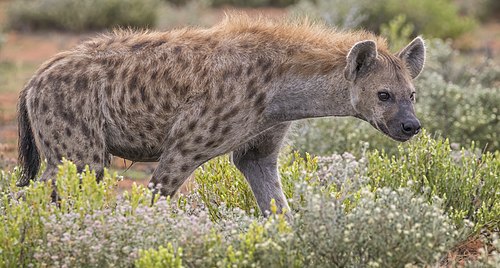
Spotted Hyena
Crocuta crocuta

African Golden Wolf
Canis lupaster

Banded Mongoose
Mungos mungo

Bat-eared Fox
Otocyon megalotis

Northern Small-spotted Genet
Genetta genetta

Common Dwarf Mongoose
Helogale parvula

Honey Badger
Mellivora capensis
📅 Monthly Probability
☀️🌙 When They're Spotted
Active throughout day and night · across all parks (global)
Global Distribution
Where this species is recorded worldwide. Restricted to human observations from 2019 onwards — the same kind of record and the same period the probabilities on this page are built from, so collar-tracking studies, camera-trap arrays and museum specimens are excluded. Around Santa Rosa that removes 5,924 GPS fixes from a handful of tagged jaguars.
where this species is recorded (GBIF density — it tracks where observers go, not how likely a sighting is) · parks where it occurs — tap a pin for the sighting probability there
Parks Where Found
| # | Park | Country | Probability |
|---|---|---|---|
| 1 | Kgalagadi Transfrontier Park | 🇿🇦 South Africa | |
| 2 | Table Mountain National Park | 🇿🇦 South Africa | |
| 3 | Ngorongoro Conservation Area | 🇹🇿 Tanzania | |
| 4 | Tsavo West National Park | 🇰🇪 Kenya | |
| 5 | Tsavo East National Park | 🇰🇪 Kenya | |
| 6 | Serengeti National Park | 🇹🇿 Tanzania | |
| 7 | Garden Route National Park | 🇿🇦 South Africa | |
| 8 | Addo Elephant National Park | 🇿🇦 South Africa | |
| 9 | Kruger National Park | 🇿🇦 South Africa | |
| 10 | Meru National Park | 🇰🇪 Kenya | |
| 11 | Waterberg Plateau Park | 🇳🇦 Namibia | |
| 12 | Mkomazi National Park | 🇹🇿 Tanzania | |
| 13 | Amboseli National Park | 🇰🇪 Kenya | |
| 14 | Pilanesberg National Park | 🇿🇦 South Africa | |
| 15 | Samburu National Reserve | 🇰🇪 Kenya | |
| 16 | Etosha National Park | 🇳🇦 Namibia | |
| 17 | Masai Mara National Reserve | 🇰🇪 Kenya | |
| 18 | Namib-Naukluft National Park | 🇳🇦 Namibia |
Quick answers
What are the chances of seeing a Caracal in Ngorongoro Conservation Area?
About 12% of wildlife watchers report a Caracal sighting in Ngorongoro Conservation Area, based on 21 days of visitor records from GBIF citizen-science data.
When is the best time to see Caracal in Ngorongoro Conservation Area?
October has the highest sighting rate for Caracal in Ngorongoro Conservation Area in our monthly data.