


Green and Black Dart-poison Frog
Dendrobates auratus
- KingdomAnimalia (Animals)
- PhylumChordata (Cordats)
- ClassAmphibia (Amfibis)
- OrderAnura (Anurs)
- FamilyDendrobatidae (Poison Dart Frogs)
- GenusDendrobates
- SpeciesDendrobates auratus (Green and Black Dart-poison Frog)
Dendrobates auratus, also known as the green-and-black poison dart frog, the green-and-black poison arrow frog, green-and-black poison frog, green poison dart frog, green poison arrow frog, and green poison frog, is a brightly-colored member of the order Anura native to southern Central America and Colombia. This species has also been introduced to Oahu, Hawaii in an effort to lower mosquito numbers. It is one of the most variably colored species of poison dart frogs, after D. tinctorius, Adelphobates galactonotus and some Oophaga species. From a conservation standpoint, it is considered to be of least concern by the International Union for Conservation of Nature. Wikipedia →
Closest Relatives at Parque Natural Metropolitano

Rainforest Rocket Frog
Silverstoneia flotator
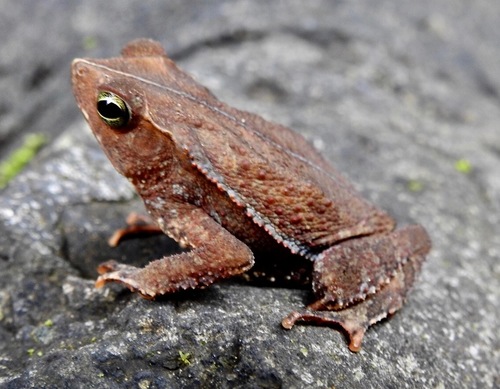
Forest Toad
Rhinella alata

Guayaquil Dwarf Frog
Engystomops pustulosus

Giant Marine Toad
Rhinella horribilis

Rosenberg's Gladiator Frog
Boana rosenbergi

Red-eyed Treefrog
Agalychnis callidryas
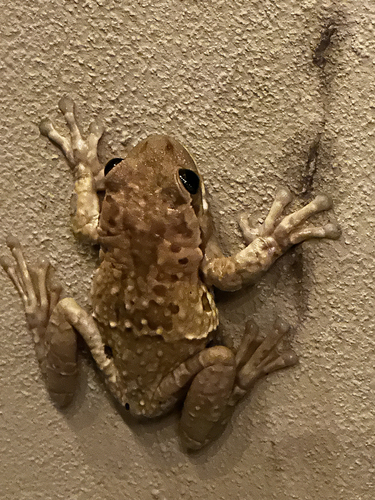
Milk Frog
Trachycephalus macrotis

Smoky Jungle Frog
Leptodactylus pentadactylus

Savage's Thin-toed Frog
Leptodactylus savagei

Turbo White-lipped Frog
Leptodactylus poecilochilus

Mexican White-lipped Frog
Leptodactylus fragilis

Fitzinger's Robber Frog
Craugastor fitzingeri
📅 Monthly Probability
Fewer than 5 records of Green and Black Dart-poison Frog at Parque Natural Metropolitano — not enough to chart months honestly.
☀️ When They're Spotted
Most active during daytime hours (6am–6pm) · across all parks (global)
Global Distribution
Where this species is recorded worldwide. Restricted to human observations from 2019 onwards — the same kind of record and the same period the probabilities on this page are built from, so collar-tracking studies, camera-trap arrays and museum specimens are excluded. Around Santa Rosa that removes 5,924 GPS fixes from a handful of tagged jaguars.
where this species is recorded (GBIF density — it tracks where observers go, not how likely a sighting is) · parks where it occurs — tap a pin for the sighting probability there