


Forest Flame Snake
Oxyrhopus petolarius
- KingdomAnimalia (Animals)
- PhylumChordata (Cordats)
- ClassSquamata
- FamilyColubridae (Colúbrids)
- GenusOxyrhopus
- SpeciesOxyrhopus petolarius (Forest Flame Snake)
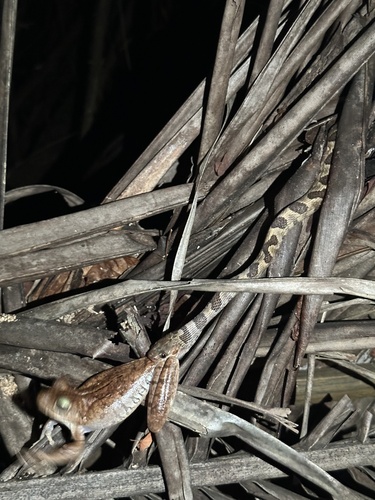
Oxyrhopus petolarius, commonly known as the forest flame snake, is a species of mildly venomous snake in the subfamily Dipsadinae of the family Colubridae. The species is native to Central and South America. There are three recognized subspecies. Wikipedia →
10–20% of wildlife watchers report a Forest Flame Snake sighting in Tenorio Volcano National Park, based on 8 days of visitor records from GBIF citizen-science data.
Closest Relatives at Tenorio Volcano National Park

Cope's Vine Snake
Oxybelis brevirostris

Blunthead Tree Snake
Imantodes cenchoa

Cloudy Snail-eating Snake
Sibon nebulatus
Ornate Cat-eyed Snake
Leptodeira ornata

Mottled Snail-eater
Sibon longifrenis

Red Coffee Snake
Ninia sebae

Puffing Snake
Phrynonax poecilonotus

Western Tree Snake
Imantodes inornatus

Black Halloween Snake
Pliocercus euryzonus

Degenhardt's Scorpion-eating Snake
Stenorrhina degenhardtii

Adorned Graceful Brown Snake
Rhadinaea decorata

Cope's Parrot Snake
Leptophis depressirostris
📅 Monthly Probability
☀️🌙 When They're Spotted
Active throughout day and night · across all parks (global)
Global Distribution
Where this species is recorded worldwide. Restricted to human observations from 2019 onwards — the same kind of record and the same period the probabilities on this page are built from, so collar-tracking studies, camera-trap arrays and museum specimens are excluded. Around Santa Rosa that removes 5,924 GPS fixes from a handful of tagged jaguars.
where this species is recorded (GBIF density — it tracks where observers go, not how likely a sighting is) · parks where it occurs — tap a pin for the sighting probability there
Parks Where Found
Quick answers
What are the chances of seeing a Forest Flame Snake in Tenorio Volcano National Park?
About 16% of wildlife watchers report a Forest Flame Snake sighting in Tenorio Volcano National Park, based on 8 days of visitor records from GBIF citizen-science data.
When is the best time to see Forest Flame Snake in Tenorio Volcano National Park?
February has the highest sighting rate for Forest Flame Snake in Tenorio Volcano National Park in our monthly data.