


Bush Stone-curlew
Burhinus grallarius
- KingdomAnimalia (Animals)
- PhylumChordata (Cordats)
- ClassAves (Aus)
- OrderCharadriiformes (Caradriformes)
- FamilyBurhinidae (Stone-curlews and Thick-knees)
- GenusBurhinus (Typical Stone-curlews)
- SpeciesBurhinus grallarius (Bush Stone-curlew)
The bush stone-curlew or bush thick-knee (Burhinus grallarius, obsolete name Burhinus magnirostris) is a large, ground-dwelling bird endemic to Australia. Its favoured habitat is open plains and woodlands, where it stalks slowly at night in search of invertebrates such as insects. Its grey-brown coloration is distinguished by dark streaks, its eyes are large and legs are long. It is capable of flight, but relies on the camouflage of its plumage to evade detection during the day; the bush curlew adopts a rigid posture when it becomes aware of an observer. Both sexes care for two eggs laid on the bare ground, usually sited near bush in a shaded position or next to a fallen branch. Wikipedia →
5–10% of wildlife watchers report a Bush Stone-curlew sighting in Nitmiluk National Park, based on 27 days of visitor records from GBIF citizen-science data.
Closest Relatives at Nitmiluk National Park

Masked Lapwing
Vanellus miles

Wood Sandpiper
Tringa glareola

Chestnut-backed Buttonquail
Turnix castanotus

Comb-crested Jacana
Irediparra gallinacea

Red-chested Buttonquail
Turnix pyrrhothorax
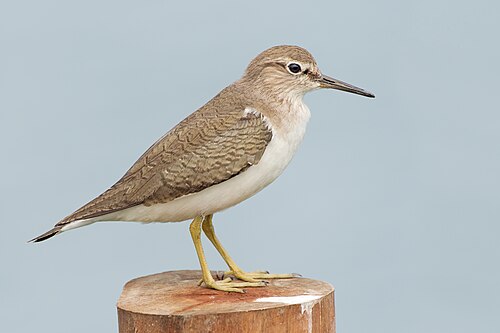
Common Sandpiper
Actitis hypoleucos

Little Buttonquail
Turnix velox
📅 Monthly Probability
☀️ When They're Spotted
Most active during daytime hours (6am–6pm) · across all parks (global)
Global Distribution
Where this species is recorded worldwide. Restricted to human observations from 2019 onwards — the same kind of record and the same period the probabilities on this page are built from, so collar-tracking studies, camera-trap arrays and museum specimens are excluded. Around Santa Rosa that removes 5,924 GPS fixes from a handful of tagged jaguars.
where this species is recorded (GBIF density — it tracks where observers go, not how likely a sighting is) · parks where it occurs — tap a pin for the sighting probability there
Parks Where Found
| # | Park | Country | Probability |
|---|---|---|---|
| 1 | Daintree National Park | 🇦🇺 Australia | |
| 2 | Kakadu National Park | 🇦🇺 Australia | |
| 3 | Lamington National Park | 🇦🇺 Australia | |
| 4 | Nitmiluk National Park | 🇦🇺 Australia | |
| 5 | Litchfield National Park | 🇦🇺 Australia | |
| 6 | Noosa National Park | 🇦🇺 Australia | |
| 7 | Grampians National Park | 🇦🇺 Australia | |
| 8 | Springbrook National Park | 🇦🇺 Australia | |
| 9 | Ningaloo Marine Park | 🇦🇺 Australia |
Quick answers
What are the chances of seeing a Bush Stone-curlew in Nitmiluk National Park?
About 7% of wildlife watchers report a Bush Stone-curlew sighting in Nitmiluk National Park, based on 27 days of visitor records from GBIF citizen-science data.
When is the best time to see Bush Stone-curlew in Nitmiluk National Park?
April has the highest sighting rate for Bush Stone-curlew in Nitmiluk National Park in our monthly data.