


Marsh Tit
Poecile palustris
- KingdomAnimalia (Animals)
- PhylumChordata (Cordats)
- ClassAves (Aus)
- OrderPasseriformes
- FamilyParidae (Mallerengues)
- GenusPoecile (Chickadees and Allies)
- SpeciesPoecile palustris (Marsh Tit)
The marsh tit (Poecile palustris) is a Eurasian passerine bird in the tit family Paridae and genus Poecile, closely related to the willow tit, Père David's and Songar tits. It is a small bird, around 12 cm (4.7 in) long and weighing 12 g (0.42 oz), with a black crown and nape, pale cheeks, brown back and greyish-brown wings and tail. Between 8 and 11 subspecies are recognised. Its close resemblance to the willow tit can cause identification problems, especially in the United Kingdom where the local subspecies of the two are very similar; they were not recognised as separate species until 1897. Globally, the marsh tit is classified as Least Concern, although there is evidence of a decline in numbers (in the UK, numbers have dropped by more than 50% since the 1970s, for example). It can be found throughout temperate Europe and northern Asia and, despite its name, it occurs in a range of habitats including dry woodland. Wikipedia →
Closest Relatives at Kiskunság National Park

Willow Tit
Poecile montanus

Great Tit
Parus major
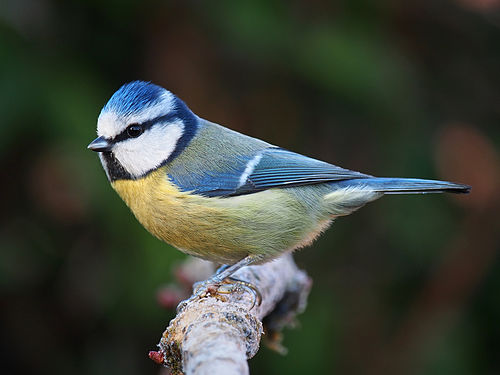
Blue Tit
Cyanistes caeruleus

Coal Tit
Periparus ater

Hooded Crow
Corvus cornix

European Starling
Sturnus vulgaris

Rook
Corvus frugilegus

Eurasian Tree Sparrow
Passer montanus

Eurasian Goldfinch
Carduelis carduelis

Eurasian Magpie
Pica pica

White Wagtail
Motacilla alba

European Stonechat
Saxicola rubicola
📅 Monthly Probability
Fewer than 5 records of Marsh Tit at Kiskunság National Park — not enough to chart months honestly.
☀️ When They're Spotted
Most active during daytime hours (6am–6pm) · across all parks (global)
Global Distribution
Where this species is recorded worldwide. Restricted to human observations from 2019 onwards — the same kind of record and the same period the probabilities on this page are built from, so collar-tracking studies, camera-trap arrays and museum specimens are excluded. Around Santa Rosa that removes 5,924 GPS fixes from a handful of tagged jaguars.
where this species is recorded (GBIF density — it tracks where observers go, not how likely a sighting is) · parks where it occurs — tap a pin for the sighting probability there
Parks Where Found
| # | Park | Country | Probability |
|---|---|---|---|
| 1 | Triglav National Park | 🇸🇮 Slovenia | |
| 2 | Białowieża National Park | 🇵🇱 Poland | |
| 3 | Biebrza National Park | 🇵🇱 Poland | |
| 4 | Ordesa y Monte Perdido National Park | 🇪🇸 Spain | |
| 5 | Bavarian Forest National Park | 🇩🇪 Germany | |
| 6 | Gauja National Park | 🇱🇻 Latvia | |
| 7 | Picos de Europa National Park | 🇪🇸 Spain | |
| 8 | Mercantour National Park | 🇫🇷 France | |
| 9 | Aigüestortes National Park | 🇪🇸 Spain | |
| 10 | Cévennes National Park | 🇫🇷 France | |
| 11 | Pyrénées National Park | 🇫🇷 France | |
| 12 | Wadden Sea National Park | 🇩🇪 Germany | |
| 13 | Tatra National Park | 🇸🇰 Slovakia | |
| 14 | Fertő-Hanság National Park | 🇭🇺 Hungary | |
| 15 | Hortobágy National Park | 🇭🇺 Hungary | |
| 16 | Snowdonia National Park | 🇬🇧 United Kingdom | |
| 17 | Kiskunság National Park | 🇭🇺 Hungary |