
Long-tailed Tit
Aegithalos caudatus
- KingdomAnimalia (Animals)
- PhylumChordata (Cordats)
- ClassAves (Aus)
- OrderPasseriformes
- FamilyAegithalidae (Long-tailed Tits and Bushtits)
- GenusAegithalos (Typical Long-tailed Tits)
- SpeciesAegithalos caudatus (Long-tailed Tit)
The long-tailed tit or long-tailed bushtit (Aegithalos caudatus) is a common bird species belonging to the bushtit family found throughout Eurasia. An insectivore, it inhabits deciduous and mixed woodlands as well as scrub, heathland, farmland, parks and gardens. The plumage of this small long-tailed bird is predominantly black and white with varying amounts of pink and grey. Northern subspecies are paler and have completely white heads, lacking the large dark eyebrows of southern populations. It is a social bird that forms compact family flocks of six to seventeen individuals outside of the breeding season, when these flocks break up. It has a strong preference for nesting in scrub areas and often builds its nest in thorny bushes less than 3 metres (10 feet) above the ground. Wikipedia →
10–20% of wildlife watchers report a Long-tailed Tit sighting in Cévennes National Park, based on 60 days of visitor records from GBIF citizen-science data.
Closest Relatives at Cévennes National Park

Chaffinch
Fringilla coelebs

Great Tit
Parus major

Eurasian Blackbird
Turdus merula

Carrion Crow
Corvus corone

European Robin
Erithacus rubecula

Blackcap
Sylvia atricapilla
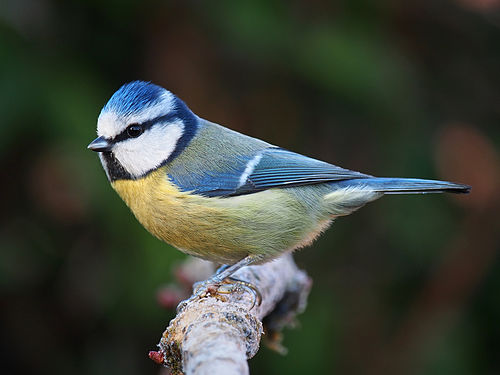
Blue Tit
Cyanistes caeruleus

Black Redstart
Phoenicurus ochruros

Eurasian Jay
Garrulus glandarius

Eurasian Crag Martin
Ptyonoprogne rupestris

European Serin
Serinus serinus

Common Raven
Corvus corax
📅 Monthly Probability
☀️ When They're Spotted
Most active during daytime hours (6am–6pm) · across all parks (global)
Global Distribution
Where this species is recorded worldwide. Restricted to human observations from 2019 onwards — the same kind of record and the same period the probabilities on this page are built from, so collar-tracking studies, camera-trap arrays and museum specimens are excluded. Around Santa Rosa that removes 5,924 GPS fixes from a handful of tagged jaguars.
where this species is recorded (GBIF density — it tracks where observers go, not how likely a sighting is) · parks where it occurs — tap a pin for the sighting probability there
Parks Where Found
| # | Park | Country | Probability |
|---|---|---|---|
| 1 | Nikko National Park | 🇯🇵 Japan | |
| 2 | Aigüestortes National Park | 🇪🇸 Spain | |
| 3 | Sierra de Guadarrama National Park | 🇪🇸 Spain | |
| 4 | Sierra Nevada National Park | 🇪🇸 Spain | |
| 5 | Pyrénées National Park | 🇫🇷 France | |
| 6 | Snowdonia National Park | 🇬🇧 United Kingdom | |
| 7 | Mercantour National Park | 🇫🇷 France | |
| 8 | Kiskunság National Park | 🇭🇺 Hungary | |
| 9 | Ordesa y Monte Perdido National Park | 🇪🇸 Spain | |
| 10 | Monfragüe National Park | 🇪🇸 Spain | |
| 11 | Białowieża National Park | 🇵🇱 Poland | |
| 12 | Hortobágy National Park | 🇭🇺 Hungary | |
| 13 | Doñana National Park | 🇪🇸 Spain | |
| 14 | Cairngorms National Park | 🇬🇧 United Kingdom | |
| 15 | Cévennes National Park | 🇫🇷 France | |
| 16 | Picos de Europa National Park | 🇪🇸 Spain | |
| 17 | Bavarian Forest National Park | 🇩🇪 Germany | |
| 18 | Triglav National Park | 🇸🇮 Slovenia | |
| 19 | Tatra National Park | 🇸🇰 Slovakia | |
| 20 | Biebrza National Park | 🇵🇱 Poland | |
| 21 | Fertő-Hanság National Park | 🇭🇺 Hungary | |
| 22 | Wadden Sea National Park | 🇩🇪 Germany | |
| 23 | Gauja National Park | 🇱🇻 Latvia | |
| 24 | Gobi Gurvansaikhan National Park | 🇲🇳 Mongolia |
Quick answers
What are the chances of seeing a Long-tailed Tit in Cévennes National Park?
About 19% of wildlife watchers report a Long-tailed Tit sighting in Cévennes National Park, based on 60 days of visitor records from GBIF citizen-science data.
When is the best time to see Long-tailed Tit in Cévennes National Park?
February has the highest sighting rate for Long-tailed Tit in Cévennes National Park in our monthly data.