


Common tent-making Bat
Uroderma bilobatum
- KingdomAnimalia (Animals)
- PhylumChordata (Cordats)
- ClassMammalia (Mamífers)
- OrderChiroptera (Ratpenats)
- FamilyPhyllostomidae (New World Leaf-nosed Bats)
- GenusUroderma (Tent-making Bats)
- SpeciesUroderma bilobatum (Common tent-making Bat)
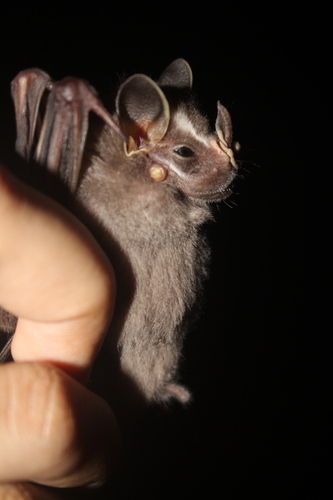
The tent-making bat (Uroderma bilobatum) is an American leaf-nosed bat (Phyllostomidae) found in lowland forests of Central and South America. This medium-sized bat has a gray coat with a pale white stripe running down the middle of the back. Its face is characterized by a fleshy nose-leaf and four white stripes. Primarily a frugivore, it may supplement its diet with insects, flower parts, pollen, and nectar. Its common name comes from its behavior of constructing tents out of large, fan-shaped leaves. These roosts provide excellent protection from the tropical rains, and a single tent roost may house several bats at once. Wikipedia →
5–10% of wildlife watchers report a Common tent-making Bat sighting in Tayrona National Natural Park, based on 5 days of visitor records from GBIF citizen-science data.
Closest Relatives at Tayrona National Natural Park


📅 Monthly Probability
☀️ When They're Spotted
Most active during daytime hours (6am–6pm) · across all parks (global)
Global Distribution
Where this species is recorded worldwide. Restricted to human observations from 2019 onwards — the same kind of record and the same period the probabilities on this page are built from, so collar-tracking studies, camera-trap arrays and museum specimens are excluded. Around Santa Rosa that removes 5,924 GPS fixes from a handful of tagged jaguars.
where this species is recorded (GBIF density — it tracks where observers go, not how likely a sighting is) · parks where it occurs — tap a pin for the sighting probability there
Parks Where Found
| # | Park | Country | Probability |
|---|---|---|---|
| 1 | Manuel Antonio National Park | 🇨🇷 Costa Rica | |
| 2 | Soberanía National Park | 🇵🇦 Panama | |
| 3 | Piedras Blancas National Park | 🇨🇷 Costa Rica | |
| 4 | Tayrona National Natural Park | 🇨🇴 Colombia | |
| 5 | Corcovado National Park | 🇨🇷 Costa Rica | |
| 6 | Braulio Carrillo National Park | 🇨🇷 Costa Rica | |
| 7 | Carara National Park | 🇨🇷 Costa Rica | |
| 8 | Chagres National Park | 🇵🇦 Panama | |
| 9 | Ostional Wildlife Refuge | 🇨🇷 Costa Rica | |
| 10 | Cordillera Azul National Park | 🇵🇪 Peru | |
| 11 | Bastimentos Island National Marine Park | 🇵🇦 Panama | |
| 12 | Yasuní National Park | 🇪🇨 Ecuador | |
| 13 | Darién National Park | 🇵🇦 Panama | |
| 14 | Arenal Volcano National Park | 🇨🇷 Costa Rica | |
| 15 | Tortuguero National Park | 🇨🇷 Costa Rica | |
| 16 | Cuyabeno Wildlife Reserve | 🇪🇨 Ecuador | |
| 17 | Tapantí-Macizo de la Muerte National Park | 🇨🇷 Costa Rica | |
| 18 | Manu National Park | 🇵🇪 Peru | |
| 19 | La Amistad International Park (Panama) | 🇵🇦 Panama | |
| 20 | Monteverde Cloud Forest Reserve | 🇨🇷 Costa Rica |
Quick answers
What are the chances of seeing a Common tent-making Bat in Tayrona National Natural Park?
About 7% of wildlife watchers report a Common tent-making Bat sighting in Tayrona National Natural Park, based on 5 days of visitor records from GBIF citizen-science data.
When is the best time to see Common tent-making Bat in Tayrona National Natural Park?
April has the highest sighting rate for Common tent-making Bat in Tayrona National Natural Park in our monthly data.