


European Golden Plover
Pluvialis apricaria
- KingdomAnimalia (Animals)
- PhylumChordata (Cordats)
- ClassAves (Aus)
- OrderCharadriiformes (Caradriformes)
- FamilyCharadriidae (Plovers and Lapwings)
- GenusPluvialis (Golden Plovers and Grey Plover)
- SpeciesPluvialis apricaria (European Golden Plover)
The European golden plover (Pluvialis apricaria), also known as the Eurasian golden plover, greater golden plover, or just the golden plover within Europe, is a relatively large species of plover. This species is similar to two other golden plovers, the American golden plover, Pluvialis dominica, and Pacific golden plover, Pluvialis fulva, which are both slightly smaller, slimmer and longer-legged than European golden plover, and both have grey rather than white axillary (armpit) feathers (visible in flight, and when the bird stretches its wings on the ground). Wikipedia →
<5% of wildlife watchers report a European Golden Plover sighting in Pyrénées National Park, based on 16 days of visitor records from GBIF citizen-science data.
Closest Relatives at Pyrénées National Park

Black-bellied Plover
Pluvialis squatarola

Northern Lapwing
Vanellus vanellus

Common Ringed Plover
Charadrius hiaticula

Eurasian Dotterel
Charadrius morinellus
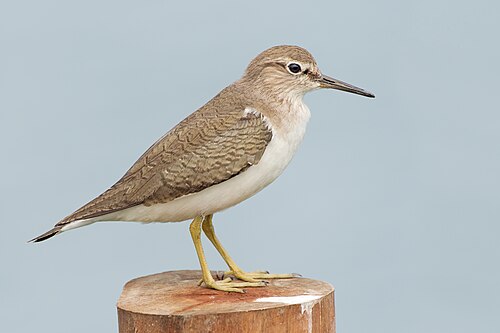
Common Sandpiper
Actitis hypoleucos

Green Sandpiper
Tringa ochropus

Yellow-legged Gull
Larus michahellis

Gull-billed Tern
Gelochelidon nilotica

Common Snipe
Gallinago gallinago

Black-winged Stilt
Himantopus himantopus

Common Redshank
Tringa totanus

Eurasian Woodcock
Scolopax rusticola
📅 Monthly Probability
☀️ When They're Spotted
Most active during daytime hours (6am–6pm) · across all parks (global)
Global Distribution
Where this species is recorded worldwide. Restricted to human observations from 2019 onwards — the same kind of record and the same period the probabilities on this page are built from, so collar-tracking studies, camera-trap arrays and museum specimens are excluded. Around Santa Rosa that removes 5,924 GPS fixes from a handful of tagged jaguars.
where this species is recorded (GBIF density — it tracks where observers go, not how likely a sighting is) · parks where it occurs — tap a pin for the sighting probability there
Parks Where Found
| # | Park | Country | Probability |
|---|---|---|---|
| 1 | Thingvellir National Park | 🇮🇸 Iceland | |
| 2 | Vatnajokull National Park | 🇮🇸 Iceland | |
| 3 | Wadden Sea National Park | 🇩🇪 Germany | |
| 4 | Kiskunság National Park | 🇭🇺 Hungary | |
| 5 | Doñana National Park | 🇪🇸 Spain | |
| 6 | Biebrza National Park | 🇵🇱 Poland | |
| 7 | Cairngorms National Park | 🇬🇧 United Kingdom | |
| 8 | Fertő-Hanság National Park | 🇭🇺 Hungary | |
| 9 | Hortobágy National Park | 🇭🇺 Hungary | |
| 10 | Monfragüe National Park | 🇪🇸 Spain | |
| 11 | Snowdonia National Park | 🇬🇧 United Kingdom | |
| 12 | Białowieża National Park | 🇵🇱 Poland | |
| 13 | Pyrénées National Park | 🇫🇷 France | |
| 14 | Bavarian Forest National Park | 🇩🇪 Germany |
Quick answers
What are the chances of seeing a European Golden Plover in Pyrénées National Park?
About 0% of wildlife watchers report a European Golden Plover sighting in Pyrénées National Park, based on 16 days of visitor records from GBIF citizen-science data.
When is the best time to see European Golden Plover in Pyrénées National Park?
November has the highest sighting rate for European Golden Plover in Pyrénées National Park in our monthly data.