


Greater Kudu
Tragelaphus strepsiceros
- KingdomAnimalia (Animals)
- PhylumChordata (Cordats)
- ClassMammalia (Mamífers)
- OrderArtiodactyla (Artiodàctils)
- FamilyBovidae (Bòvids)
- GenusTragelaphus (Spiral-horned Antelopes)
- SpeciesTragelaphus strepsiceros (Greater Kudu)
The greater kudu (Tragelaphus strepsiceros) is a large woodland antelope, found throughout eastern and southern Africa. Despite occupying such widespread territory, they are sparsely populated in most areas due to declining habitat, deforestation, and poaching. The greater kudu is one of two species commonly known as kudu, the other being the lesser kudu, T. imberbis. Wikipedia →
Closest Relatives at Serengeti National Park

Northern Bushbuck
Tragelaphus scriptus

Lesser Kudu
Tragelaphus imberbis

Topi
Damaliscus korrigum
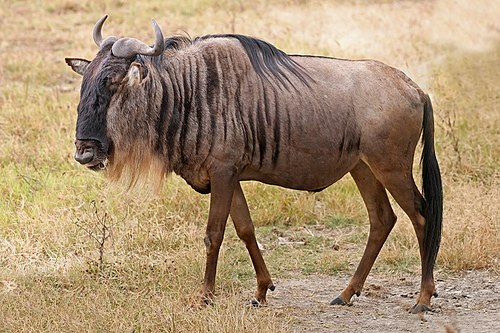
Blue Wildebeest
Connochaetes taurinus

Impala
Aepyceros melampus

African Buffalo
Syncerus caffer

Thomson's Gazelle
Eudorcas thomsonii

Hartebeest
Alcelaphus buselaphus

Common Eland
Taurotragus oryx

Grant's Gazelle
Nanger granti

Waterbuck
Kobus ellipsiprymnus

Bohor Reedbuck
Redunca redunca
📅 Monthly Probability
Fewer than 5 records of Greater Kudu at Serengeti National Park — not enough to chart months honestly.
☀️ When They're Spotted
Most active during daytime hours (6am–6pm) · across all parks (global)
Global Distribution
Where this species is recorded worldwide. Restricted to human observations from 2019 onwards — the same kind of record and the same period the probabilities on this page are built from, so collar-tracking studies, camera-trap arrays and museum specimens are excluded. Around Santa Rosa that removes 5,924 GPS fixes from a handful of tagged jaguars.
where this species is recorded (GBIF density — it tracks where observers go, not how likely a sighting is) · parks where it occurs — tap a pin for the sighting probability there