


Muskrat
Ondatra zibethicus
- KingdomAnimalia (Animals)
- PhylumChordata (Cordats)
- ClassMammalia (Mamífers)
- OrderRodentia (Rosegadors)
- FamilyCricetidae (Hamsters, Voles, Lemmings, and Allies)
- GenusOndatra (Common Muskrats)
- SpeciesOndatra zibethicus (Muskrat)
The muskrat or common muskrat (Ondatra zibethicus) is a medium-sized semiaquatic rodent. Adult muskrats weigh 0.6–2 kg (1+1⁄4–4+1⁄2 lb), with a body length (excluding the tail) of 20–35 cm (8–14 in). They are covered with short, thick fur of medium to dark brown color. Their long tails, covered with scales rather than hair, are laterally compressed and generate a small amount of thrust, with their webbed hind feet being the main means of propulsion and the unique tail mainly important in directional stability. Muskrats spend most of their time in the water and can swim underwater for 12 to 17 minutes. They live in families of a male and female pair and their young. Wikipedia →
10–20% of wildlife watchers report a Muskrat sighting in Rocky Mountain National Park, based on 61 days of visitor records from GBIF citizen-science data.
Closest Relatives at Rocky Mountain National Park

Deer Mouse
Peromyscus maniculatus

Meadow Vole
Microtus pennsylvanicus

Gapperrotelmaus
Myodes gapperi

Bushy-tailed Wood Rat
Neotoma cinerea
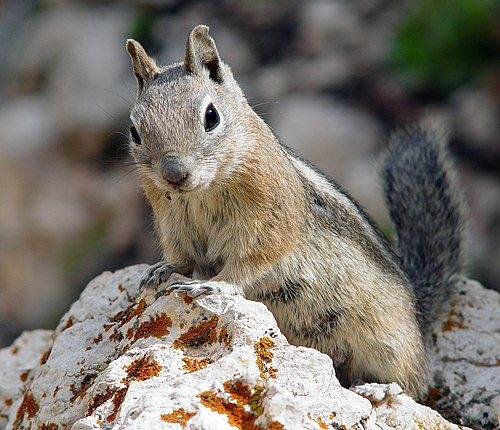
Golden-mantled Ground Squirrel
Callospermophilus lateralis

Yellow-bellied Marmot
Marmota flaviventris

Wyoming Ground Squirrel
Urocitellus elegans

American Red Squirrel
Tamiasciurus hudsonicus

Least Chipmunk
Tamias minimus

Abert's Squirrel
Sciurus aberti

Colorado Chipmunk
Tamias quadrivittatus

Uinta Chipmunk
Tamias umbrinus
📅 Monthly Probability
☀️🌙 When They're Spotted
Active throughout day and night · across all parks (global)
Global Distribution
Where this species is recorded worldwide. Restricted to human observations from 2019 onwards — the same kind of record and the same period the probabilities on this page are built from, so collar-tracking studies, camera-trap arrays and museum specimens are excluded. Around Santa Rosa that removes 5,924 GPS fixes from a handful of tagged jaguars.
where this species is recorded (GBIF density — it tracks where observers go, not how likely a sighting is) · parks where it occurs — tap a pin for the sighting probability there
Parks Where Found
Quick answers
What are the chances of seeing a Muskrat in Rocky Mountain National Park?
About 14% of wildlife watchers report a Muskrat sighting in Rocky Mountain National Park, based on 61 days of visitor records from GBIF citizen-science data.
When is the best time to see Muskrat in Rocky Mountain National Park?
November has the highest sighting rate for Muskrat in Rocky Mountain National Park in our monthly data.