


Orange-winged Parrot
Amazona amazonica
- KingdomAnimalia (Animals)
- PhylumChordata (Cordats)
- ClassAves (Aus)
- OrderPsittaciformes (Parrots)
- FamilyPsittacidae (New World and African Parrots)
- GenusAmazona (Amazon Parrots)
- SpeciesAmazona amazonica (Orange-winged Parrot)
The orange-winged amazon (Amazona amazonica), also known as orange-winged parrot and loro guaro, is a large amazon parrot. It is a resident breeding bird in tropical South America, from Colombia, Trinidad and Tobago south to Peru, Bolivia and central Brazil. Its habitat is forest and semi-open country. Although common, it is persecuted as an agricultural pest and by capture for the pet trade (over 66,000 captured from 1981 to 1985). It is also hunted as a food source. Introduced breeding populations have been reported in Puerto Rico and Tenerife in the Canary Islands. Wikipedia →
Closest Relatives at Noel Kempff Mercado National Park

Blue-fronted Parrot
Amazona aestiva

Yellow-crowned Parrot
Amazona ochrocephala

Mealy Parrot
Amazona farinosa
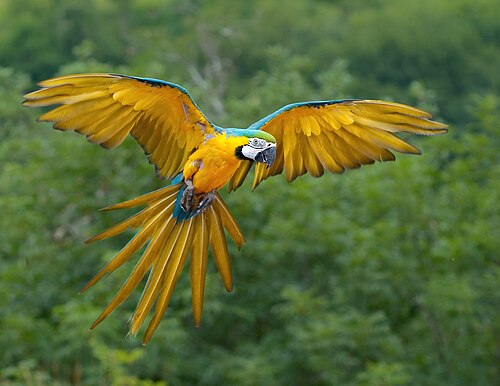
Blue-and-yellow Macaw
Ara ararauna

Yellow-chevroned Parakeet
Brotogeris chiriri

Dusky-headed Parakeet
Aratinga weddellii

Blue-headed Parrot
Pionus menstruus

Chestnut-fronted Macaw
Ara severus

White-eyed Parakeet
Aratinga leucophthalma

Red-shouldered Macaw
Diopsittaca nobilis

Red-and-green Macaw
Ara chloropterus

Red-bellied Macaw
Orthopsittaca manilata
📅 Monthly Probability
Fewer than 5 records of Orange-winged Parrot at Noel Kempff Mercado National Park — not enough to chart months honestly.
☀️ When They're Spotted
Most active during daytime hours (6am–6pm) · across all parks (global)
Global Distribution
Where this species is recorded worldwide. Restricted to human observations from 2019 onwards — the same kind of record and the same period the probabilities on this page are built from, so collar-tracking studies, camera-trap arrays and museum specimens are excluded. Around Santa Rosa that removes 5,924 GPS fixes from a handful of tagged jaguars.
where this species is recorded (GBIF density — it tracks where observers go, not how likely a sighting is) · parks where it occurs — tap a pin for the sighting probability there