Lorentz National Park
🇮🇩 Indonesia
🐦 Lorentz's Whistler Echoes Through RainforestLorentz National Park is a massive protected tropical rainforest spanning lowland swamps and high mountain peaks in Indonesian Papua. Dense vegetation covers the rugged jungle terrain, where muddy forest tracks wind through thick canopies and fern-choked valleys.
-4.573° S 137.609° E
Wildlife
⭐ Iconic Species
 ★
★ Lorentz's Whistler
Pachycephala lorentzi
 ★
★ Splendid Astrapia
Astrapia splendidissima
 ★
★ Pig-nosed Turtle
Carettochelys insculpta
 ★
★ Common Spotted Cuscus
Spilocuscus maculatus
📊 Most Spotted

Red-capped Flowerpecker
Dicaeum geelvinkianum

Smoky Honeyeater
Melipotes fumigatus

Friendly Fantail
Rhipidura albolimbata

Glossy Swiftlet
Collocalia esculenta

Belford's Melidectes
Melidectes belfordi
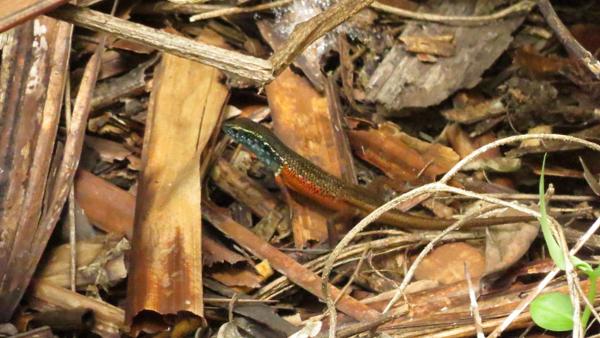
Blue-grey-throated Rainbow Skink
Carlia caesius

Red-collared Myzomela
Myzomela rosenbergii

Black-backed Honeyeater
Ptiloprora perstriata

Brown-breasted Gerygone
Gerygone ruficollis

Mountain Swiftlet
Aerodramus hirundinaceus

Pacific Bluetail Skink
Emoia caeruleocauda

Baliem Whistler
Pachycephala balim
⭐ Iconic Species
📊 Most Spotted

Speckled Dasyure
Neophascogale lorentzi

Geoffroy's Rousette
Rousettus amplexicaudatus

Wild Boar
Sus scrofa
Glacier Rat
Rattus richardsoni
⭐ Iconic Species
📊 Most Spotted
Red-capped Flowerpecker
Dicaeum geelvinkianum
Smoky Honeyeater
Melipotes fumigatus
Friendly Fantail
Rhipidura albolimbata
Glossy Swiftlet
Collocalia esculenta
Belford's Melidectes
Melidectes belfordi
Red-collared Myzomela
Myzomela rosenbergii
Black-backed Honeyeater
Ptiloprora perstriata
Brown-breasted Gerygone
Gerygone ruficollis
Mountain Swiftlet
Aerodramus hirundinaceus
Baliem Whistler
Pachycephala balim

Black-breasted Munia
Lonchura teerinki

Ornate Melidectes
Melidectes torquatus
⭐ Iconic Species
📊 Most Spotted
Blue-grey-throated Rainbow Skink
Carlia caesius
Pacific Bluetail Skink
Emoia caeruleocauda

Flat-tailed House Gecko
Hemidactylus platyurus

New Guinea Death Adder
Acanthophis laevis

Common House Gecko
Hemidactylus frenatus

Shrub Whiptail-skink
Emoia longicauda

Many-lined Sun-skink
Eutropis multifasciata

Indonesian Forest Dragon
Lophosaurus dilophus

Meyer's Emo Skink
Emoia kordoana

Bar-lipped Sheen-skink
Eugongylus rufescens

Müller’s Crown Snake
Aspidomorphus muelleri
Prehensile Green Tree Skink
Prasinohaema prehensicauda


Animal Events
Highland Honeyeater Breeding and Territorial Display
With the arrival of October, the Smoky Honeyeater engages in intensive territorial singing and courtship displays across the damp montane scrublands, establishing breeding pairs before the heavier seasonal rains.
Alpine Swiftlet Aerial Foraging Congregations
During the drier months of August and October, Glossy Swiftlets congregate in large, whirling flocks above the forest canopy and rocky cliffs to exploit high densities of flying insects stirred up by thermal air currents.
Lowland River Turtle Nesting Season
As river water levels recede during the seasonal transition, Pig-nosed Turtles haul themselves onto exposed sandy riverbanks to excavate nests and lay eggs in the warm alluvial soils.
Sighting Calendar
Chance of spotting each species, month by month
Where Wildlife Score
How good is this park for seeing wildlife?Biodiversity
Very goodHow rich is the wildlife?
Sighting
GoodHow likely to see animals?
Quick answers
What animals can you see in Lorentz National Park?
The most likely sightings are Red-capped Flowerpecker (seen by 70–80% of wildlife watchers), Smoky Honeyeater (seen by 70–80% of wildlife watchers), Friendly Fantail (seen by 70–80% of wildlife watchers), Glossy Swiftlet (seen by 60–70% of wildlife watchers), Belford's Melidectes (seen by 60–70% of wildlife watchers) — among 980 recorded vertebrate species, based on citizen-science data from GBIF.
When is the best time to visit Lorentz National Park for wildlife?
August has the highest combined sighting rate for the park's top species in our month-by-month GBIF data. The full sighting calendar on this page shows each species' best months.
Can you see Lorentz's Whistler in Lorentz National Park?
Yes — about 63% of wildlife watchers report a Lorentz's Whistler sighting in Lorentz National Park, based on 64 days of visitor records from GBIF citizen-science data.
Can you see Splendid Astrapia in Lorentz National Park?
Yes — about 47% of wildlife watchers report a Splendid Astrapia sighting in Lorentz National Park, based on 48 days of visitor records from GBIF citizen-science data.
Can you see Pig-nosed Turtle in Lorentz National Park?
Yes — about 25% of wildlife watchers report a Pig-nosed Turtle sighting in Lorentz National Park, based on 4 days of visitor records from GBIF citizen-science data.
Can you see Common Spotted Cuscus in Lorentz National Park?
Yes — about 16% of wildlife watchers report a Common Spotted Cuscus sighting in Lorentz National Park, based on 2 days of visitor records from GBIF citizen-science data.
Explore Other Parks
 📍 1121 km 🐊 Saltwater Crocodile's Ancient River Realm
 Kakadu National Park
 📍 1197 km 🐊 Watch Freshwater Crocodiles Basking Dryly
 Nitmiluk National Park
 📍 1215 km 🦎 Mertens's Water Monitor's Secret Pools
 Litchfield National Park
.jpg?width=1920) 📍 1550 km 🐊 Saltwater Crocodiles on the Daintree River
📍 1550 km 🐊 Saltwater Crocodiles on the Daintree River