


Springbok
Antidorcas marsupialis
- KingdomAnimalia (Animals)
- PhylumChordata (Cordats)
- ClassMammalia (Mamífers)
- OrderArtiodactyla (Artiodàctils)
- FamilyBovidae (Bòvids)
- GenusAntidorcas (Springboks)
- SpeciesAntidorcas marsupialis (Springbok)
The springbok or springbuck (Antidorcas marsupialis) is an antelope found mainly in south and southwest Africa. The sole living member of the genus Antidorcas, this bovid was first described by the German zoologist Eberhard August Wilhelm von Zimmermann in 1780. Three subspecies are identified. A slender, long-legged antelope, the springbok reaches 71 to 86 cm (28 to 34 in) at the shoulder and weighs between 27 and 42 kg (60 and 93 lb). Both sexes have a pair of black, 35 to 50 cm (14 to 20 in) long horns that curve backwards. The springbok is characterised by a white face, a dark stripe running from the eyes to the mouth, a light brown coat marked by a reddish-brown stripe that runs from the upper foreleg to the buttocks across the flanks like the Thomson's gazelle, and a white rump flap. Wikipedia →
20–30% of wildlife watchers report a Springbok sighting in Pilanesberg National Park, based on 33 days of visitor records from GBIF citizen-science data.
Closest Relatives at Pilanesberg National Park

Impala
Aepyceros melampus
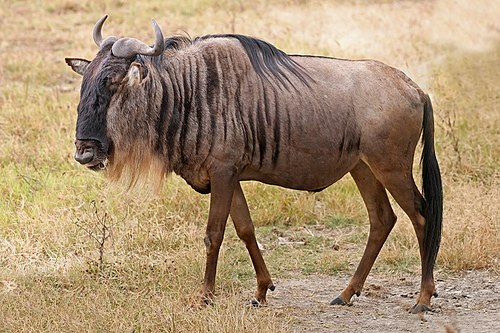
Blue Wildebeest
Connochaetes taurinus

Greater Kudu
Tragelaphus strepsiceros

Waterbuck
Kobus ellipsiprymnus

Steenbok
Raphicerus campestris

Khama
Alcelaphus caama

Tsessebe
Damaliscus lunatus

Klipspringer
Oreotragus oreotragus

African Buffalo
Syncerus caffer

Common Eland
Taurotragus oryx

Northern Bushbuck
Tragelaphus scriptus

Bush Duiker
Sylvicapra grimmia
📅 Monthly Probability
☀️ When They're Spotted
Most active during daytime hours (6am–6pm) · across all parks (global)
Global Distribution
Where this species is recorded worldwide. Restricted to human observations from 2019 onwards — the same kind of record and the same period the probabilities on this page are built from, so collar-tracking studies, camera-trap arrays and museum specimens are excluded. Around Santa Rosa that removes 5,924 GPS fixes from a handful of tagged jaguars.
where this species is recorded (GBIF density — it tracks where observers go, not how likely a sighting is) · parks where it occurs — tap a pin for the sighting probability there
Parks Where Found
| # | Park | Country | Probability |
|---|---|---|---|
| 1 | Etosha National Park | 🇳🇦 Namibia | |
| 2 | Kgalagadi Transfrontier Park | 🇿🇦 South Africa | |
| 3 | Waterberg Plateau Park | 🇳🇦 Namibia | |
| 4 | Namib-Naukluft National Park | 🇳🇦 Namibia | |
| 5 | Pilanesberg National Park | 🇿🇦 South Africa | |
| 6 | Addo Elephant National Park | 🇿🇦 South Africa | |
| 7 | Garden Route National Park | 🇿🇦 South Africa | |
| 8 | Chobe National Park | 🇧🇼 Botswana | |
| 9 | Table Mountain National Park | 🇿🇦 South Africa |
Quick answers
What are the chances of seeing a Springbok in Pilanesberg National Park?
About 25% of wildlife watchers report a Springbok sighting in Pilanesberg National Park, based on 33 days of visitor records from GBIF citizen-science data.
When is the best time to see Springbok in Pilanesberg National Park?
April has the highest sighting rate for Springbok in Pilanesberg National Park in our monthly data.