


Black Crevice-skink
Egernia saxatilis
- KingdomAnimalia (Animals)
- PhylumChordata (Cordats)
- ClassSquamata
- FamilyScincidae (Escíncid)
- GenusEgernia (Spiny-tailed and Crevice Skinks)
- SpeciesEgernia saxatilis (Black Crevice-skink)
The black rock skink (Egernia saxatilis) is a species of large skink native to Eastern and Southern Australia from central New South Wales to Grampians National Park in Victoria. A large, dark colored skink, up to 135 mm from snout to base of the tail, the black rock skink is the first reptile discovered to have a "nuclear family" structure where the parents form a pair and care for their offspring for more than one year. The black rock skink is a viviparous skink meaning females give birth to live offspring instead of laying eggs. They defend their home range and families against conspecifics for up to several years. Wikipedia →
10–20% of wildlife watchers report a Black Crevice-skink sighting in Kosciuszko National Park, based on 12 days of visitor records from GBIF citizen-science data.
Closest Relatives at Kosciuszko National Park

Cunningham's Skink
Egernia cunninghami

Blotched Bluetongue
Tiliqua nigrolutea

Southern Water Skink
Eulamprus heatwolei

Entrecasteaux's Skink
Pseudemoia entrecasteauxii

Pale-flecked Garden Sunskink
Lampropholis guichenoti

Cool-temperate Water Skink
Eulamprus tympanum
Trunk-climbing Cool-skink
Pseudemoia spenceri
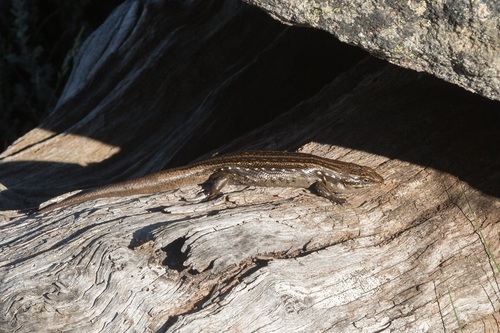
Guthega Skink
Liopholis guthega

Alpine Meadow-skink
Eulamprus kosciuskoi

Eastern Three-lined Skink
Acritoscincus duperreyi

Copper-tailed Ctenotus
Ctenotus taeniolatus
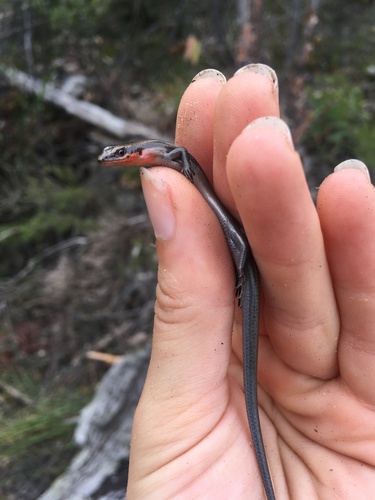
Red-throated Cool-skink
Acritoscincus platynotus
📅 Monthly Probability
☀️ When They're Spotted
Most active during daytime hours (6am–6pm) · across all parks (global)
Global Distribution
Where this species is recorded worldwide. Restricted to human observations from 2019 onwards — the same kind of record and the same period the probabilities on this page are built from, so collar-tracking studies, camera-trap arrays and museum specimens are excluded. Around Santa Rosa that removes 5,924 GPS fixes from a handful of tagged jaguars.
where this species is recorded (GBIF density — it tracks where observers go, not how likely a sighting is) · parks where it occurs — tap a pin for the sighting probability there
Parks Where Found
| # | Park | Country | Probability |
|---|---|---|---|
| 1 | Grampians National Park | 🇦🇺 Australia | |
| 2 | Kosciuszko National Park | 🇦🇺 Australia | |
| 3 | Blue Mountains National Park | 🇦🇺 Australia |
Quick answers
What are the chances of seeing a Black Crevice-skink in Kosciuszko National Park?
About 13% of wildlife watchers report a Black Crevice-skink sighting in Kosciuszko National Park, based on 12 days of visitor records from GBIF citizen-science data.
When is the best time to see Black Crevice-skink in Kosciuszko National Park?
November has the highest sighting rate for Black Crevice-skink in Kosciuszko National Park in our monthly data.