


Black-legged Kittiwake
Rissa tridactyla
- KingdomAnimalia (Animals)
- PhylumChordata (Cordats)
- ClassAves (Aus)
- OrderCharadriiformes (Caradriformes)
- FamilyLaridae (Gulls, Terns, and Skimmers)
- GenusRissa (Kittiwakes)
- SpeciesRissa tridactyla (Black-legged Kittiwake)
The black-legged kittiwake (Rissa tridactyla) is a seabird species in the gull family Laridae. This species was first described by Carl Linnaeus in his landmark 1758 10th edition of Systema Naturae as Larus tridactylus. The English name is derived from its call, a shrill 'kittee-wa-aaake, kitte-wa-aaake'. In North America, this species is known as the black-legged kittiwake to differentiate it from the red-legged kittiwake, but in Europe, where it is the only member of the genus, it is often known just as kittiwake. Wikipedia →
5–10% of wildlife watchers report a Black-legged Kittiwake sighting in Gros Morne National Park, based on 67 days of visitor records from GBIF citizen-science data.
Closest Relatives at Gros Morne National Park

American Herring Gull
Larus smithsonianus

Great Black-backed Gull
Larus marinus

Ring-billed Gull
Larus delawarensis

Common Tern
Sterna hirundo

Caspian Tern
Hydroprogne caspia

Iceland Gull
Larus glaucoides

Arctic Tern
Sterna paradisaea

Lesser Black-backed Gull
Larus fuscus

Glaucous Gull
Larus hyperboreus
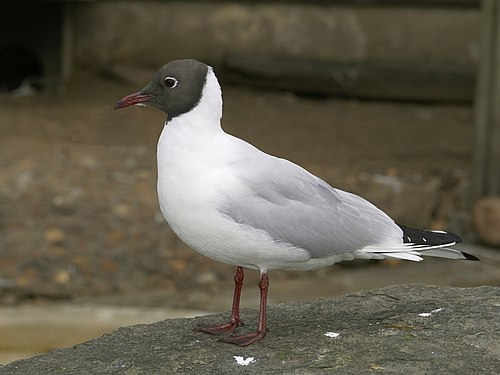
Black-headed Gull
Chroicocephalus ridibundus

Common Gull
Larus canus

Wilson's Snipe
Gallinago delicata
📅 Monthly Probability
☀️ When They're Spotted
Most active during daytime hours (6am–6pm) · across all parks (global)
Global Distribution
Where this species is recorded worldwide. Restricted to human observations from 2019 onwards — the same kind of record and the same period the probabilities on this page are built from, so collar-tracking studies, camera-trap arrays and museum specimens are excluded. Around Santa Rosa that removes 5,924 GPS fixes from a handful of tagged jaguars.
where this species is recorded (GBIF density — it tracks where observers go, not how likely a sighting is) · parks where it occurs — tap a pin for the sighting probability there
Parks Where Found
| # | Park | Country | Probability |
|---|---|---|---|
| 1 | Kenai Fjords National Park | 🇺🇸 United States | |
| 2 | Katmai National Park | 🇺🇸 United States | |
| 3 | Vatnajokull National Park | 🇮🇸 Iceland | |
| 4 | Wrangell-St. Elias National Park | 🇺🇸 United States | |
| 5 | Gros Morne National Park | 🇨🇦 Canada | |
| 6 | Wadden Sea National Park | 🇩🇪 Germany | |
| 7 | Redwood National Park | 🇺🇸 United States | |
| 8 | Cape Breton Highlands National Park | 🇨🇦 Canada | |
| 9 | Great Bear Rainforest | 🇨🇦 Canada | |
| 10 | Acadia National Park | 🇺🇸 United States | |
| 11 | Pacific Rim National Park Reserve | 🇨🇦 Canada | |
| 12 | Point Pelee National Park | 🇨🇦 Canada | |
| 13 | Snowdonia National Park | 🇬🇧 United Kingdom | |
| 14 | Olympic National Park | 🇺🇸 United States | |
| 15 | Thingvellir National Park | 🇮🇸 Iceland | |
| 16 | Kluane National Park | 🇨🇦 Canada | |
| 17 | Cairngorms National Park | 🇬🇧 United Kingdom | |
| 18 | Cumbres de Monterrey National Park | 🇲🇽 Mexico | |
| 19 | Channel Islands National Park | 🇺🇸 United States | |
| 20 | Pyrénées National Park | 🇫🇷 France |
Quick answers
What are the chances of seeing a Black-legged Kittiwake in Gros Morne National Park?
About 7% of wildlife watchers report a Black-legged Kittiwake sighting in Gros Morne National Park, based on 67 days of visitor records from GBIF citizen-science data.
When is the best time to see Black-legged Kittiwake in Gros Morne National Park?
June has the highest sighting rate for Black-legged Kittiwake in Gros Morne National Park in our monthly data.