


Three-striped Poison Frog
Ameerega trivittata
- KingdomAnimalia (Animals)
- PhylumChordata (Cordats)
- ClassAmphibia (Amfibis)
- OrderAnura (Anurs)
- FamilyDendrobatidae (Poison Dart Frogs)
- GenusAmeerega
- SpeciesAmeerega trivittata (Three-striped Poison Frog)
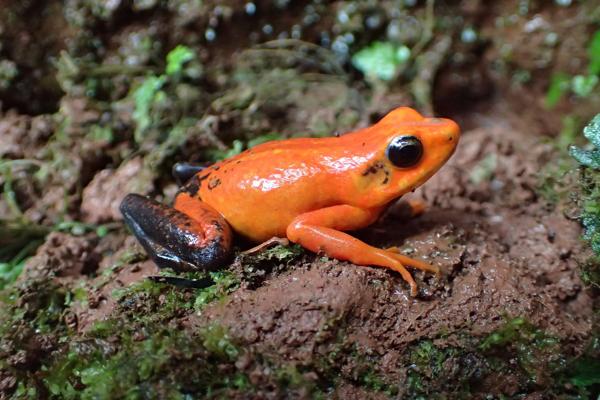
Ameerega trivittata, formerly Epipedobates trivittatus, is a species of frog in the family Dendrobatidae commonly known as the three-striped poison frog. It is found in Bolivia, Brazil, Colombia, Guyana, Peru, Suriname, Venezuela, possibly Ecuador, and possibly French Guiana. Its natural habitats are subtropical or tropical moist lowland forest floors and intermittent freshwater marshes. A. trivittata is diurnal and terrestrial. Its distinctive features include its large size (up to 50 mm), granular skin, lack of webbing between digits, and distinctive striped markings. The colour of these markings varies; typically the stripes are green, but yellow and orange specimens occur, as well. Wikipedia →
50–60% of wildlife watchers report a Three-striped Poison Frog sighting in Cordillera Azul National Park, based on 57 days of visitor records from GBIF citizen-science data.
Closest Relatives at Cordillera Azul National Park

Pleasing Poison Frog
Ameerega bassleri

Cainarachi Poison Frog
Ameerega cainarachi

Tarapoto Poison Frog
Ameerega altamazonica
Silverstone's Poison Frog
Ameerega silverstonei

Pongo de Aguirre Poison Frog
Ameerega pongoensis

Peruvian Poison Frog
Ameerega petersi

Pale-striped Poison Frog
Ameerega hahneli

Valle de Huallaga Poison Frog
Ameerega pepperi

Imitating Poison Frog
Ranitomeya imitator

Summers' Poison Dart Frog
Ranitomeya summersi

Los Tayos Rocket Frog
Hyloxalus nexipus

Zimmermann's Poison Frog
Ranitomeya variabilis
📅 Monthly Probability
☀️🌙 When They're Spotted
Active throughout day and night · across all parks (global)
Global Distribution
Where this species is recorded worldwide. Restricted to human observations from 2019 onwards — the same kind of record and the same period the probabilities on this page are built from, so collar-tracking studies, camera-trap arrays and museum specimens are excluded. Around Santa Rosa that removes 5,924 GPS fixes from a handful of tagged jaguars.
where this species is recorded (GBIF density — it tracks where observers go, not how likely a sighting is) · parks where it occurs — tap a pin for the sighting probability there
Parks Where Found
| # | Park | Country | Probability |
|---|---|---|---|
| 1 | Brownsberg Nature Park | 🇸🇷 Suriname | |
| 2 | Cordillera Azul National Park | 🇵🇪 Peru | |
| 3 | Amacayacu National Natural Park | 🇨🇴 Colombia | |
| 4 | Tambopata National Reserve | 🇵🇪 Peru | |
| 5 | Manu National Park | 🇵🇪 Peru | |
| 6 | Anavilhanas National Park | 🇧🇷 Brazil |
Quick answers
What are the chances of seeing a Three-striped Poison Frog in Cordillera Azul National Park?
About 59% of wildlife watchers report a Three-striped Poison Frog sighting in Cordillera Azul National Park, based on 57 days of visitor records from GBIF citizen-science data.
When is the best time to see Three-striped Poison Frog in Cordillera Azul National Park?
December has the highest sighting rate for Three-striped Poison Frog in Cordillera Azul National Park in our monthly data.