


White Bat
Ectophylla alba
- KingdomAnimalia (Animals)
- PhylumChordata (Cordats)
- ClassMammalia (Mamífers)
- OrderChiroptera (Ratpenats)
- FamilyPhyllostomidae (New World Leaf-nosed Bats)
- GenusEctophylla
- SpeciesEctophylla alba (White Bat)
The Honduran white bat (Ectophylla alba), also called the Caribbean white tent-making bat, is a species of bat in the family Phyllostomatidae. It is the only member of the genus Ectophylla. The genus and the species were both scientifically described for the first time in 1892. It has distinctive, entirely white fur, which is only found in six of the roughly 1,300 known species of bat. It constructs "tents" out of understory plant leaves by strategically cutting the leaf ribs with its teeth; it roosts in these tents during the day. It is a specialist frugivore, consuming almost exclusively the fruits of one species of fig. Wikipedia →
30–40% of wildlife watchers report a White Bat sighting in Braulio Carrillo National Park, based on 101 days of visitor records from GBIF citizen-science data.
Closest Relatives at Braulio Carrillo National Park

Vampire Bat
Desmodus rotundus

Jamaican Fruit-eating Bat
Artibeus jamaicensis

Striped Yellow-eared Bat
Vampyriscus nymphaea

Northern Little Yellow-eared Bat
Vampyressa thyone

Northern Stripe-headed Round-eared Bat
Tonatia bakeri

pale spear-nosed bat
Phyllostomus discolor

Great Fruit-eating Bat
Artibeus lituratus

MacConnell's bat
Mesophylla macconnelli

Hart's Fruit-eating Bat
Enchisthenes hartii
White-throated Round-eared Bat
Lophostoma silvicola

Heller's Broad-nosed Bat
Platyrrhinus helleri
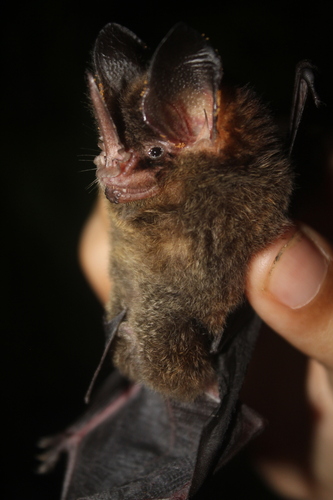
Keenan's Hairy-nosed Bat
Gardnerycteris keenani
📅 Monthly Probability
☀️ When They're Spotted
Most active during daytime hours (6am–6pm) · across all parks (global)
Global Distribution
Where this species is recorded worldwide. Restricted to human observations from 2019 onwards — the same kind of record and the same period the probabilities on this page are built from, so collar-tracking studies, camera-trap arrays and museum specimens are excluded. Around Santa Rosa that removes 5,924 GPS fixes from a handful of tagged jaguars.
where this species is recorded (GBIF density — it tracks where observers go, not how likely a sighting is) · parks where it occurs — tap a pin for the sighting probability there
Parks Where Found
| # | Park | Country | Probability |
|---|---|---|---|
| 1 | Braulio Carrillo National Park | 🇨🇷 Costa Rica | |
| 2 | Tortuguero National Park | 🇨🇷 Costa Rica | |
| 3 | Tapantí-Macizo de la Muerte National Park | 🇨🇷 Costa Rica | |
| 4 | Monteverde Cloud Forest Reserve | 🇨🇷 Costa Rica | |
| 5 | La Amistad International Park (Panama) | 🇵🇦 Panama |
Quick answers
What are the chances of seeing a White Bat in Braulio Carrillo National Park?
About 38% of wildlife watchers report a White Bat sighting in Braulio Carrillo National Park, based on 101 days of visitor records from GBIF citizen-science data.
When is the best time to see White Bat in Braulio Carrillo National Park?
January has the highest sighting rate for White Bat in Braulio Carrillo National Park in our monthly data.