


African Clawed Frog
Xenopus laevis
- KingdomAnimalia (Animals)
- PhylumChordata (Cordats)
- ClassAmphibia (Amfibis)
- OrderAnura (Anurs)
- FamilyPipidae (Clawed Frogs)
- GenusXenopus (African Clawed Frogs)
- SpeciesXenopus laevis (African Clawed Frog)
The African clawed frog (Xenopus laevis), also known as simply xenopus, African clawed toad, African claw-toed frog or the platanna) is a species of African aquatic frog of the family Pipidae. Its name is derived from the short black claws on its feet. The word Xenopus means 'strange foot' and laevis means 'smooth'. The species is found throughout much of Sub-Saharan Africa (Nigeria and Sudan to South Africa), and in isolated, introduced populations in North America, South America, Europe, and Asia. All species of the family Pipidae are tongueless, toothless and completely aquatic. They use their hands to shove food in their mouths and down their throats and a hyobranchial pump to draw or suck things in their mouth. Wikipedia →
<5% of wildlife watchers report a African Clawed Frog sighting in Kruger National Park, based on 23 days of visitor records from GBIF citizen-science data.
Closest Relatives at Kruger National Park

Müller's Platanna
Xenopus muelleri

Grey Foam-nest Treefrog
Chiromantis xerampelina

Painted Reed Frog
Hyperolius marmoratus

Garman's Toad
Sclerophrys garmani

Anchieta's Ridged Frog
Ptychadena anchietae

African Split-skin Toad
Schismaderma carens

Red-Banded Rubber Frog
Phrynomantis bifasciatus

Edible bullfrog
Pyxicephalus edulis

Common Rain Frog
Breviceps adspersus

Senegal Kassina
Kassina senegalensis

Shovel-nosed Frog
Hemisus marmoratus
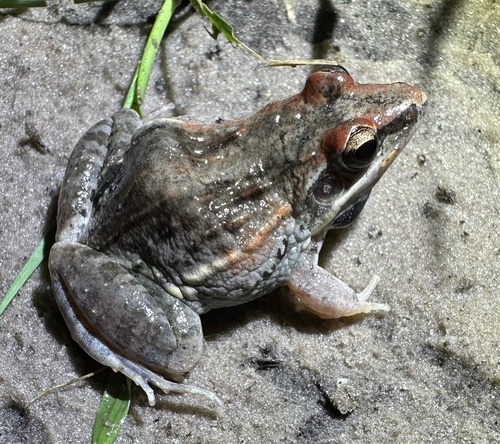
Mozambique ridged frog
Ptychadena mossambica
📅 Monthly Probability
☀️🌙 When They're Spotted
Active throughout day and night · across all parks (global)
Global Distribution
Where this species is recorded worldwide. Restricted to human observations from 2019 onwards — the same kind of record and the same period the probabilities on this page are built from, so collar-tracking studies, camera-trap arrays and museum specimens are excluded. Around Santa Rosa that removes 5,924 GPS fixes from a handful of tagged jaguars.
where this species is recorded (GBIF density — it tracks where observers go, not how likely a sighting is) · parks where it occurs — tap a pin for the sighting probability there
Parks Where Found
| # | Park | Country | Probability |
|---|---|---|---|
| 1 | Addo Elephant National Park | 🇿🇦 South Africa | |
| 2 | Garden Route National Park | 🇿🇦 South Africa | |
| 3 | iSimangaliso Wetland Park | 🇿🇦 South Africa | |
| 4 | Table Mountain National Park | 🇿🇦 South Africa | |
| 5 | Namib-Naukluft National Park | 🇳🇦 Namibia | |
| 6 | Kruger National Park | 🇿🇦 South Africa | |
| 7 | Channel Islands National Park | 🇺🇸 United States | |
| 8 | Waterberg Plateau Park | 🇳🇦 Namibia | |
| 9 | Nairobi National Park | 🇰🇪 Kenya | |
| 10 | Liwonde National Park | 🇲🇼 Malawi | |
| 11 | Moremi Game Reserve | 🇧🇼 Botswana | |
| 12 | Hluhluwe-Imfolozi Park | 🇿🇦 South Africa | |
| 13 | Pilanesberg National Park | 🇿🇦 South Africa |
Quick answers
What are the chances of seeing a African Clawed Frog in Kruger National Park?
About 4% of wildlife watchers report a African Clawed Frog sighting in Kruger National Park, based on 23 days of visitor records from GBIF citizen-science data.
When is the best time to see African Clawed Frog in Kruger National Park?
December has the highest sighting rate for African Clawed Frog in Kruger National Park in our monthly data.