
Pelagic Cormorant
Phalacrocorax pelagicus
- KingdomAnimalia (Animals)
- PhylumChordata (Cordats)
- ClassAves (Aus)
- OrderSuliformes
- FamilyPhalacrocoracidae (Corbs marins)
- GenusPhalacrocorax (Typical Old World Cormorants)
- SpeciesPhalacrocorax pelagicus (Pelagic Cormorant)
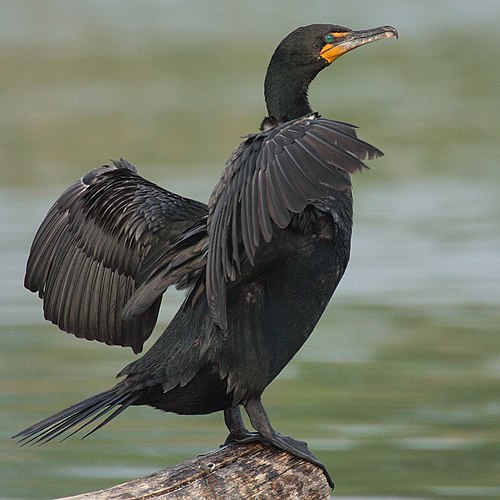
The pelagic cormorant (Urile pelagicus), also known as Baird's cormorant or violet-green cormorant, is a small member of the cormorant family Phalacrocoracidae. Analogous to other smallish cormorants, it is also called the pelagic shag occasionally. This seabird lives along the coasts of the northern Pacific; during winter it can also be found in the open ocean. Pelagic cormorants have relatively short wings due to their need for economical movement underwater, and consequently have the highest flight costs of any bird. It was formerly classified in the genus Phalacrocorax, but a 2014 study supported reclassifying it and several other Pacific cormorant species into the genus Urile. The IOC followed this classification in 2021. Wikipedia →
20–30% of wildlife watchers report a Pelagic Cormorant sighting in Great Bear Rainforest, based on 1,800 days of visitor records from GBIF citizen-science data.
Closest Relatives at Great Bear Rainforest


📅 Monthly Probability
☀️ When They're Spotted
Most active during daytime hours (6am–6pm) · across all parks (global)
Global Distribution
Where this species is recorded worldwide. Restricted to human observations from 2019 onwards — the same kind of record and the same period the probabilities on this page are built from, so collar-tracking studies, camera-trap arrays and museum specimens are excluded. Around Santa Rosa that removes 5,924 GPS fixes from a handful of tagged jaguars.
where this species is recorded (GBIF density — it tracks where observers go, not how likely a sighting is) · parks where it occurs — tap a pin for the sighting probability there
Parks Where Found
| # | Park | Country | Probability |
|---|---|---|---|
| 1 | Kenai Fjords National Park | 🇺🇸 United States | |
| 2 | Pacific Rim National Park Reserve | 🇨🇦 Canada | |
| 3 | Great Bear Rainforest | 🇨🇦 Canada | |
| 4 | Olympic National Park | 🇺🇸 United States | |
| 5 | Redwood National Park | 🇺🇸 United States | |
| 6 | Channel Islands National Park | 🇺🇸 United States | |
| 7 | Katmai National Park | 🇺🇸 United States | |
| 8 | Wrangell-St. Elias National Park | 🇺🇸 United States |
Quick answers
What are the chances of seeing a Pelagic Cormorant in Great Bear Rainforest?
About 21% of wildlife watchers report a Pelagic Cormorant sighting in Great Bear Rainforest, based on 1,800 days of visitor records from GBIF citizen-science data.
When is the best time to see Pelagic Cormorant in Great Bear Rainforest?
January has the highest sighting rate for Pelagic Cormorant in Great Bear Rainforest in our monthly data.