


Peach-faced Lovebird
Agapornis roseicollis
- KingdomAnimalia (Animals)
- PhylumChordata (Cordats)
- ClassAves (Aus)
- OrderPsittaciformes (Parrots)
- FamilyPsittacidae (New World and African Parrots)
- GenusAgapornis (Lovebirds)
- SpeciesAgapornis roseicollis (Peach-faced Lovebird)
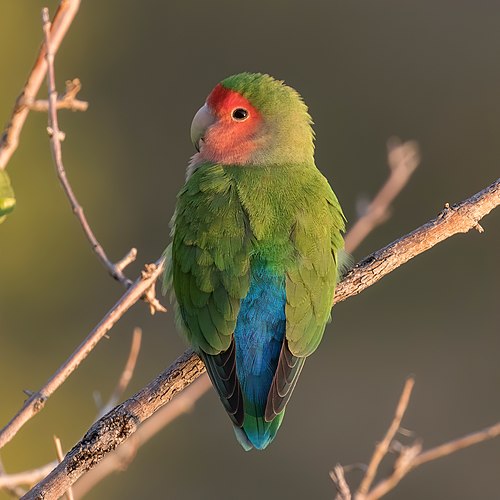
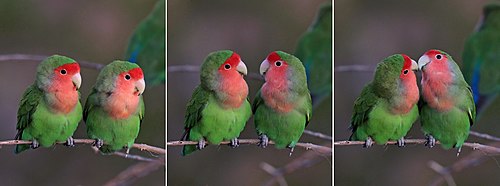
The rosy-faced lovebird (Agapornis roseicollis), also known as the rosy-collared or peach-faced lovebird, is a species of lovebird native to the Namibian savanna woodlands. Loud and constant chirpers, these birds are very social animals and often congregate in small groups in the wild. They eat throughout the day and take frequent baths. Coloration can vary widely among populations. Plumage is identical in males and females. Lovebirds are renowned for their sleep position in which they sit side-by-side and turn their faces in towards each other. Wikipedia →
<5% of wildlife watchers report a Peach-faced Lovebird sighting in Etosha National Park, based on 9 days of visitor records from GBIF citizen-science data.
Closest Relatives at Etosha National Park


📅 Monthly Probability
☀️ When They're Spotted
Most active during daytime hours (6am–6pm) · across all parks (global)
Global Distribution
Where this species is recorded worldwide. Restricted to human observations from 2019 onwards — the same kind of record and the same period the probabilities on this page are built from, so collar-tracking studies, camera-trap arrays and museum specimens are excluded. Around Santa Rosa that removes 5,924 GPS fixes from a handful of tagged jaguars.
where this species is recorded (GBIF density — it tracks where observers go, not how likely a sighting is) · parks where it occurs — tap a pin for the sighting probability there
Parks Where Found
| # | Park | Country | Probability |
|---|---|---|---|
| 1 | Waterberg Plateau Park | 🇳🇦 Namibia | |
| 2 | Namib-Naukluft National Park | 🇳🇦 Namibia | |
| 3 | Etosha National Park | 🇳🇦 Namibia | |
| 4 | Sierra Nevada National Park | 🇪🇸 Spain | |
| 5 | Kruger National Park | 🇿🇦 South Africa | |
| 6 | Kgalagadi Transfrontier Park | 🇿🇦 South Africa | |
| 7 | Addo Elephant National Park | 🇿🇦 South Africa | |
| 8 | Ciénaga de Zapata | 🇨🇺 Cuba | |
| 9 | Everglades National Park | 🇺🇸 United States | |
| 10 | Monfragüe National Park | 🇪🇸 Spain | |
| 11 | Pyrénées National Park | 🇫🇷 France |
Quick answers
What are the chances of seeing a Peach-faced Lovebird in Etosha National Park?
About 1% of wildlife watchers report a Peach-faced Lovebird sighting in Etosha National Park, based on 9 days of visitor records from GBIF citizen-science data.
When is the best time to see Peach-faced Lovebird in Etosha National Park?
January has the highest sighting rate for Peach-faced Lovebird in Etosha National Park in our monthly data.