


Texas Horned Lizard
Phrynosoma cornutum
- KingdomAnimalia (Animals)
- PhylumChordata (Cordats)
- ClassSquamata
- FamilyPhrynosomatidae (Frinosomàtids)
- GenusPhrynosoma (Horned Lizards)
- SpeciesPhrynosoma cornutum (Texas Horned Lizard)
The Texas horned lizard (Phrynosoma cornutum) is one of about 21 North American species of spikey-bodied reptiles called horned lizards, all belonging the genus Phrynosoma. It occurs in south-central regions of the US and northeastern Mexico, as well as several isolated introduced records and populations from Southern United States. Though some populations are stable, severe population declines have occurred in many areas of Texas and Oklahoma. The Texas spiny lizard (Sceloporus olivaceus) may be confused for a Texas horned lizard due to its appearance and overlapping habitat. Texas horned lizard populations show strong genetic structuring across their range, with limited gene flow between regions. Because the Texas horned lizard is listed as a threatened species in the state, it is illegal to pick up, touch, or possess them in Texas. Wikipedia →
Closest Relatives at Cumbres de Monterrey National Park

Mountain Horned Lizard
Phrynosoma orbiculare

Roundtail Horned Lizard
Phrynosoma modestum

West Gulf Rough-scaled Lizard
Sceloporus cyanogenys

Rose-bellied Lizard
Sceloporus variabilis

Texas Spiny Lizard
Sceloporus olivaceus

Crevice Swift
Sceloporus torquatus

Graphic Spiny Lizard
Sceloporus grammicus

Minor Lizard
Sceloporus minor

Couch's Spiny Lizard
Sceloporus couchii

Greater Earless Lizard
Cophosaurus texanus
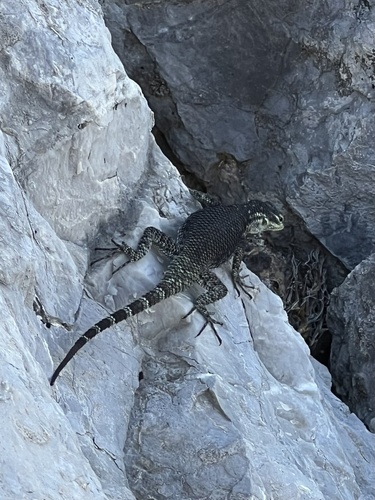
Noble Spiny Lizard
Sceloporus oberon

Pygmy Spiny Lizard
Sceloporus parvus
📅 Monthly Probability
Fewer than 5 records of Texas Horned Lizard at Cumbres de Monterrey National Park — not enough to chart months honestly.
☀️🌙 When They're Spotted
Active throughout day and night · across all parks (global)
Global Distribution
Where this species is recorded worldwide. Restricted to human observations from 2019 onwards — the same kind of record and the same period the probabilities on this page are built from, so collar-tracking studies, camera-trap arrays and museum specimens are excluded. Around Santa Rosa that removes 5,924 GPS fixes from a handful of tagged jaguars.
where this species is recorded (GBIF density — it tracks where observers go, not how likely a sighting is) · parks where it occurs — tap a pin for the sighting probability there
Parks Where Found
| # | Park | Country | Probability |
|---|---|---|---|
| 1 | Guadalupe Mountains National Park | 🇺🇸 United States | |
| 2 | Big Bend National Park | 🇺🇸 United States | |
| 3 | Cumbres de Monterrey National Park | 🇲🇽 Mexico |