


Curve-billed Thrasher
Toxostoma curvirostre
- KingdomAnimalia (Animals)
- PhylumChordata (Cordats)
- ClassAves (Aus)
- OrderPasseriformes
- FamilyMimidae (Mímids)
- GenusToxostoma (Typical Thrashers)
- SpeciesToxostoma curvirostre (Curve-billed Thrasher)
The curve-billed thrasher (Toxostoma curvirostre) is a medium-sized mimid native to most of Mexico and to the deserts of southwestern United States. It is a non-migratory species, and throughout most of its range it is the most common desert thrasher. Several subspecies have been classified since 1827, though there is no consensus on the number. Allopatric speciation is believed to have played a major role in the variations of the curve-billed. It is grey-brown overall with a slightly curved bill, and is similar in appearance to the related Bendire's thrasher. It generally resides in desert regions of the United States and Mexico, but can inhabit areas predominately populated by humans. Wikipedia →
30–40% of wildlife watchers report a Curve-billed Thrasher sighting in Big Bend National Park, based on 1,517 days of visitor records from GBIF citizen-science data.
Closest Relatives at Big Bend National Park

Crissal Thrasher
Toxostoma crissale

Brown Thrasher
Toxostoma rufum

Long-billed Thrasher
Toxostoma longirostre

Northern Mockingbird
Mimus polyglottos
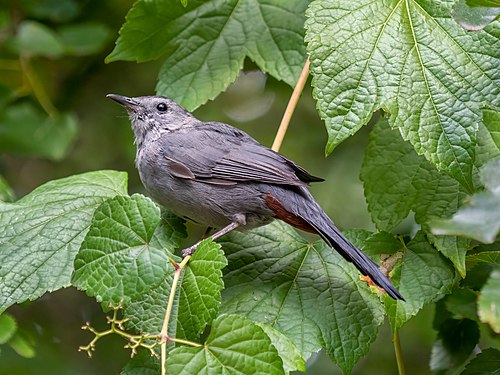
Gray Catbird
Dumetella carolinensis

Sage Thrasher
Oreoscoptes montanus

Common Raven
Corvus corax

House Finch
Haemorhous mexicanus

Cactus Wren
Campylorhynchus brunneicapillus

Pyrrhuloxia
Cardinalis sinuatus

Yellow-rumped Warbler
Setophaga coronata

Ash-throated Flycatcher
Myiarchus cinerascens
📅 Monthly Probability
☀️ When They're Spotted
Most active during daytime hours (6am–6pm) · across all parks (global)
Global Distribution
Where this species is recorded worldwide. Restricted to human observations from 2019 onwards — the same kind of record and the same period the probabilities on this page are built from, so collar-tracking studies, camera-trap arrays and museum specimens are excluded. Around Santa Rosa that removes 5,924 GPS fixes from a handful of tagged jaguars.
where this species is recorded (GBIF density — it tracks where observers go, not how likely a sighting is) · parks where it occurs — tap a pin for the sighting probability there
Parks Where Found
| # | Park | Country | Probability |
|---|---|---|---|
| 1 | Big Bend National Park | 🇺🇸 United States | |
| 2 | Reserva de la Biosfera Mariposa Monarca | 🇲🇽 Mexico | |
| 3 | Cumbres de Monterrey National Park | 🇲🇽 Mexico | |
| 4 | Guadalupe Mountains National Park | 🇺🇸 United States | |
| 5 | Joshua Tree National Park | 🇺🇸 United States | |
| 6 | Grand Teton National Park | 🇺🇸 United States |
Quick answers
What are the chances of seeing a Curve-billed Thrasher in Big Bend National Park?
About 34% of wildlife watchers report a Curve-billed Thrasher sighting in Big Bend National Park, based on 1,517 days of visitor records from GBIF citizen-science data.
When is the best time to see Curve-billed Thrasher in Big Bend National Park?
August has the highest sighting rate for Curve-billed Thrasher in Big Bend National Park in our monthly data.